


An air traffic controller at Phoenix Sky Harbor International Airport has been praised for the calm way he handled an unusual situation late one Thursday night: two American Airlines aircraft carrying the exact same callsign, flying toward each other with only a couple of thousand feet of vertical separation between them. The controller said it was something he had not seen in 25 years on the job.
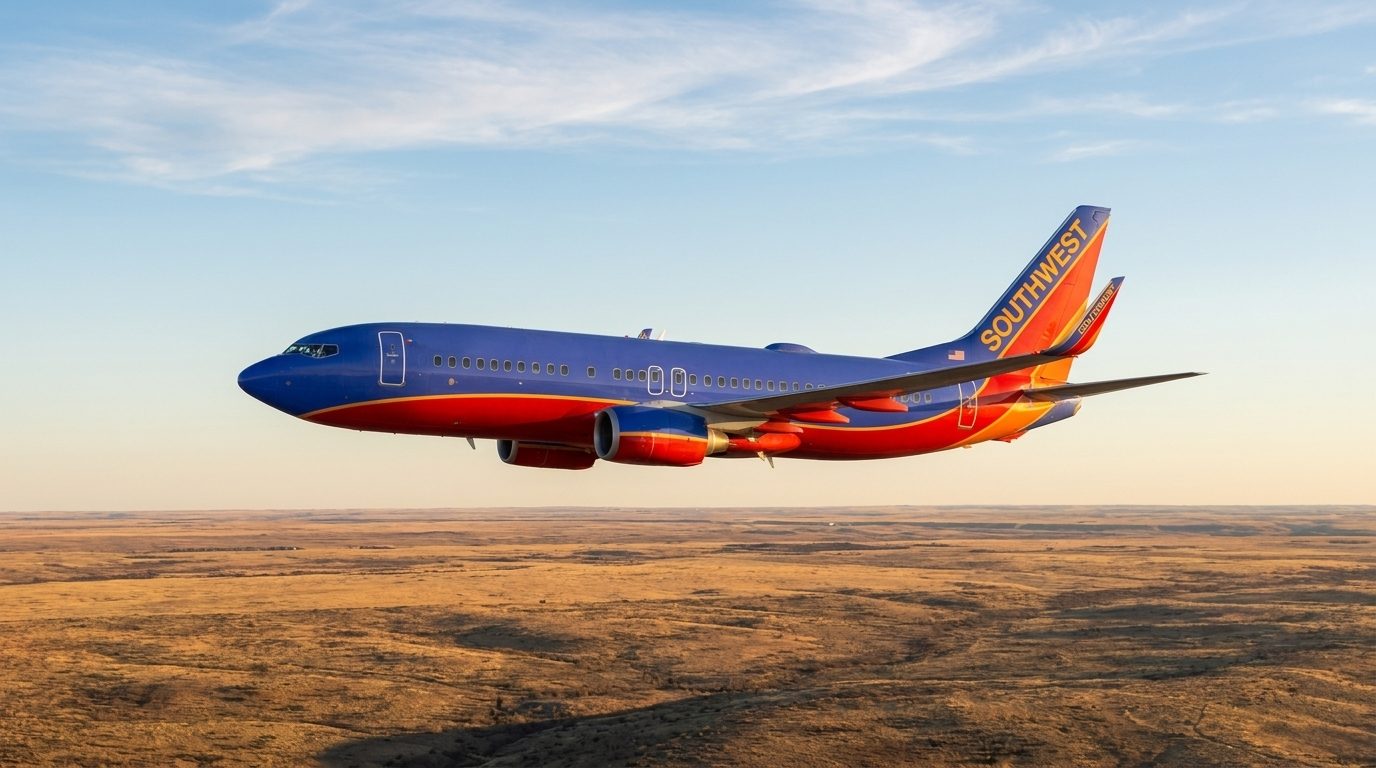
The confusion arose because both flights were using the identical callsign at the same time. One of them, American Airlines flight AA-2482 bound for Chicago O'Hare and operated by a Boeing 737, departed Phoenix slightly behind schedule at around 11:58 pm. Heading in the opposite direction, another American Airlines Boeing 737 with the same callsign was approaching Phoenix at the end of a roughly three-hour flight from Chicago O'Hare.
Duplicate callsigns are a known quirk of large airline operations. Carriers run thousands of flights a day, and it is possible for two services on related routes to end up assigned the same flight number at overlapping times, particularly when schedules shift or aircraft run late. Controllers and pilots rely on the callsign as the primary way of identifying who they are talking to, so having two aircraft answer to the same one in the same slice of airspace introduces an obvious risk of a clearance meant for one crew being actioned by the other.
In this case the controller recognised the overlap and worked to keep the two aircraft clearly separated as they passed, maintaining vertical spacing between them and issuing instructions carefully to avoid any mix-up. The situation was resolved without incident, and it was the controller's composure under an unusual workload that drew attention afterward.
The episode is a reminder of how much of aviation safety rests on clear communication rather than on any single piece of hardware. Radar, collision-avoidance systems and standard separation minima all provide layers of protection, but they work best when controllers and crews can unambiguously identify one another. When a callsign is shared, that first layer is weakened, and the human in the loop has to compensate.
Airlines and air navigation service providers have long been aware of the callsign-confusion problem and use several tools to reduce it, including alphanumeric callsigns that differ from the marketed flight number and software that flags potential duplicates before they reach a controller's screen. Even so, real-world scheduling means overlaps still occur, and the last line of defence remains an alert controller noticing that two targets are answering to the same name.
For passengers on board either aircraft, the night would have felt entirely routine, which is precisely the point: the system is designed so that an unusual and potentially confusing situation on the frequency is absorbed and managed long before it becomes anything the cabin would notice. The recognition the controller received reflects how that quiet, unglamorous work keeps busy airspace moving safely.
Sources: Paddle Your Own Kanoo. Featured image: AI-generated by AviationShop. By Elena Vargas.


Comments
Loading comments…