


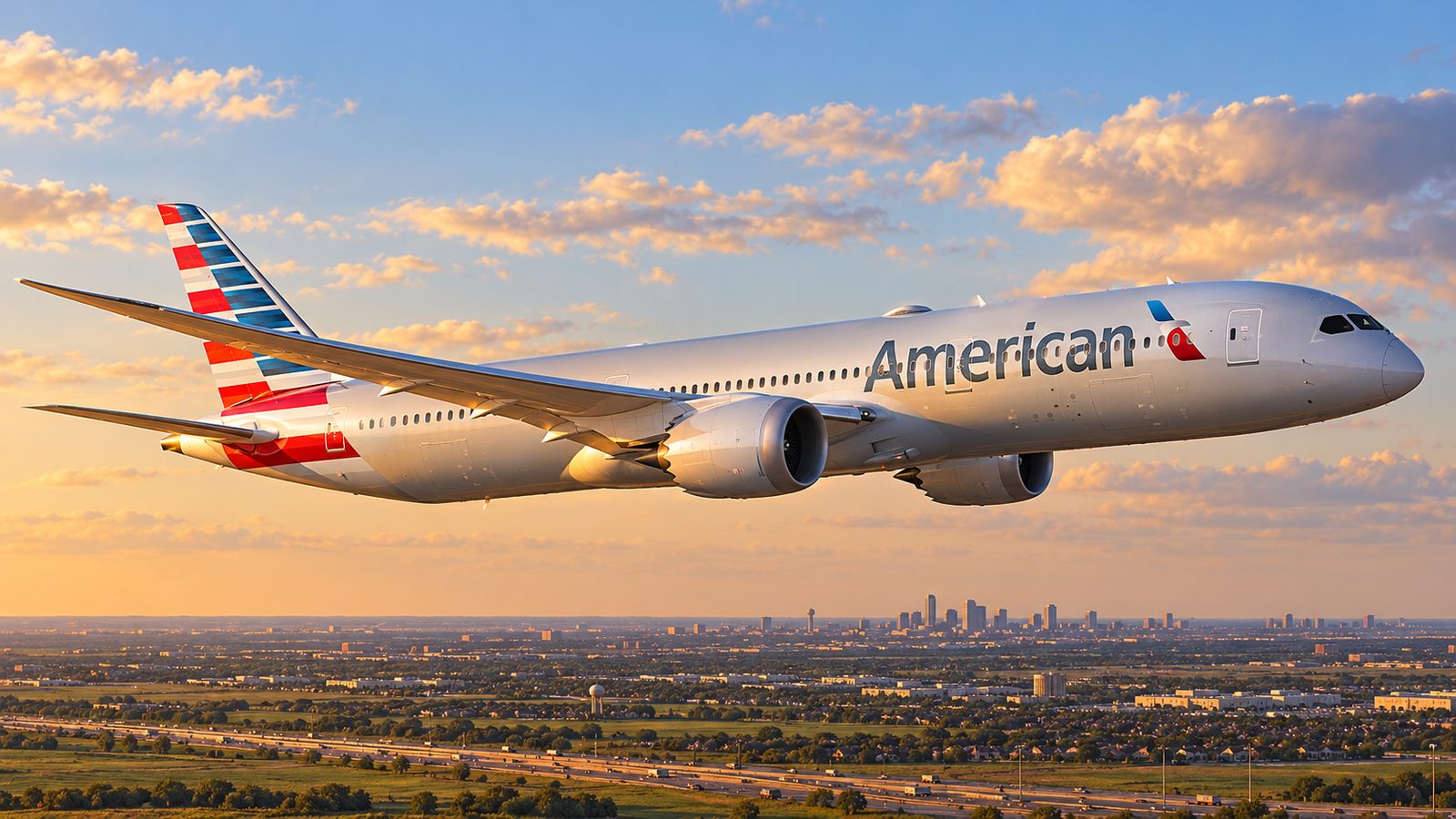
American Airlines chief executive Robert Isom has set out how the carrier intends to close a profitability gap of several billion dollars against its two largest US rivals, in comments to CNBC published on 19 July 2026 ahead of the airline's second-quarter earnings report.
The size of the gap
The numbers are stark. United Airlines brought in roughly $3 billion more than American last year, while Delta Air Lines — the most profitable US carrier — made close to $5 billion more. That shortfall persists despite American operating around 6,500 flights a day and maintaining the largest network in North America.
In other words, this is not a scale problem. American flies more than its competitors in raw terms. What it has not matched is their ability to convert that flying into profit.
Four areas of investment
Isom pointed to four priorities. The first is premium cabins — more upscale seating aimed at travellers willing to pay for it. The second is airport lounges, the ground-side half of the same premium proposition. The third is operational reliability, the unglamorous business of running flights on time and recovering quickly when things go wrong. The fourth is new long-haul aircraft.
On that last point, the carrier is working toward a widebody order from either Boeing or Airbus, potentially as soon as this year. A widebody commitment would be the clearest signal yet of intent, since aircraft ordered now would not arrive for years and would shape the long-haul network well into the 2030s.
Chasing the premium traveller
The common thread is higher-spending customers. Over the past decade Delta and United have both leaned heavily into premium cabins, co-branded credit card economics and loyalty revenue, and the earnings gap between the US majors has widened along roughly those lines. American's plan is, in essence, to compete on the same ground.
That is a slower path than it sounds. Retrofitting cabins takes aircraft out of service. Building lounges requires airport real estate and construction time. Neither delivers results in a single quarter, and both require capital while the gap being closed is itself a capital constraint.
Reliability as the foundation
The emphasis on operational reliability is worth noting because it underpins everything else. Premium customers are disproportionately sensitive to disruption, and an airline cannot charge a premium for a product that arrives late. Reliability improvements also carry their own direct benefits, reducing the costs of rebooking, crew disruption and compensation.
The near-term picture
Analysts expect American to increase adjusted earnings this year by close to 80% compared with 2025 — a substantial improvement, though one that starts from a low base and does not by itself close a multi-billion-dollar gap.
The comments landed just before the airline's second-quarter results, which will offer the first concrete read on whether the strategy is translating into numbers. Isom's framing sets a clear standard against which American can be measured: not whether it grows, but whether it earns more from what it already flies.
For now, the plan is stated and the gap is quantified. What remains is execution, and the aircraft order that would demonstrate the airline is willing to fund it.
Sources: CNBC, Simple Flying. Featured image: AI-generated by AviationShop. By James Holloway.
Comments
Loading comments…