


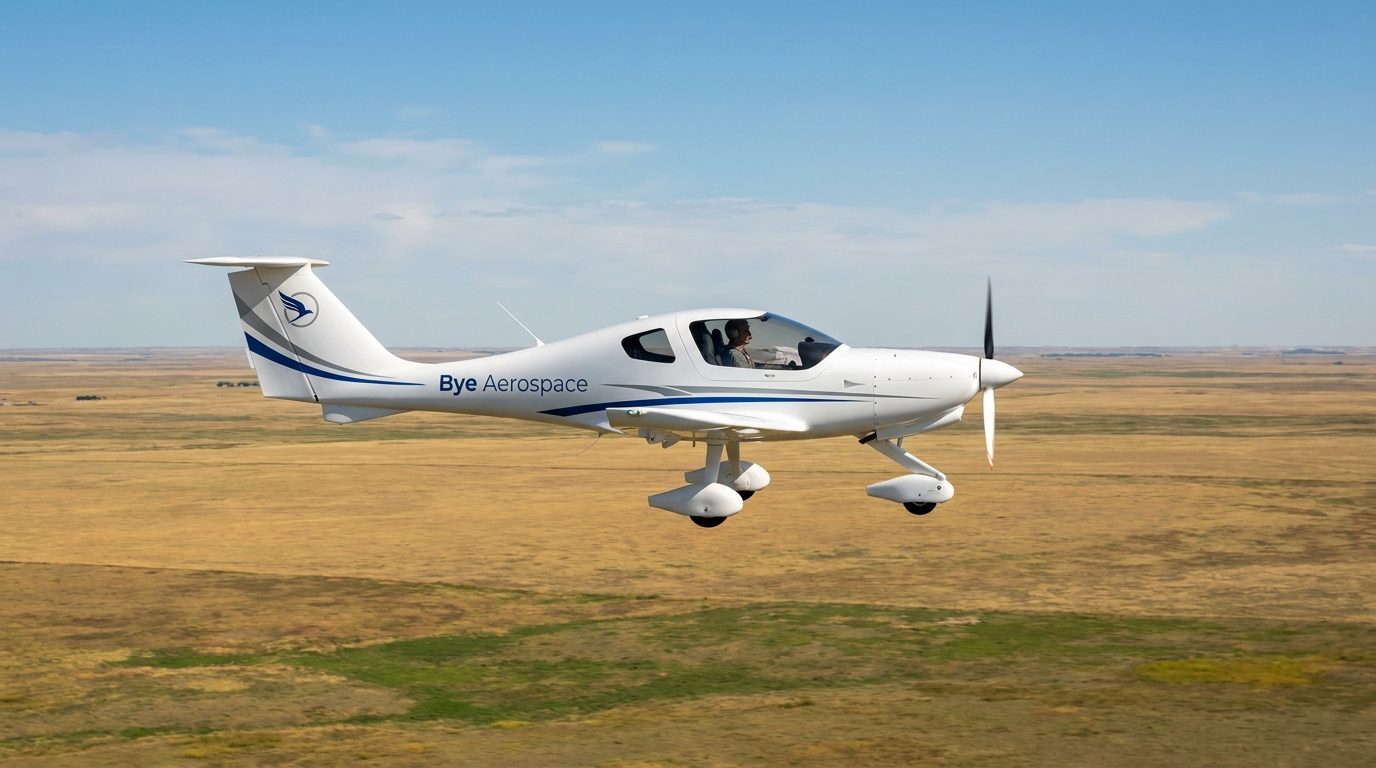
Bye Aerospace flew its all-electric eFlyer 2 trainer for the first time on September 24, 2026, launching a multi-year flight-test campaign aimed at FAA certification and eventual deliveries to flight schools. AeroTime reported that chief test pilot Elliot Seguin lifted the two-seat prototype from Centennial Airport near Denver and used the short hop to check handling qualities, aerodynamics, and system performance while gathering data for the next test phase.
Seguin said the eFlyer 2 handled well and validated years of design and ground testing. CEO Rod Zastrow called the sortie a milestone that exceeded expectations for aerodynamics, handling, propulsion, and overall performance, with no maintenance discrepancies after landing. The company frames the airplane as a safety-focused design with advanced electric propulsion and a lightweight composite airframe, claiming operating-cost cuts of up to 80 percent and zero in-flight emissions compared with piston trainers that burn avgas.
Earlier in September the FAA awarded Bye a Special Airworthiness Certificate for the eFlyer 2, clearing the legal path for the flight-test program. Bye says the order book for the two-seat eFlyer 2 and four-seat eFlyer 4 already exceeds 1,000 aircraft. Named training customers include Spartan College of Aeronautics & Technology, Skyborne Academy, Flex Air Flight School, and KLM Academy in the Netherlands—schools that face high fuel bills and piston-engine overhaul backlogs on conventional fleets.
Partners listed by the company span the electric-aviation supply chain: Safran Electrical and Power, magniX, Siemens, Toray, Composite Approach, Garmin, Sensenich Propeller, Electro.Aero, and several aerostructures and engineering firms. That roster matters because primary trainers only disrupt the market if batteries, motors, and avionics stay supportable for decades of student circuits around busy training airports.
Bye is selling a simple economic story to flight schools. Operators pay unpredictable avgas prices and wait on engine shops; an electric two-seater that removes those line items could cut the cost of a private pilot certificate and widen the student pipeline at a time when airlines still struggle to hire enough new pilots. Zastrow has argued the airplane helps schools break free from fossil-fuel price spikes and crippling overhaul queues that ground piston trainers for weeks.
Whether the eFlyer 2 can meet FAA training requirements, prove battery endurance across cold Colorado winters, and keep utilization high enough for school schedules will decide if the first-flight celebration becomes a certification program or a prototype footnote. Envelope expansion, longer test points, and a formal certification plan still sit ahead of any customer delivery.
For now the facts are narrow and concrete: a prototype flew from Centennial, the FAA has issued a special airworthiness certificate, and more than a thousand airframes sit on a backlog that includes major training organizations on both sides of the Atlantic. The next public milestones are longer flights, systems reliability data, and the paperwork that turns a five-minute first flight into an airplane a student can rent.
Sources: AeroTime; Bye Aerospace statements as reported by AeroTime.
Comments
Loading comments…