


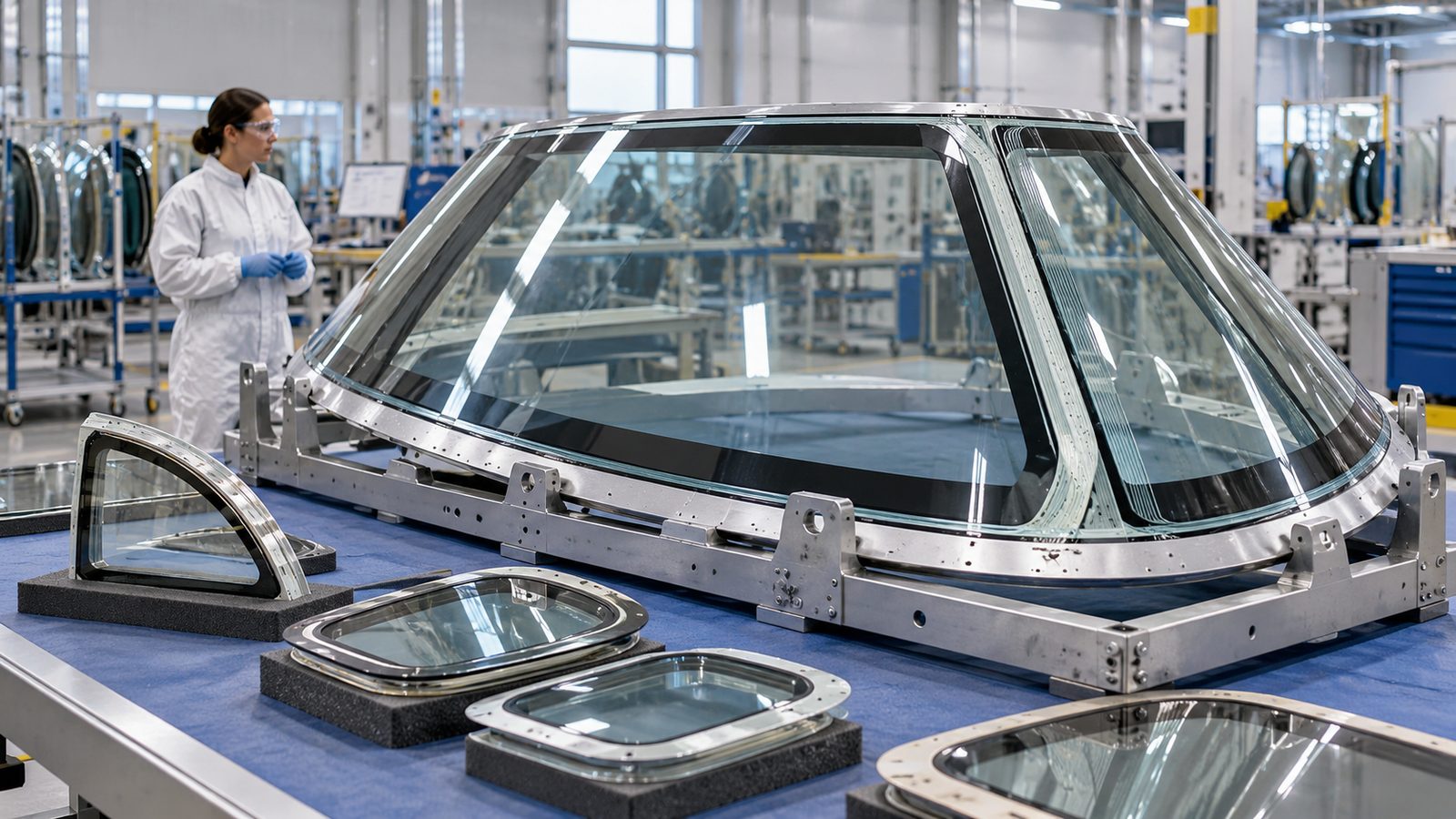
PPG announced a US$70 million expansion of its aerospace transparencies operation in Huntsville, Alabama, on October 7. The investment targets the business that supplies aircraft cockpit and passenger windows, with a new 112,000-square-foot facility intended to house production-support functions and free more manufacturing space at the existing site. PPG expansion announcement
The company describes the spending as part of a series of projects extending over several years. Its plan involves leasing and fitting out the additional premises. PPG cites demand across commercial, military and general aviation, but the announcement does not give a completion date or quantify the resulting increase in window production. PPG says it has operated its Huntsville aerospace-transparencies manufacturing facility for more than 55 years, so the investment builds on an established local industrial presence. PPG project details
What an aircraft window contains
PPG’s product information illustrates why this is a specialised manufacturing business. Its transparencies use materials including glass, acrylic and polycarbonate, combined with coatings, heating systems, structural attachments and layers bonded together. The company lists flight-deck products for aircraft from Airbus, Boeing, Bombardier and Embraer, alongside offerings for regional, general aviation and military applications. PPG transparencies overview
The finished component must bring these features together in a form suited to the aircraft. From a manufacturing perspective, an expansion serving such products is about the supporting production system as well as floor area. The new building’s role makes that distinction particularly relevant: moving support activities creates room for manufacturing work at a site that already has established operations.
PPG also markets Opticor, a transparent aerospace plastic intended for applications including cockpit and cabin windows, landing-light lenses and wingtip lenses. The company says it can be cast into complex curves and offers a lower density than stretched acrylic. Those characteristics show the range of materials and design considerations in its portfolio; the Huntsville announcement does not identify a new Opticor production line. PPG Opticor product background
Huntsville’s established window business
A previous programme announcement provides a concrete example of Huntsville’s role. In December 2014, PPG said it had been selected to supply cockpit windows and passenger-window assemblies for Gulfstream’s G500 and G600 business jets. It identified Huntsville as the planned production location for those windows and assemblies, with Opticor material manufactured separately at its Sylmar, California, plant. PPG’s 2014 Gulfstream announcement
That earlier design combined different materials within a single cabin-window assembly and included a heated inner glass panel for antifogging. PPG also described water-repellent coatings for the cockpit windshields. These details are historical programme background, rather than specifications for a newly announced aircraft product, but they illustrate the engineering that sits behind the familiar view through an aeroplane window. Gulfstream window-design background
The next measure is added output
For the aviation supply chain, the practical question is how the expanded operation performs once space, equipment and workflows are in place. Investment announcements establish intent; delivery capacity becomes clearer through execution. The useful milestones to watch are the new premises entering service and evidence of additional manufacturing output. Until those details emerge, the news is a defined investment and expansion approach, with the production timetable still to be specified.








Comments
Loading comments…