


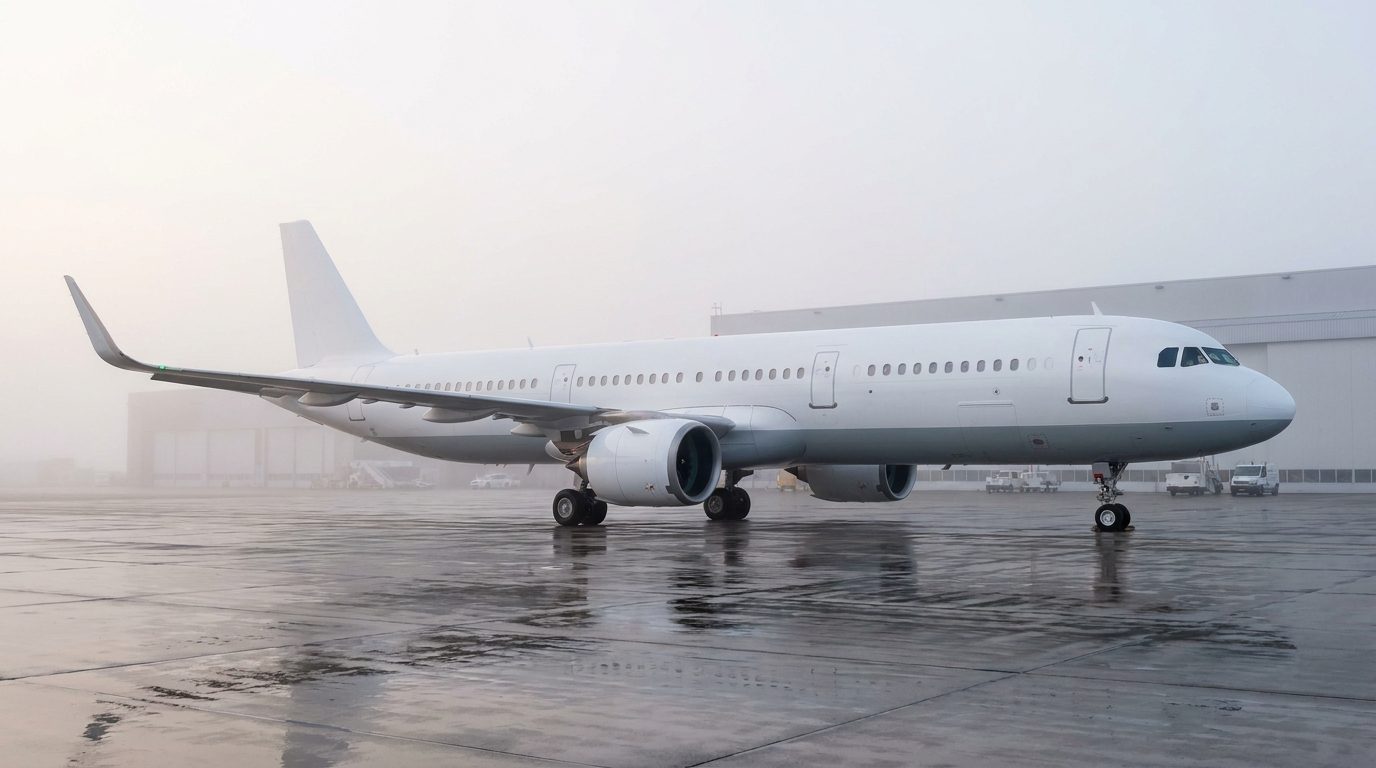
Airbus has confirmed a quality defect in corrosion protection on forward lower-fuselage stringers of certain Airbus A321neo-family aircraft, according to The Air Current, Reuters and European trade outlets including aero.de and Air Journal. The airframer says the issue is a quality problem, not an immediate safety-of-flight finding, and that affected jets may continue operating while corrective work is planned.
Inspectors spotted the nonconforming coating during production rework. Longitudinal stringers in the forward lower fuselage received inadequate surface protection from a tier-2 supplier that Airbus has not named publicly. The company says it has isolated the cause and developed a corrective process that does not require removing the stringers themselves from the airframe.
Source counts differ slightly by outlet but point to the same industrial scale. The Air Current reported more than 500 aircraft implicated. Reuters described about 500 A321neos in total—roughly 250 already flying and 250 still in production or the delivery pipeline across Europe, the United States and China. Airbus has not released a public registry of serial numbers or operator lists.
A Reuters source said the longer-range A321XLR is outside the affected population. For in-service neo jets, Airbus has not mandated an immediate grounding or universal heavy check; any timed retrofit campaign would need airworthiness authorities to impose deadlines on airlines. The sharper near-term risk sits on the factory floor, where rework can steal hours from already busy A320-family final-assembly lines in Europe, the U.S. and China.
Airbus was still describing an annual 2026 delivery target near 870 aircraft when the story broke on September 24–25, after 475 handovers through the end of August. Spokespeople did not immediately say how many months of output might soften if stringer repairs queue behind other bottlenecks such as cabin completions or engine supply.
The coating snag is the second supplier-quality flare-up on the A320 family in about a year. Late 2025 brought fuselage-panel thickness shortfalls tied to a Spanish program partner; Airbus later said that problem was fixed. The new case is framed as corrosion-protection nonconformance rather than cracks, fatigue findings or in-service structural failures that would force overnight groundings.
For lessors and airline technical teams, the practical checklist is familiar: confirm whether serial numbers in the delivery pipeline are flagged, ask Airbus for the inspection bulletin timeline, and model which undelivered positions might move right. Because the defect is described as inadequate corrosion protection rather than active corrosion, the near-term airworthiness argument rests on continued surveillance rather than overnight grounding.
Production geography matters. A321neo-family fuselage work spans multiple sites, and The Air Current’s sourcing placed unfinished jets in Europe, the United States and China. That spread means rework capacity—not just engineering authority—will decide how quickly the backlog clears without denting the 870-delivery narrative Airbus still publicly defended when asked. Until a formal airworthiness directive appears, operators of delivered A321neos can treat the story as a manufacturing watch item while Airbus clears unfinished airframes.
Sources: The Air Current (Sep 24, 2026); Reuters via Air Journal (Sep 25, 2026); aero.de (Sep 25, 2026).

Comments
Loading comments…