


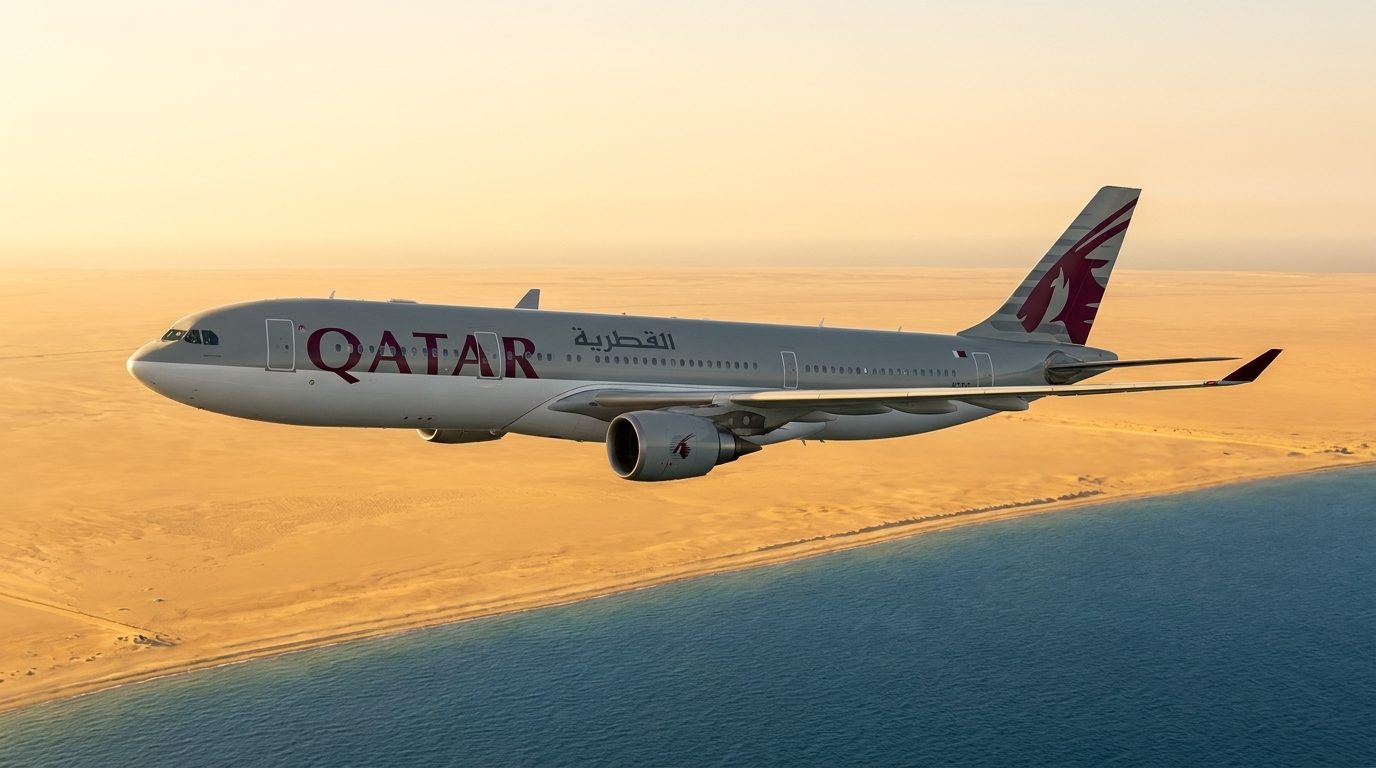
Qatar Airways has retired its remaining passenger Airbus A330 fleet, One Mile at a Time reported on September 25, 2026, citing Reuters. The type still represented about 7 percent of the airline’s capacity earlier this year, so the withdrawal removes a meaningful but already end-of-life slice of the twin-aisle roster as Gulf connecting demand softens.
Qatar’s A330s were long scheduled for exit and had been kept mainly because newer deliveries slipped. Over two decades the airline operated 45 A330s—29 A330-200s and 16 A330-300s—with first deliveries in 2002. Four additional A330s leased from Oman Air last year never entered Qatar passenger service despite the lease start.
A Qatar Airways spokesperson told Reuters the carrier regularly reviews its fleet and that retiring older jets while inducting newer, more efficient types is normal practice. Management also pointed to 138 new aircraft expected over the next five years as the replacement pipeline that makes keeping aging A330s unnecessary.
Demand across Gulf hubs has been softer during the Iran conflict, with connecting traffic hesitant to transit the region. Against that backdrop, pulling the last passenger A330s accelerates a retirement that was already economically overdue rather than freezing a growth type that still had years of structural life left.
With surplus pilots on hand, Qatar has offered some crews temporary opportunities at RwandAir, which has longstanding commercial ties to the Qatari carrier. The pilot secondment is a labor valve for excess training capacity, not a claim that A330 flying is moving wholesale onto the Rwandan register.
What replaces A330 capacity inside Qatar’s own network will be newer twin-aisles already on order, not a return to the older Airbus widebodies. The report leaves open how long Qatar’s small A380 fleet remains in passenger service, but that question is separate from the A330 retirement decision confirmed this week.
For passengers, the visible change is simpler fleet commonality on routes that still carried A330s earlier in 2026. Spotters and fleet trackers should treat the passenger A330 chapter as closed unless Qatar reverses course—an outcome the airline’s own statement does not suggest given the delivery pipeline cited to Reuters.
Factually, the September story rests on Reuters’ retirement confirmation, the 7 percent capacity share, the historical 45-aircraft A330 tally, the unused Oman Air leases, the 138-aircraft delivery outlook, and the RwandAir pilot option. Those points define the article; wider regional conflict commentary is context around demand, not the fleet event itself.
Fleet trackers had expected Qatar’s passenger A330s to leave once replacement widebodies arrived in volume; the Reuters confirmation simply closes that chapter during a soft demand year. Routes that still showed A330 metal earlier in 2026 should now settle onto newer twin-aisles as the 138-aircraft delivery stream continues through the next five years.
Industry readers should separate the fleet retirement from the war-context demand soft patch: the A330s were already near exit, and Reuters’ confirmation simply marks the passenger type as gone while newer aircraft continue to arrive.


Comments
Loading comments…