


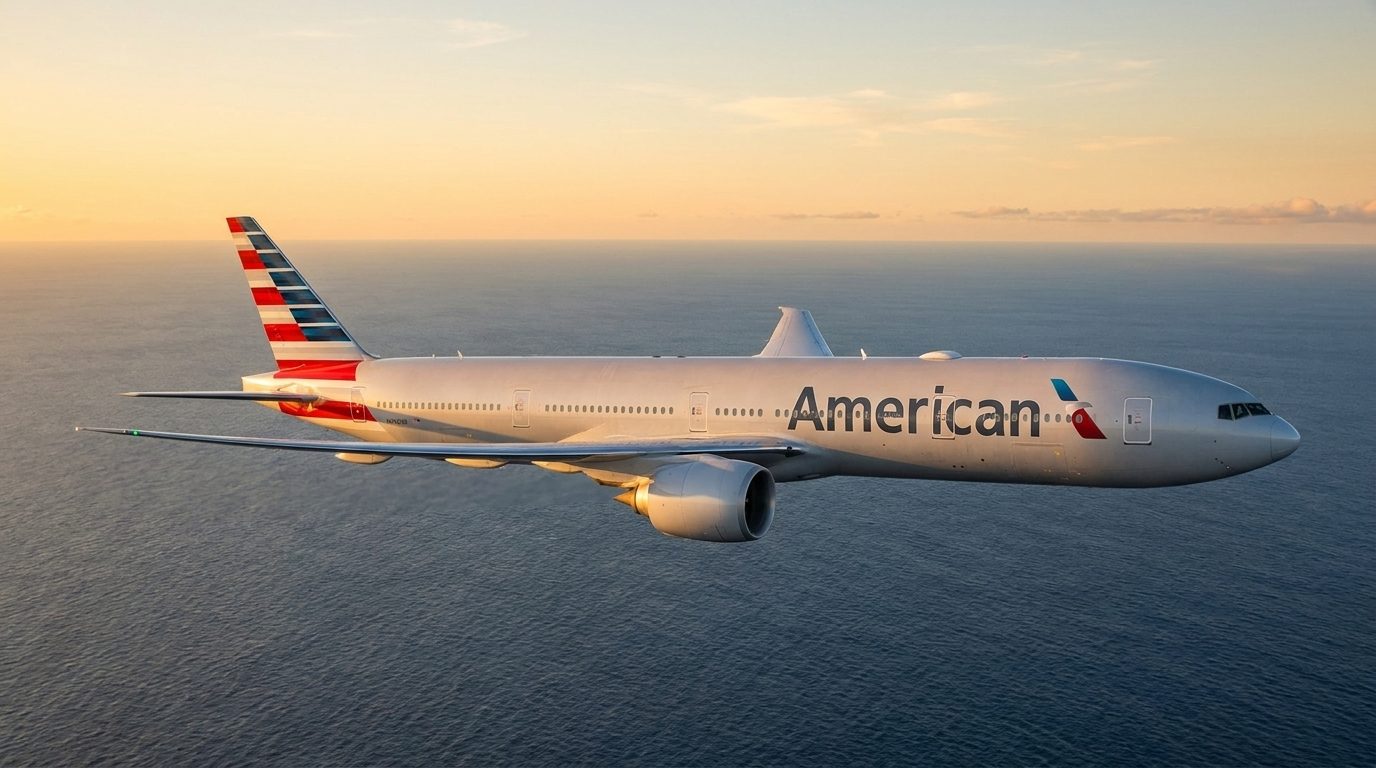
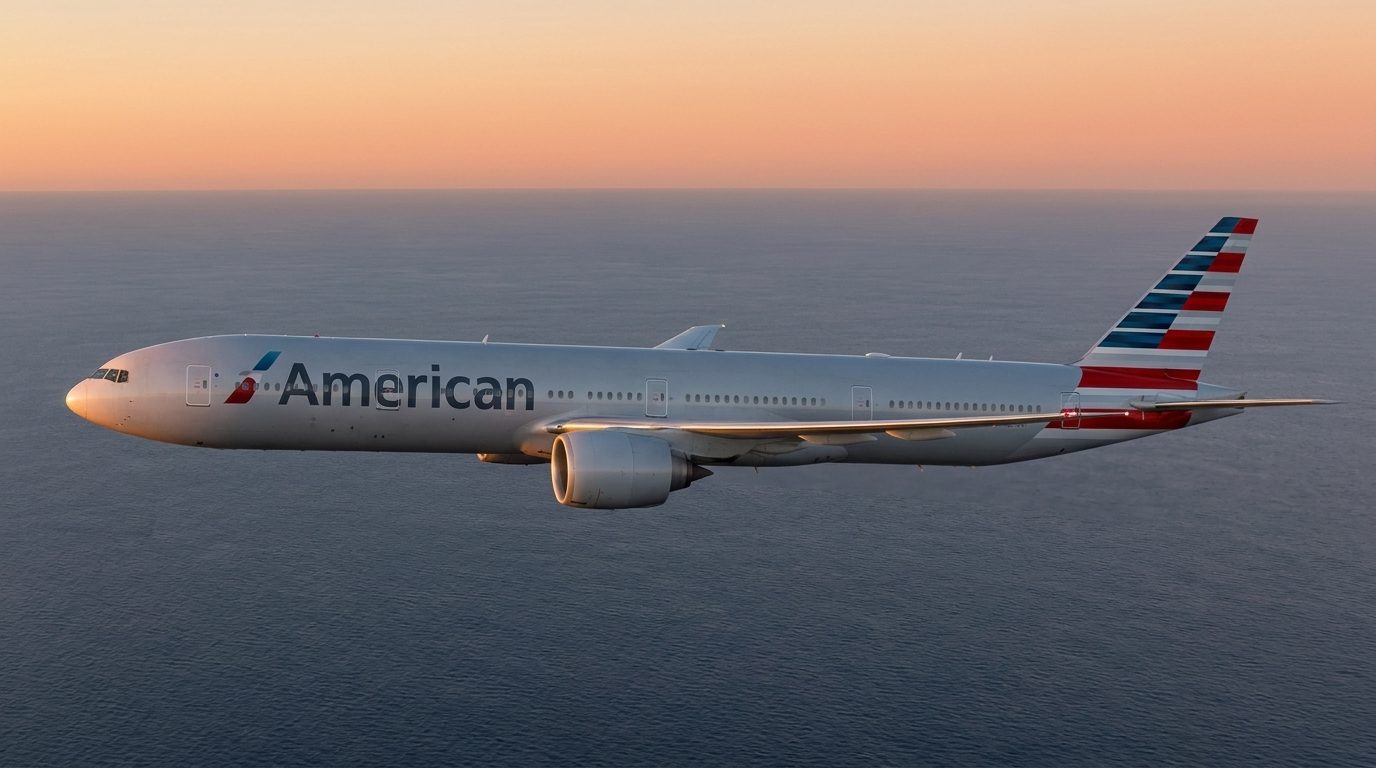
American Airlines has put its first Project Olympus Boeing 777-300ER into passenger service, a cabin retrofit that adds twenty-six seats overall, expands Flagship Business, and permanently removes international Flagship First from the type. The first converted airframe, N718AN with American's internal tail number 7LB, is already flying New York and Dallas–Fort Worth sectors to London, while N721AN (7LE) has entered the shop. American aims to finish all twenty of its 777-300ERs by the end of 2027.
Simple Flying reported that the previous 777-300ER layout seated 304 passengers: eight Flagship First seats, fifty-two Flagship Business seats, twenty-eight premium-economy seats, and 216 economy seats including Main Cabin Extra. The Olympus layout lifts the total to 330 seats. Flagship Business grows to seventy Elevate Ascent reverse-herringbone suites with sliding doors—the first installation of that Collins-family platform on a 777-300ER—while eight Flagship Preferred front-row suites add larger screens and a counter. Premium economy rises to forty-four seats, Main Cabin Extra edges up to thirty within the unchanged 216-seat economy cabin, and economy seats switch to Collins Aerospace Aspire units with larger seatback screens.
Eliminating the eight-seat Flagship First cabin and rearranging galleys and lavatories freed the space for the eighteen extra business suites and the twenty-six-seat net gain. Lavatory count falls from twelve to nine. Seat pitch in the new Flagship Business suites is about forty-two inches, roughly an inch tighter than the previous business product, and premium-economy and Main Cabin Extra pitch each lose about an inch. American says it will stop selling Flagship First as a separate cabin in November 2026 and will market remaining first-class seats as Flagship Business until each airframe is converted.
The 777-300ER had been the last place American sold a true international first-class product alongside a small transcontinental Airbus A321 subfleet. Project Olympus treats Flagship Preferred and the denser Flagship Business cabin as the premium tip of the spear instead. American's newest Boeing 787-9s already introduced the same interior family; the 777-300ER fleet is the first to receive it as a retrofit. After the twenty Triple Sevens are done, American plans to move the program to its forty-seven 777-200ERs and later to its thirty-seven 787-8s so older Safran business seats leave the long-haul fleet.
For London and other dense transatlantic markets, the Olympus 777-300ER keeps a named widebody type in the schedule while shifting more of each departure into saleable premium inventory. Seventy business suites plus forty-four premium-economy seats put more than one hundred passengers ahead of the main cabin on every flight, which matches the yield mix American has been pushing on the newest Dreamliners. Economy capacity stays flat at 216 seats, so the retrofit is not a classic densification exercise that simply packs more Main Cabin rows into the same tube.
Operationally, finishing twenty airframes by the end of next year means a steady flow of heavy cabin visits rather than a single big bang. N718AN's early New York and Dallas–London flying gives American a live product to sell and photograph while the rest of the subfleet cycles through. Until Flagship First disappears from the last unconverted 777-300ER, customers will still see mixed cabins on the same city pairs depending on which tail shows up.
What is confirmed today is narrower and more concrete: one Olympus 777-300ER is already in service, a second is in work, the cabin math is 304 to 330 seats with Flagship First deleted, and American has published an end-2027 target for the full twenty-aircraft subfleet. Those are the facts passengers and competitors can plan against while the wider widebody-order debate continues.
Comments
Loading comments…