


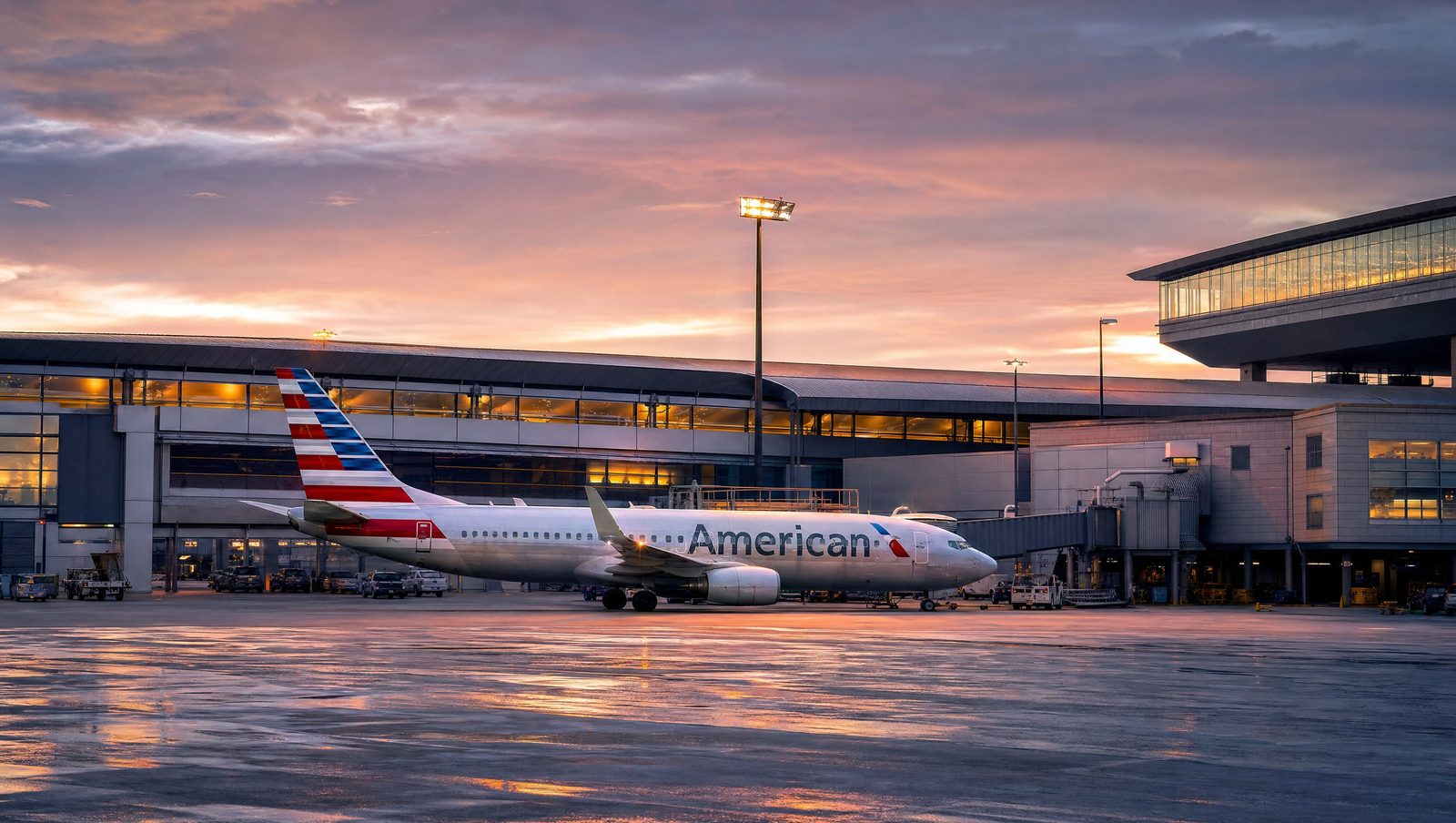
American Airlines will pay $200,000 to settle a disability discrimination lawsuit brought by the U.S. Equal Employment Opportunity Commission, the federal agency announced on August 28, 2026. The case concerned an employee at the carrier's Fort Worth, Texas, location who developed cortical blindness and was later terminated.
According to the EEOC's lawsuit, the employee asked to use screen reader software that converts on-screen text into synthesized speech, which would have allowed her to keep using the company's computer systems to perform her job duties. As an alternative, she requested a transfer to another position. The agency alleged that American failed to take the legally required steps to enable her to use the screen reader software or to help her find another reasonable accommodation, instead keeping her on unpaid, involuntary leave for almost four years before firing her after failing to facilitate her return to work.
The EEOC filed the case, U.S. EEOC v. American Airlines, Inc., Case No. 4:25-cv-01056-P, in the U.S. District Court for the Northern District of Texas, Fort Worth Division, after first attempting to reach a pre-litigation settlement through its administrative conciliation process. The conduct alleged in the complaint falls under the Americans with Disabilities Act, which requires employers to provide reasonable accommodations for known disabilities absent an undue hardship, and prohibits terminations based on disability, including terminations caused by an employer's failure to accommodate.
What the consent decree requires
The monetary relief is only part of the resolution. Under a two-year consent decree, American Airlines committed to integrating the Web Content Accessibility Guidelines into the development of new reservation software the company is projecting to launch in 2027. Once that new reservation web application is implemented, the airline is required to have a trained specialist conduct an accessibility audit of the software and to dedicate up to 120 hours of labor to remedying any remaining barriers for blind and visually impaired employee-users.
American will also train the human resources employees whose duties include responding to reasonable accommodation requests, post an employee notice about disability discrimination, and provide reports to the EEOC about relevant accommodation requests.
Why the software commitment matters
EEOC Dallas District Director Travis Nicholson said American has agreed to incorporate critical web accessibility standards into the development of new software, helping ensure its technology is accessible to employees with disabilities, and noted that building accessibility into new systems from the start can help prevent similar barriers in the future.
Acting EEOC Dallas Regional Attorney Ronald L. Phillips said blind and otherwise visually impaired workers deserve every opportunity to put their skills and knowledge to work, and pointed to the range of technical resources available to employers searching for reasonable accommodations, including government rehabilitation agencies, non-profit organizations, technology consultants and the Job Accommodation Network.
The wider industry picture
Airline back-office and reservations work runs on layers of proprietary software, much of it built long before modern accessibility standards existed. That legacy stack is precisely why accommodation requests in the sector often turn into multi-year disputes: retrofitting a screen reader onto a decades-old terminal interface is far harder than designing an accessible application from the outset. The consent decree's focus on a system still in development, rather than on the one that caused the dispute, reflects that reality.
The lawsuit was initiated by the EEOC's Dallas District Office, which has jurisdiction over a substantial part of Texas and parts of southern New Mexico.
Sources: EEOC, Simple Flying. Featured image: AI-generated by AviationShop. By Elena Vargas.











Comments
Loading comments…