


Few airliners have quietly done as much work, for as long, as the Boeing 767. It never had the glamour of the 747 or the headline range of the 777, yet for more than four decades it has hauled passengers across oceans, carried a huge share of the world's overnight parcels, and even refuelled fighter jets. As Boeing's first wide-body twinjet, the 767 introduced ideas that shaped every modern airliner that followed — and it is still rolling off the line today. Here is a pilot-and-avgeek deep dive into why the 767 earned its reputation as the reliable wide-body workhorse.
The twinjet that rewrote the rulebook
Boeing launched the 767 as part of its 7X7 program on July 14, 1978. The prototype first flew on September 26, 1981, earned certification on July 30, 1982, and entered service with United Airlines on September 8, 1982. From the outset it was a different kind of Boeing: a semi-wide-body with a seven-abreast cabin cross-section sized around smaller LD2 cargo containers, splitting the difference between narrow-body economics and wide-body comfort.
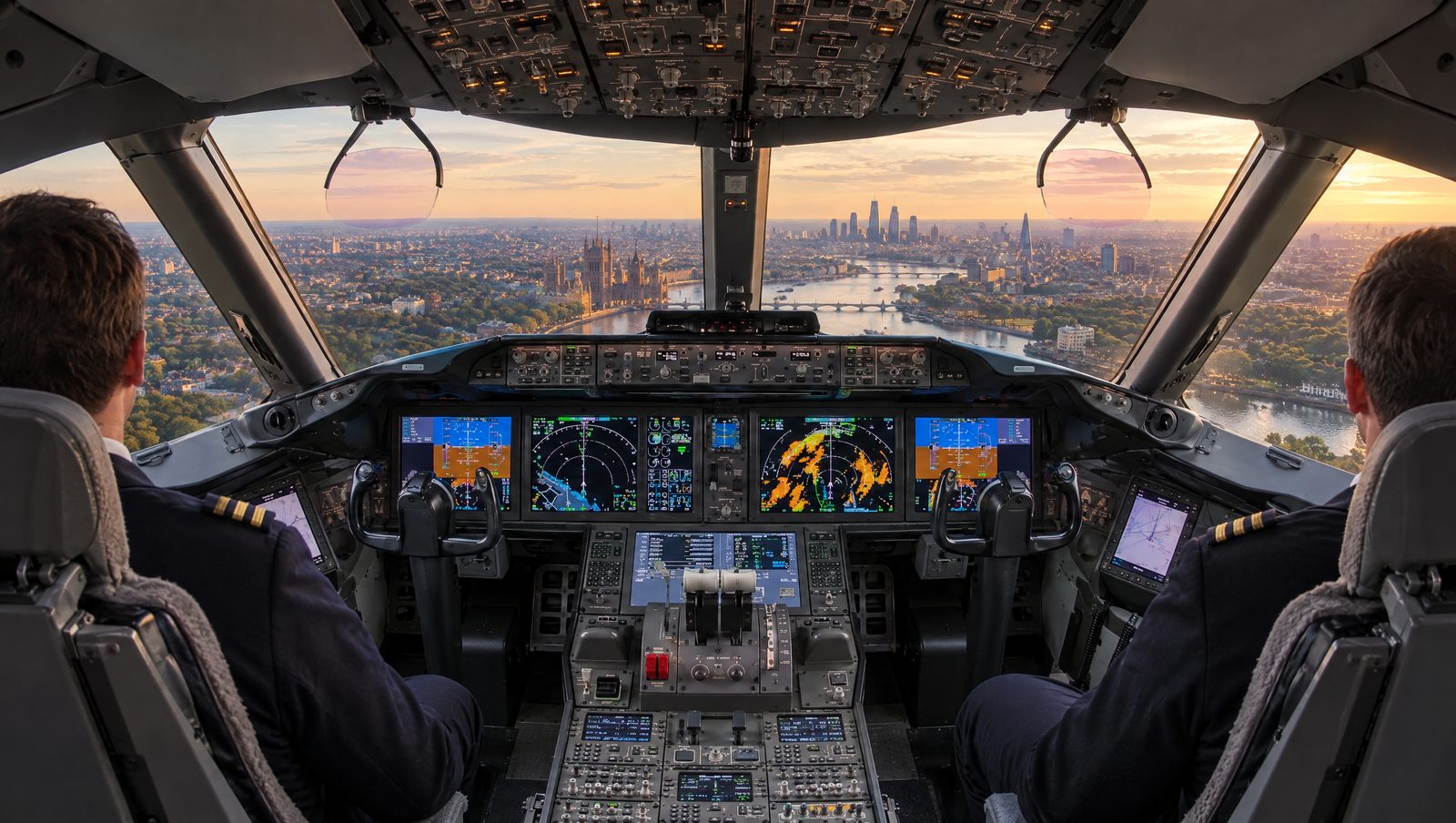
Its biggest legacy, though, is in the cockpit. The 767 was the first Boeing wide-body designed around a two-crew digital glass cockpit, retiring the flight engineer's station that older wide-bodies still carried. That two-pilot layout became the template for the rest of the industry. Paired with fuel-efficient high-bypass turbofans, the design was built for long, thin routes at a time when a twin-engine jet crossing an ocean was still a novel idea.
That novelty didn't last. A loosening of ETOPS (Extended-range Twin-engine Operational Performance Standards) rules starting in 1985 let the 767 stretch out over the Atlantic on two engines, and it quickly became a transatlantic favourite. Sales accelerated through the late 1980s, with 1989 alone bringing 132 firm orders. The 767, more than any single aircraft, proved that twins could do the long-haul job the industry had reserved for three- and four-engine jets.
The 767 family at a glance
The 767 has been built in three fuselage lengths — the -200, the -300, and the -400ER — with extended-range and freighter derivatives layered on top. Understanding the family is the key to understanding why the type stayed relevant for so long.
The original 767-200 measures 159 ft (48.5 m) and typically seats about 216 passengers with a range near 3,900 nautical miles (7,200 km). The extended-range 767-200ER pushed that to roughly 6,590 nmi (12,200 km), opening up genuine long-haul work. The stretched 767-300 grew to 180 ft (54.9 m) and about 269 passengers, while the 767-300ER — the definitive version — carries around 218 passengers in typical two-class seating out to 5,980 nmi (11,070 km).
That -300ER became the runaway success of the program. It entered service with American Airlines in 1988 and went on to outsell every other 767 variant combined, with 583 delivered. The 767-400ER, the largest passenger model, was Boeing's first wide-body to result from two fuselage stretches. It introduced the 777-style Boeing Signature Interior in 2000, but because its fuel capacity wasn't increased it actually has a shorter range — about 5,625 nmi (10,418 km) — and it sold in tiny numbers, with only around 37 built for two customers. Boeing dropped both the -400ER and the -200ER from its price list in 2014.
Specifications that matter
Numbers tell the story of why operators kept coming back. Here is how the core passenger variants compare:
| Variant | Length | Typical seating | Range |
|---|---|---|---|
| 767-200 | 159 ft (48.5 m) | ~216 | ~3,900 nmi (7,200 km) |
| 767-200ER | 159 ft (48.5 m) | ~181 | ~6,590 nmi (12,200 km) |
| 767-300 | 180 ft (54.9 m) | ~269 | ~3,900 nmi (7,200 km) |
| 767-300ER | 180 ft (54.9 m) | ~218 | ~5,980 nmi (11,070 km) |
| 767-400ER | 201 ft (61.4 m) | ~245 | ~5,625 nmi (10,418 km) |
The 767-300ER's long legs came from extra fuel tankage and a higher maximum takeoff weight of 407,000 lb (185,000 kg), later raised to 412,000 lb (187,000 kg) by 1993. Cruise sits at around Mach 0.80, comfortably in the same block as its wide-body peers. For airlines, the combination of respectable capacity, genuine ocean-crossing range and two-engine operating economics was hard to beat — which is exactly why the type squared off so directly against the Airbus A300, A310 and later the A330-200.
Engines and systems
The 767 has always been engine-flexible, and that helped it fit a wide range of airline fleets. Over its life it has been offered with General Electric CF6, Rolls-Royce RB211 and Pratt & Whitney JT9D turbofans, with the JT9D eventually giving way to the more modern Pratt & Whitney PW4000. That choice let carriers standardise around whichever engine family they already supported.
Underneath the glass cockpit, the 767 shares a great deal of its flight-deck philosophy and even its type-rating commonality logic with the larger 757, which was developed alongside it. Pilots qualified on one could transition to the other with minimal additional training — a genuinely clever piece of fleet planning that made the 757/767 pair especially attractive to airlines running mixed long- and short-haul networks.
Flying the 767 — a pilot's perspective
Ask crews who have flown it and the 767 tends to earn the same word again and again: honest. It is a conventional, cable-and-hydraulic Boeing with a yoke, real feedback, and predictable manners. There is no fly-by-wire envelope protection standing between the pilot and the airplane, which many veteran aviators regard as a feature rather than a limitation. It rewards hand-flying and behaves the way a big Boeing is expected to behave.
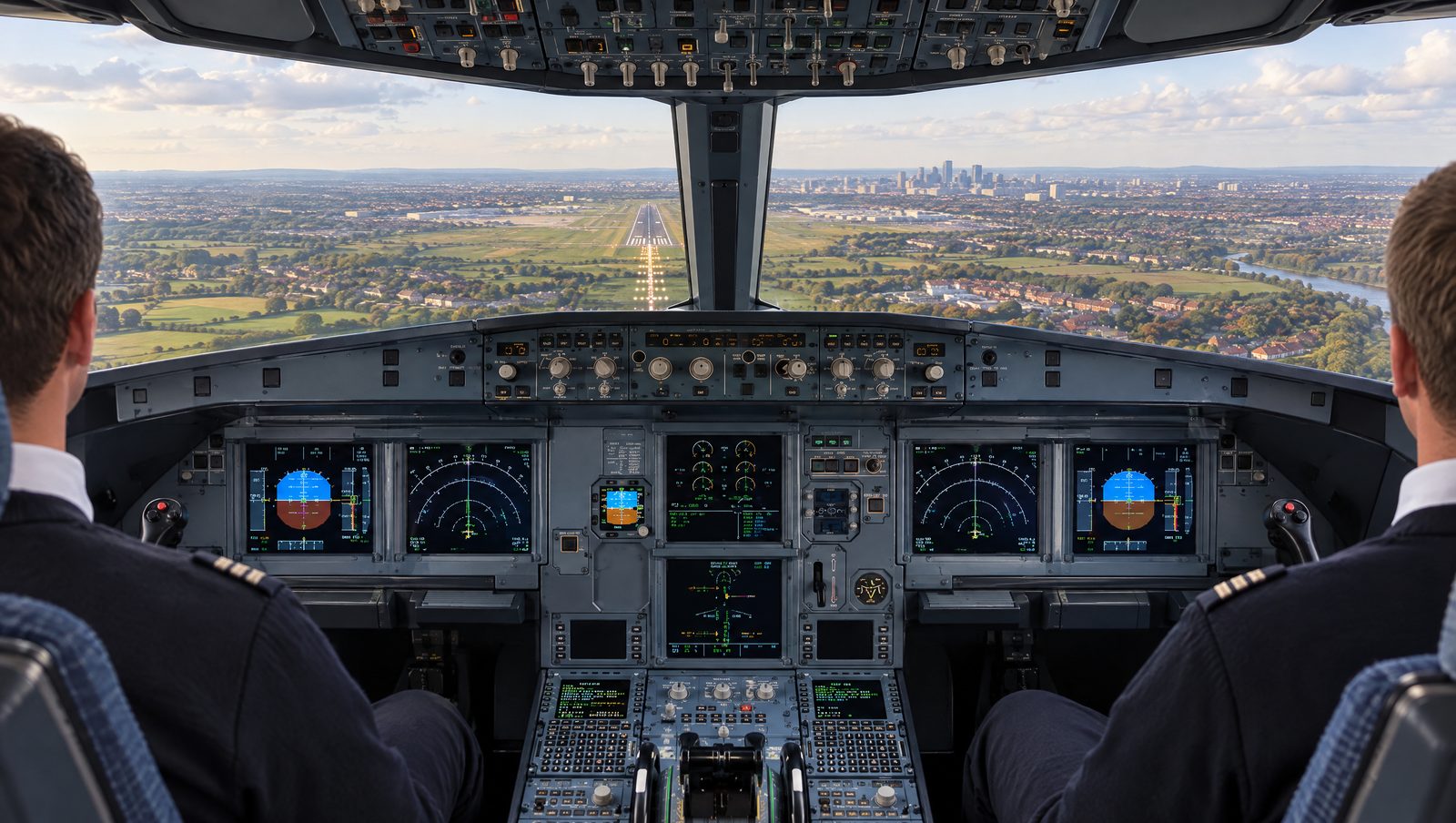
The two-crew glass cockpit was cutting-edge in 1982 and remains perfectly workable today, with cathode-ray-tube (and later upgraded) displays presenting flight and engine data cleanly. The wide, comfortable flight deck, good visibility and stable approach characteristics make it a pleasant machine on long sectors. Its seven-abreast cabin, meanwhile, gave it a passenger-friendly reputation — no one is ever more than one seat from an aisle in the most common layouts. If you are the kind of enthusiast who appreciates this era of airliner design, our Boeing 767 gifts collection is built for exactly that affection.
From passengers to parcels — the freighter second life
The 767's most remarkable trick is its second career. As newer twins nudged it off premium passenger routes, the 767 found an enormous new role in air cargo. The 767-300F, the production freighter based on the -300ER, entered service with UPS Airlines in 1995, and passenger 767s have been converted to freighters in large numbers ever since.
Today the type is a backbone of express logistics. FedEx and UPS operate large 767 fleets, and FedEx — the biggest cargo operator of the type — even placed a firm order for 50 more freighters in 2015 for delivery through 2023. Its combination of main-deck volume, transcontinental range and modest trip costs makes it close to ideal for overnight parcel networks. Every time a package crosses the country overnight, there is a fair chance a 767 carried part of the journey.
The military took notice too. The 767 airframe underpins the Boeing E-767 airborne early-warning platform and, most importantly, the KC-46 Pegasus aerial-refuelling tanker, built on the dedicated 767-2C airframe. The KC-46 program alone accounts for 189 orders, of which 112 have been delivered, keeping the production line busy well beyond its commercial base. For the broader community of people who love this stuff, our aviation enthusiast gifts range celebrates icons like the 767 across their many roles.
Where the 767 stands today
By the numbers, the 767 has been a durable commercial success: cumulative orders sit at roughly 1,451 with about 1,357 aircraft delivered. As recently as 2018, more than 740 were still in airline service, with Delta Air Lines, FedEx, UPS, United Airlines, Japan Airlines and All Nippon Airways among the largest operators. That is a remarkable fleet for a design that first flew in 1981.
The commercial chapter is, however, drawing toward a close. Boeing has signalled that production of the passenger and freighter 767 is expected to cease by the end of 2027, driven by more stringent emissions and noise limits coming into force in 2028. The KC-46 tanker line will carry the airframe onward for the military, but the era of new civilian 767s is nearly over. For airlines, converted freighters and the enormous installed base mean the type will keep flying — and keep hauling cargo — for many years yet.
Why the 767 still matters
The Boeing 767 is a masterclass in doing the fundamentals well. It pioneered the two-pilot wide-body cockpit, helped make long-haul twins routine through the ETOPS era, and then reinvented itself as a cargo and tanker workhorse when its passenger days waned. It rarely grabbed headlines, but it quietly became one of the most useful aircraft Boeing ever built — versatile, dependable and beloved by the crews who fly it. That is precisely the definition of a workhorse, and it is why the 767 remains a firm favourite among pilots and aviation enthusiasts. If you count yourself among them, browse our gifts for pilots for something that honours the aircraft and the people who fly it.
Comments
Loading comments…