


A Delta Air Lines Airbus A330-300 bound for Rome turned back toward North America and landed at St. John's International Airport in Newfoundland, Canada, after a mechanical problem developed roughly four hours into the transatlantic crossing. Delta flight 182 was operating between New York John F. Kennedy International Airport and Rome Fiumicino Airport when the crew elected to divert.
According to Simple Flying, emergency crews met the widebody on arrival in Newfoundland as a precaution, which is standard practice when a flight crew declares a mechanical emergency ahead of landing. There were 280 people on board. Delta subsequently sent a replacement aircraft to St. John's, which ferried the passengers back to New York rather than continuing to Italy.
Why St. John's
St. John's is one of a small handful of North Atlantic airports that transatlantic crews plan around. Along with Gander, Goose Bay, Keflavik and Shannon, it sits close to the great-circle tracks that connect the US East Coast with Europe, and it has a runway long enough and an apron large enough to accept a widebody at short notice. For a crew several hours east of New York, turning back to a nearby Canadian airport is frequently faster and lower-risk than pressing on across open ocean toward Europe.
That geography is why these diversions cluster in the same places. A flight that develops a technical issue over the western Atlantic has very few sensible options, and Newfoundland is usually the closest one with the infrastructure to handle a full widebody load of passengers.
The aircraft
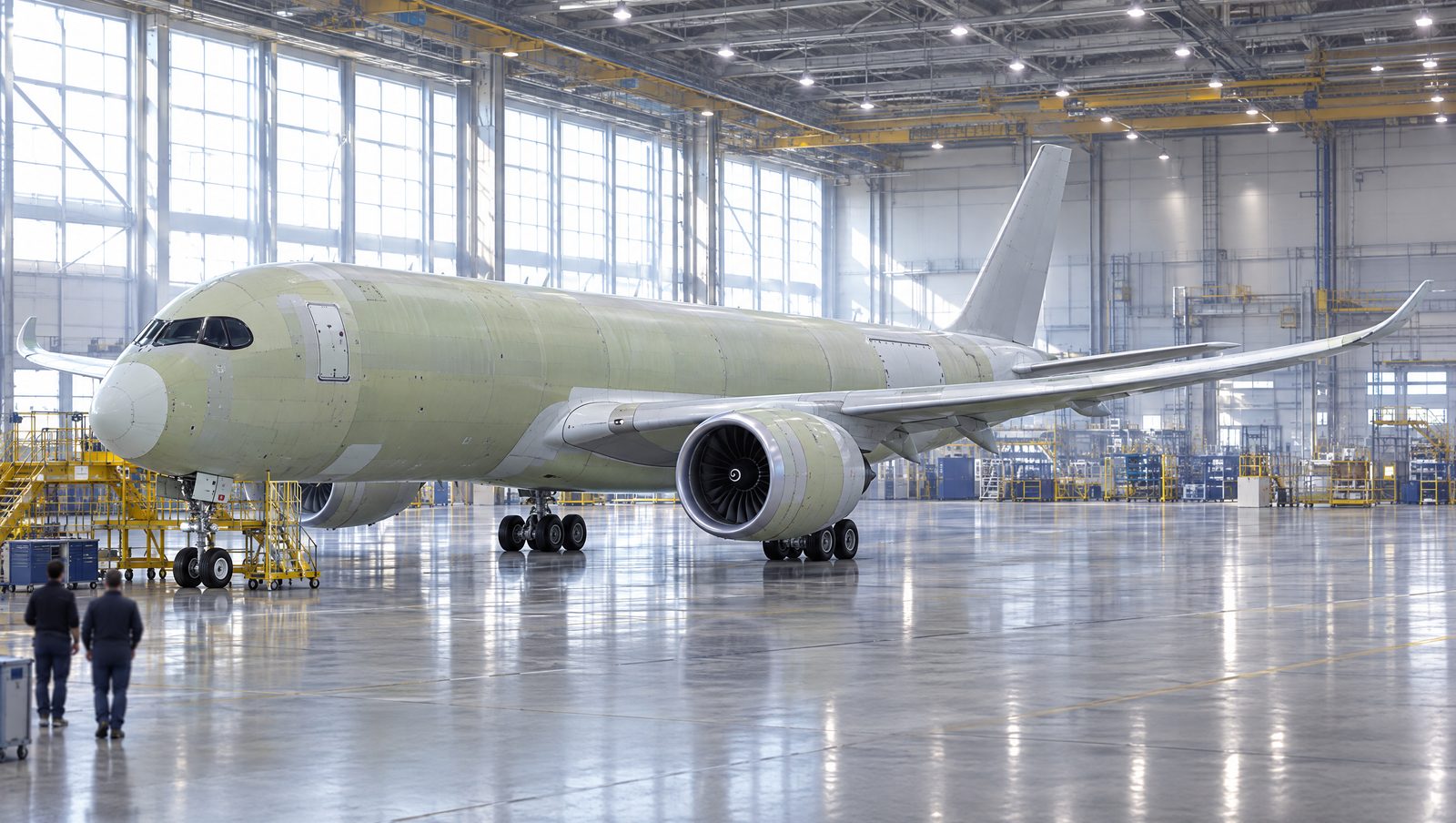
The Airbus A330-300 is a twin-engine, twin-aisle widebody and one of the workhorses of Delta's transatlantic operation. The type seats well over 250 passengers in Delta's long-haul layout and is a regular sight on the carrier's European network alongside the newer A330-900neo and the A350 family. A load of 280 people is entirely consistent with a full A330-300 on a summer-season Europe rotation.
Delta has not detailed the specific nature of the technical problem, and no cause has been published. Mechanical diversions of this kind cover a wide range of scenarios, from a system indication that the crew cannot reset in flight to a component that would prevent the aircraft from being dispatched onward under the airline's minimum equipment list. Sending a second aircraft to collect the passengers, rather than continuing to Rome, generally indicates the original jet needed engineering attention before it could fly again.
Passenger impact
For travellers, a mid-Atlantic diversion is disruptive in a way that a gate delay is not. Newfoundland has no Delta operation to speak of, so recovery depends entirely on the airline positioning a replacement aircraft and crew, and on how quickly that can be arranged within crew duty limits. In this case the passengers were flown back to New York, which means the Rome itinerary had to be rebuilt from scratch on later flights.
The event ended without injury and with the aircraft on the ground safely, which is the outcome the diversion decision is designed to produce. Crews are trained to treat a technical problem over water conservatively, and choosing a nearby suitable airport over a four-hour continuation to Europe is a textbook application of that thinking.
Sources: Simple Flying. Featured image: AI-generated by AviationShop. By Elena Vargas.






Comments
Loading comments…