


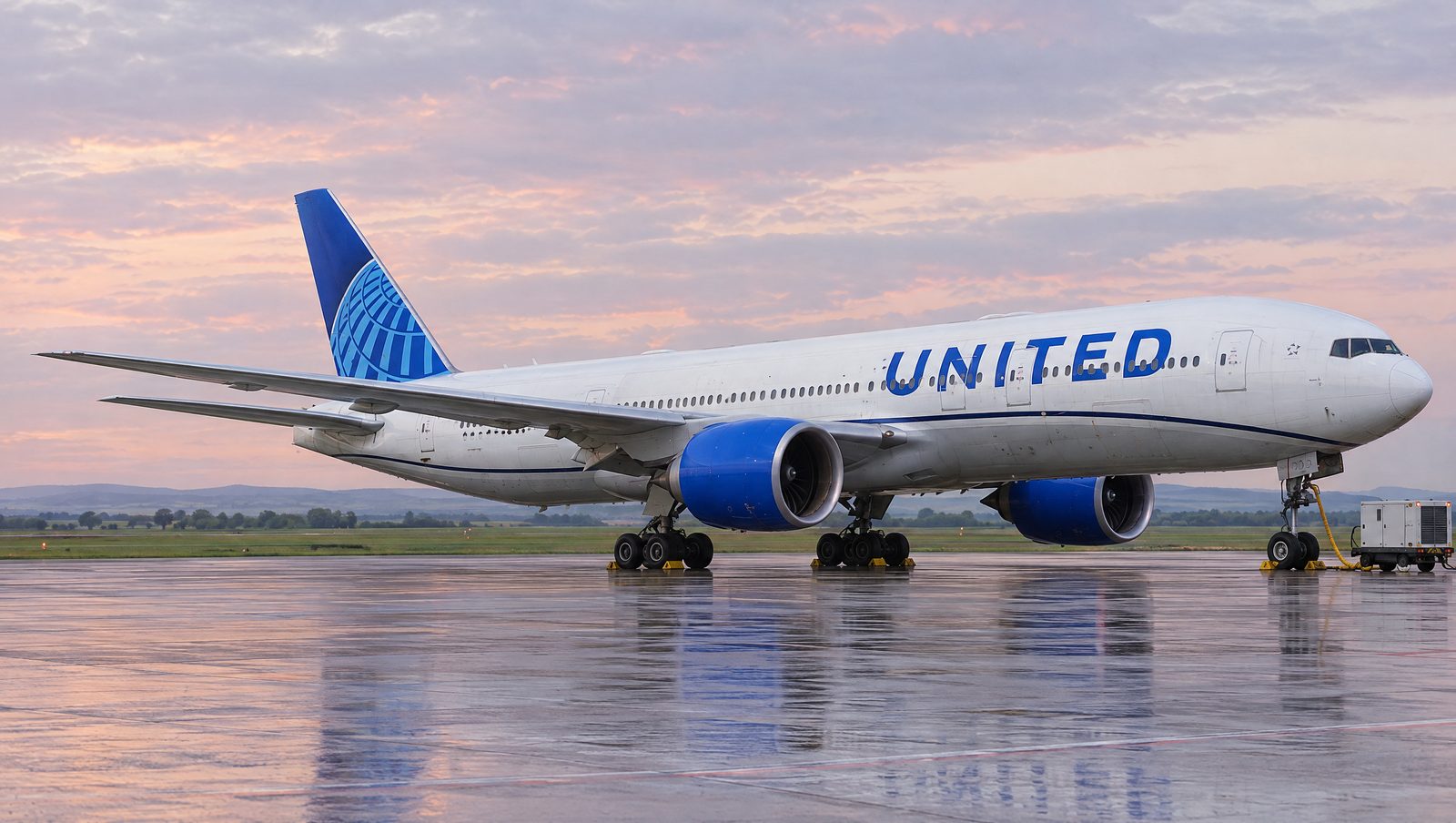
A United Airlines Boeing 777-200ER flying from Newark to Milan diverted to Dublin early on Saturday, October 10, after the main cockpit windscreen on the first officer's side cracked while the aircraft was cruising at around 37,000 feet over the North Atlantic.
Flight UA19 left Newark Liberty International Airport (EWR) at around 5:25 pm local time on Friday, October 9, on what should have been a routine overnight crossing of about seven hours to Milan Malpensa (MXP). According to Paddle Your Own Kanoo, which first reported the incident, the jet was tracking along the North Atlantic flight path and nearing Ireland when it began a descent that one passenger described as "steep".
Diversion to Dublin
Passengers were told the aircraft was diverting to Dublin, but most on board did not know why until after landing. Once on the ground, they learned that the main cockpit windscreen on the first officer's side had cracked at cruising altitude. The aircraft landed safely in Dublin.
The aircraft involved was a 29-year-old Boeing 777-200ER, registered N782UA and powered by two Pratt & Whitney PW4000 engines. Up to 276 passengers could have been on board, according to the report. At the time of the report, the aircraft remained on the ground in Dublin. United did not immediately respond to a request for comment, and the airline has not published details about how affected passengers continued their journey to Milan.
Why a cracked windscreen leads to a descent
Cockpit windscreen cracks are uncommon, but they are not unheard of, and airliners are designed with them in mind. The windscreen of a Boeing 777 is built from multiple layers, so the failure of one layer does not normally compromise the integrity of the whole panel. It is very rare for a windscreen to break to the point where the cabin depressurises.
Even so, a cracked windscreen is never treated as a routine event. Once a layer fails, pilots will generally handle the situation as a potentially serious problem and look to land as soon as it is safe to do so. Descending to a lower altitude reduces the pressure difference across the damaged panel, which helps explain the descent passengers noticed. In the case of UA19, the aircraft was already close to Ireland, which gave the crew a large, well-equipped diversion airport within easy reach. The situation could have been very different if the crack had appeared earlier, in the middle of the ocean crossing.
Past windscreen failures
Two well-known cases show why crews take these events seriously. In 2018, the first officer's windscreen on a Sichuan Airlines Airbus A319 burst completely at high altitude, injuring the first officer. The aircraft landed safely, and China's civil aviation authority later blamed a faulty seal.
In 1990, a British Airways captain was partially sucked out of the cockpit after an incorrectly installed windscreen panel separated from the aircraft in flight. Crew members held on to Captain Timothy Lancaster until the aircraft landed. He survived with fractures, including to his right arm, as well as frostbite. Both events are far more extreme than a cracked outer or inner layer, but they are part of the reason windscreen problems trigger immediate diversions.
United's 777-200ER fleet
The 777-200ER remains a workhorse of United's long-haul network, flying many of its transatlantic routes from Newark, including services to European destinations such as Milan. Many of the airline's PW4000-powered 777-200ERs have been in service since the late 1990s, and the type is gradually being joined by newer widebodies, including Boeing 787s, in United's fleet.
No investigation findings have been published, and it is not yet known what caused the windscreen on N782UA to crack. Incidents of this kind are typically reviewed by the airline and the manufacturer, and the damaged panel will need to be replaced before the aircraft returns to service.
Comments
Loading comments…