


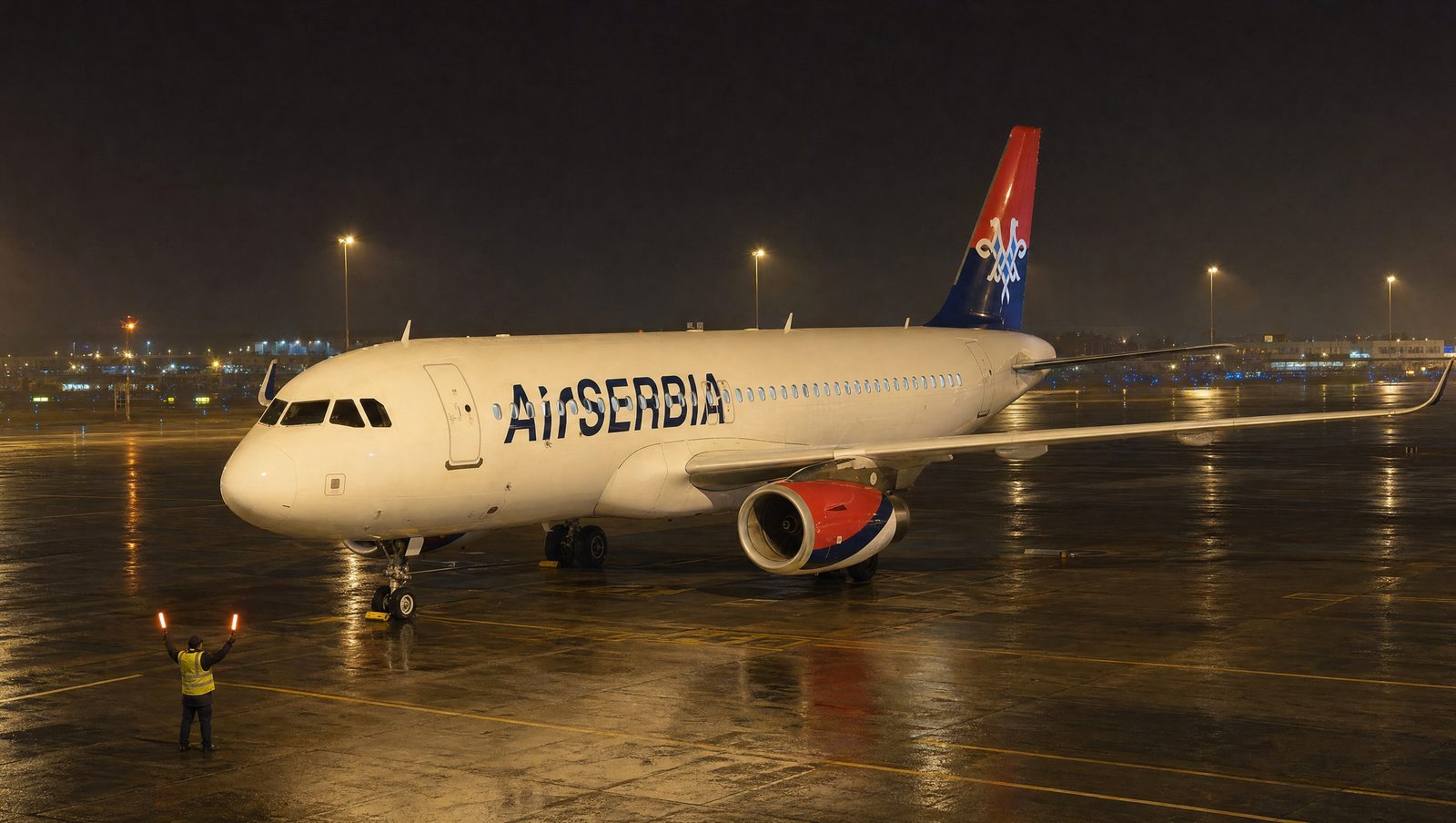
An Air Serbia Airbus A320 was taken out of service for a technical inspection at Paris Charles de Gaulle after the wingtip of a taxiing easyJet jet clipped it on the apron on the evening of Friday, 2 October 2026. Nobody was hurt.
According to Air Serbia's account, reported by EX-YU Aviation News, Air Journal and MiGFlug, the A320, registered YU-APS, had just arrived from Belgrade and was standing still on the apron, waiting for instructions from air traffic control, when the sharklet of an easyJet Airbus that was manoeuvring nearby struck its right wingtip.
Two hours on board
Air Serbia said no injuries were reported and that all of its passengers and crew were safe. A passenger quoted by EX-YU Aviation News said the contact was not felt in the cabin. Even so, travellers stayed on board for almost two hours while the situation was assessed, and the airport's fire service and police attended the scene, according to the reports.
The aircraft was then withdrawn from operation for what the airline called a detailed technical inspection. Air Serbia said it was cooperating with the airport authorities and the other parties involved to establish exactly how the event unfolded. No official finding on responsibility, or on the factors that led to the contact, has been published.
The disruption to the Serbian flag carrier appears to have been short. Flight-tracking data cited by Air Journal shows YU-APS flew from Paris back to Belgrade on 3 October after the checks were completed.
Fence versus sharklet
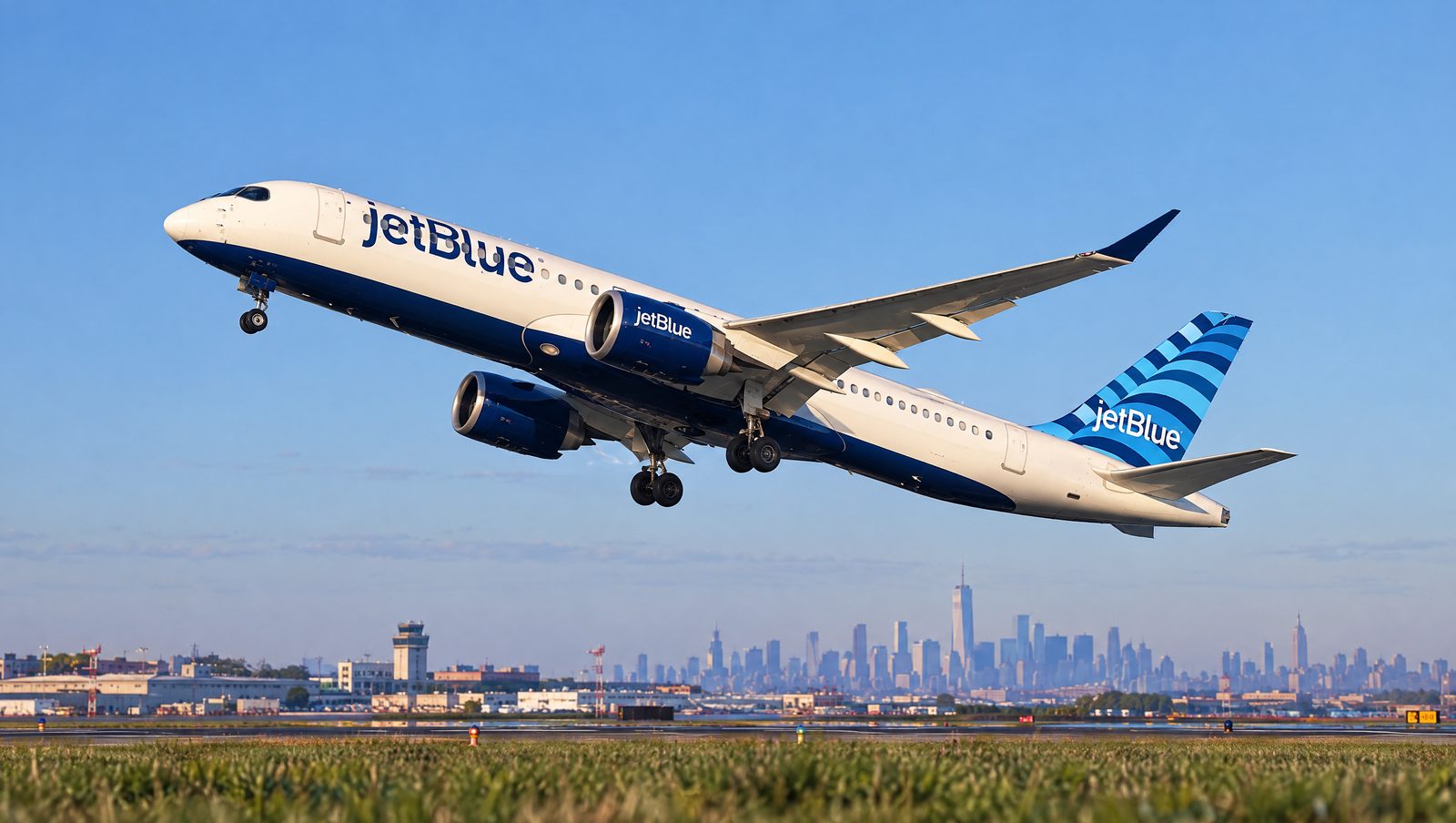
The two jets are close relatives with different wingtips. YU-APS is a classic A320ceo, roughly 15 years old, that carries the small arrowhead-shaped wingtip fences of the original A320 design, MiGFlug noted. Many easyJet A320-family aircraft, including all of its A320neos, are fitted with sharklets, the tall blended winglets that rise about 2.4 metres above the wing and add span.
That extra structure sits at the very edge of the aircraft, the part pilots cannot see from the flight deck. On a crowded apron, a taxiing crew relies on painted centrelines, guidance from controllers and marshallers, and the expectation that nothing is parked inside its clearance. When those margins are misjudged, the wingtips are usually the first parts to touch.
Investigators are expected to look at where each aircraft was positioned, which instructions both crews had received and whether the easyJet jet was following its assigned taxi route. Neither airline had said more about the incident by the weekend, MiGFlug reported, and the registration of the easyJet aircraft has not been confirmed in the reports.
Low speed, real cost
Contact between aircraft on aprons and taxiways is normally a low-energy event, very different from a collision in flight or a runway excursion. It is still treated seriously. Grounding an aircraft for even a localised wingtip check means an inspection, maintenance planning and sometimes a repair, along with possible delays or aircraft swaps for the airline that loses the jet.
At Paris-CDG, one of Europe's busiest airports, ground movements depend on constant coordination between crews, controllers, handling agents and marshallers. As Air Journal pointed out, these walking-pace manoeuvres, mostly invisible to passengers, are one of the most demanding phases of the operation.
For Air Serbia's evening passengers from Belgrade, the episode meant a long wait at the end of a short flight. For the industry, it is another reminder that a few metres of wingtip clearance on the ramp matter as much as any procedure in the air. Aviation Shop News will update this story if investigators or either airline publish findings.

Comments
Loading comments…