


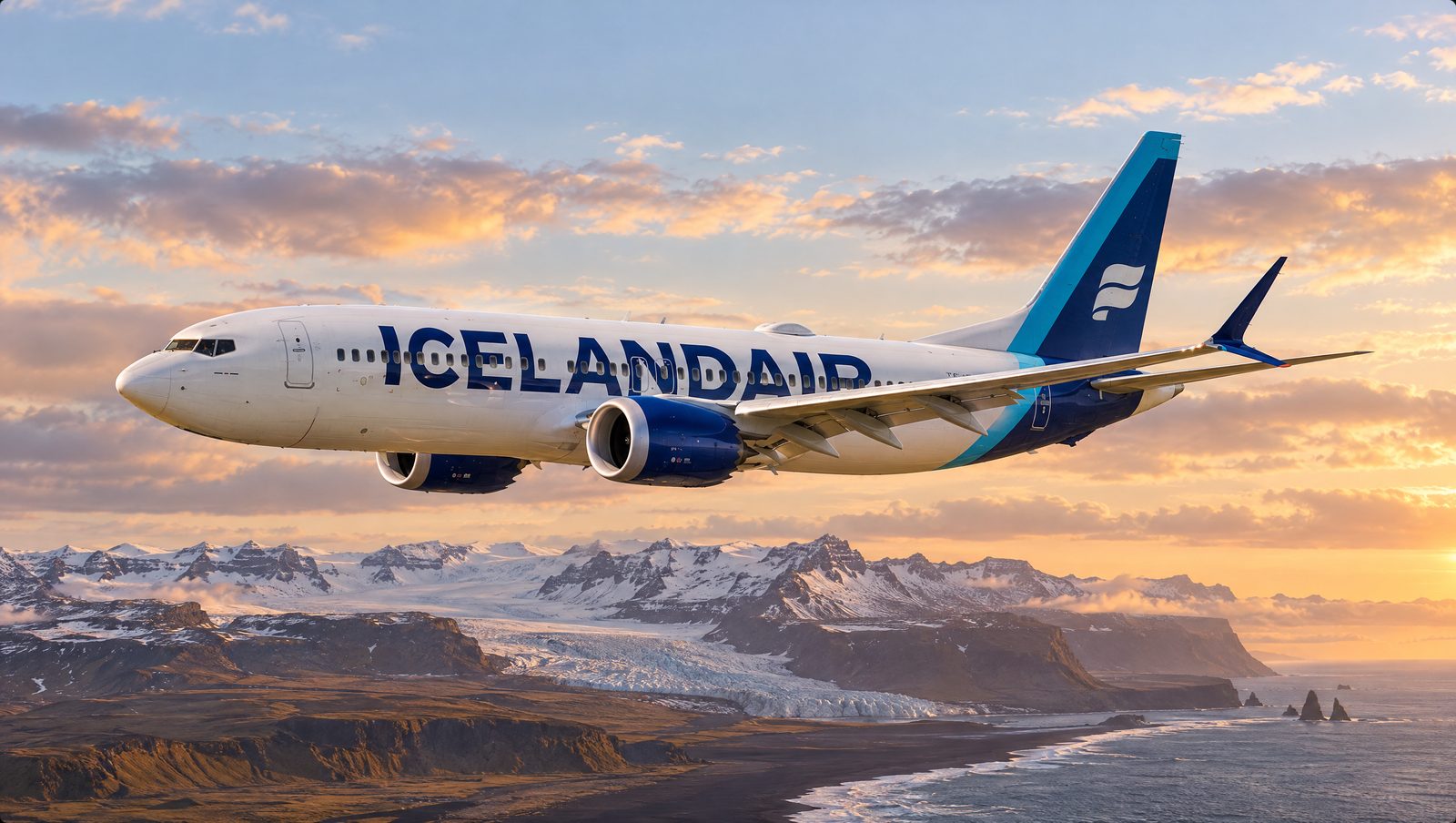
Icelandair carried 466,000 passengers in September 2026, 3% fewer than a year earlier, but filled its aircraft better than in any previous September. The airline's load factor reached 84.9%, a record for the month, as it cut capacity and shifted its focus from transatlantic transfer passengers to travel to and from Iceland itself.
The figures, published on 6 October, show a clear change in Icelandair's passenger mix. Passengers travelling to Iceland rose 7% year-on-year and those flying from Iceland rose 11%. Connecting passengers, who use Keflavík as a stop between Europe and North America, fell 15%, and domestic passengers fell 7%.
Less capacity, fuller flights, higher yield
Capacity, measured in available seat kilometres, fell 8% to 1,664 million. Passenger traffic, measured in revenue passenger kilometres, fell only 4% to 1,412 million. Because traffic dropped less than capacity, the load factor rose 3.2 percentage points from 81.7% in September 2025.
Yield, the average revenue per passenger kilometre, rose 14% to 10.30 US cents. Icelandair said the drop in connecting passengers reflects its current focus on markets to and from Iceland, with notably strong demand on routes to Southern Europe and Greenland. The fall in domestic passengers was caused by necessary maintenance on one of its regional aircraft during the month.
In September, 38% of Icelandair passengers travelled to Iceland, 19% from Iceland, 38% were connecting and 5% flew within Iceland. A year earlier, connecting passengers made up 44% of the total and travellers to Iceland 34%.
Gdańsk launch and a strike day
"We achieved a record load factor for the month, and the improved yield shows that our focus on travel to and from Iceland is delivering results," said Bogi Nils Bogason, Icelandair President and CEO. "In September, we launched service to Gdansk, Poland, for the first time, and customer response has been very positive."
The month was not without disruption. Bogason thanked customers for their patience during temporary changes to the domestic schedule and the cancellations caused by industrial action on 23 September. On-time performance for arrivals was 85.4%, down from 87.2% a year earlier.
Cargo, leasing and emissions
Icelandair's other businesses grew. Freight, measured in freight tonne kilometres, rose 14% year-on-year, and sold block hours in its leasing operations rose 6%. Carbon dioxide emissions per operational tonne kilometre fell 5%, which the airline attributed to higher load factors, more use of new-generation aircraft and continued operational efficiencies. Icelandair's newer aircraft include Boeing 737 MAX 8 jets, which it flies alongside Airbus A321LRs on its European and North American network.
The year so far
Over the first nine months of 2026, Icelandair carried 3,984,087 passengers, up 2% on the same period of 2025. Passengers to Iceland rose 9% to 1,483,129 and passengers from Iceland jumped 17% to 777,495, while connecting passengers fell 10% to 1,518,658. Year-to-date capacity was flat, traffic rose 1% and the load factor was 84.1%, up 0.8 points. Year-to-date yield was 10.04 US cents, 11% higher than a year earlier, and on-time performance was 82.0%.
The average stage length in September was 3,046 kilometres, almost unchanged from 3,077 kilometres a year earlier.
Why it matters
Icelandair's business model has long relied on connecting traffic across the North Atlantic. The September numbers show the airline deliberately trading some of those lower-yield transfer passengers for travellers who start or end their trip in Iceland, and so far the strategy is producing fuller aircraft and much better revenue per passenger even with fewer seats in the market.








Comments
Loading comments…