


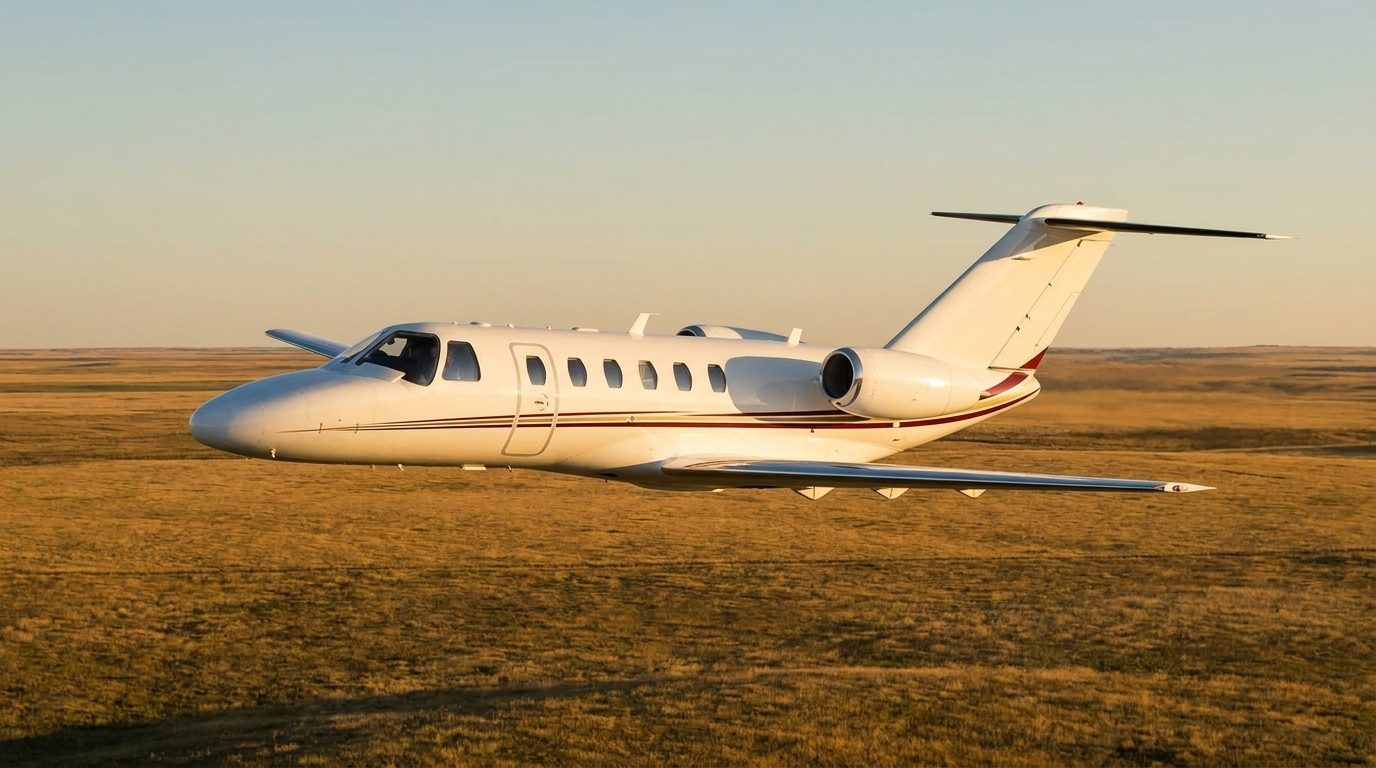
The Federal Aviation Administration is ending exemptions that let pilots fly certain older Cessna Citation business jets alone in the United States, citing widespread training violations and safety concerns with aircraft originally certified for two-pilot crews. AeroTime reported the decision on September 25, 2026, noting that the policy is scheduled to take effect when the notice is published in the Federal Register on September 28, 2026.
The action covers single-pilot operations conducted under exemptions for the Citation and Citation I, Citation II, S/II, V, Ultra, Bravo, Encore and Encore+, plus the military T-47A variant. After the Federal Register publication, the FAA plans to rescind remaining training-provider exemptions through separate actions. Pilots who rely on those exemptions lose single-pilot privileges at that point.
The ban does not remove single-pilot certification from the Citation Mustang or CJ family. The notice also distinguishes Part 23-certified Citation 501 and 551 variants, which can still be flown by one pilot when equipped as their approved flight manuals require. In other words, the FAA is closing a long-running exemption pathway for older Part 25 CE-500-family jets, not rewriting the type certificates of the light Citation models designed for single-pilot work.
Single-pilot Citation flying under exemptions has existed for more than forty years. The agency’s review of 14 Part 61 exemption holders found that 13 lost their exemptions or were denied extensions because of noncompliance or failure to provide requested information. Investigators cited incomplete records, unauthorized use of training devices and improper proficiency checks, including falsified records. Examiners involved in falsification lost their designations.
An 18-year accident review underpinned the safety case. The FAA said Part 25 CE-500 aircraft flown single-pilot showed roughly twice the accident rate of Part 23 CE-500, CE-510 and CE-525 aircraft also flown single-pilot. It also pointed to two fatal accidents involving pilots who lacked valid authorization for the single-pilot operations they attempted. Together those crashes killed 13 people and injured eight on the ground; both investigations remain open without a final probable cause in the September reporting.
For charter operators, fractional programs and owner-flown fleets that leaned on the old exemptions, the September 28 stamp is an operational cliff. Trips that were legal with one qualified pilot under an exemption will need a second qualified crewmember, a different aircraft, or a schedule change. Training houses that sold single-pilot Citation courses tied to those exemptions will have to rebuild syllabi around two-crew Part 25 operations or shift customers onto Mustang and CJ airframes that still carry single-pilot approval.
Insurers and lenders watching older Citation values should expect a two-crew cost structure to show up in direct operating cost models for the affected serials. The airframes themselves are not grounded; the change is about who may sit alone in the left seat under U.S. rules. Owners outside the exemption system who already crewed these jets with two pilots will see less disruption.
Until the Federal Register notice posts and the follow-on rescissions land, the confirmed facts are the covered models, the September 28 effective target, the carve-outs for Mustang/CJ and Part 23 501/551 aircraft, and the training-compliance findings that drove the decision. Operators who still hold a live exemption should treat September 28 as the planning date to staff a second pilot or move flying onto an unaffected type.
Sources: AeroTime (Sep 25, 2026); FAA notice details as cited in that report.


Comments
Loading comments…