


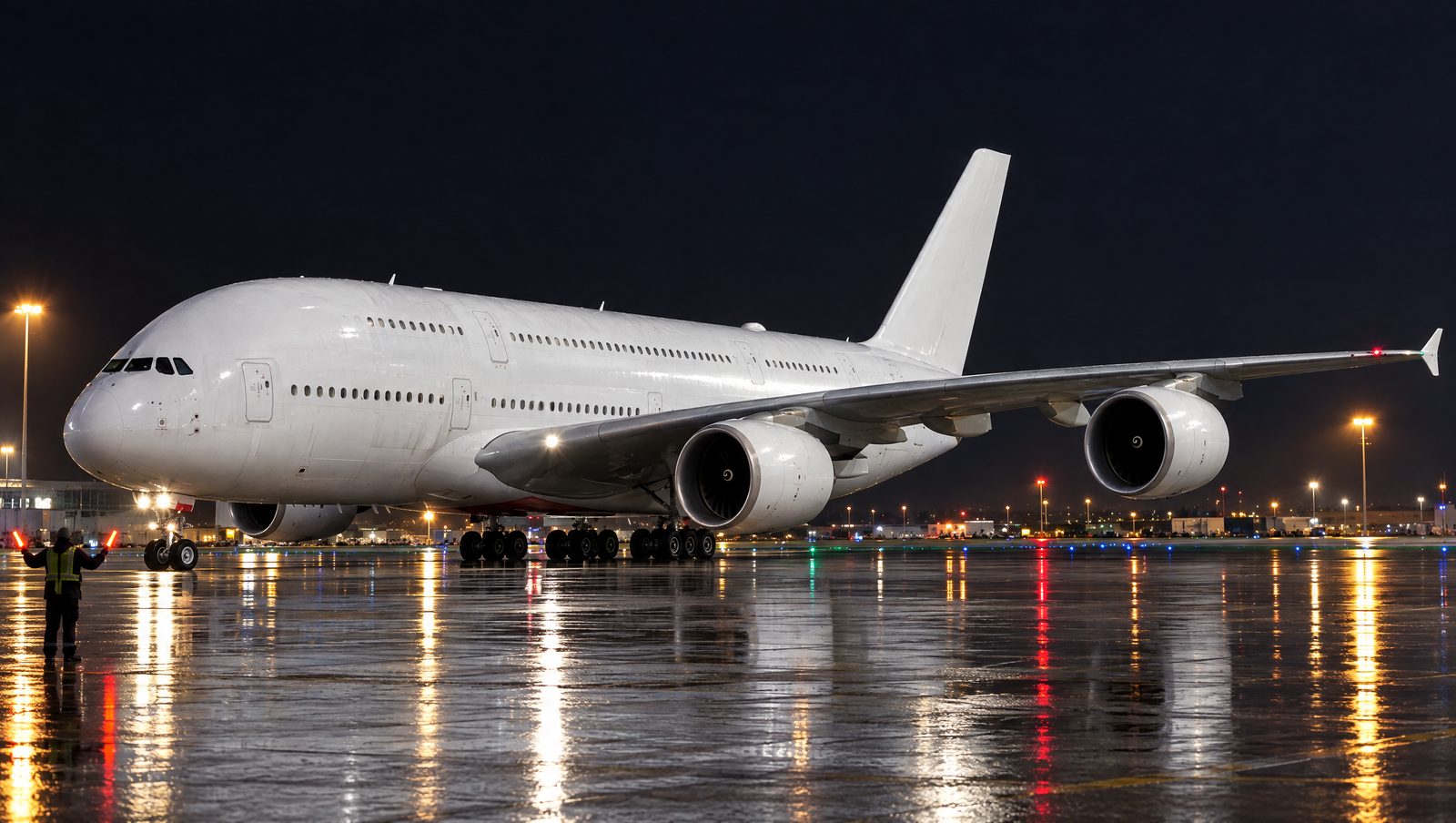
The US Federal Aviation Administration has ordered airlines to replace a batch of high-pressure turbine interstage seals in Engine Alliance GP7200-family engines on the Airbus A380 after an uncontained failure forced a crew to shut an engine down and abort a takeoff. The airworthiness directive was published on 8 October 2026 and takes effect on 23 October 2026.
Fifteen seals, three compliance buckets
According to AeroTime's summary of the rule, the directive targets 15 high-pressure turbine interstage seals, part number 2047M99P02, installed in GP7270, GP7272 and GP7277 engines. It is not a fleet-wide scrap of every GP7200 on every A380. Instead, Engine Alliance Alert Service Bulletin EAGP7-A72-479 lists the serial numbers that matter, and the FAA splits those parts into three groups with replacement deadlines of 50 flight cycles or 30 days, 100 cycles or 60 days, and 150 cycles or 90 days after the effective date, whichever comes first for each group.
The agency said the most urgent seals are those with the highest number of flight cycles since overhaul. Operators must install parts that are eligible under the September 4, 2026 Engine Alliance alert bulletin. The FAA adopted the directive without a prior public comment period, citing the short compliance windows and the safety risk of another failure.
What failed
The manufacturer investigation behind the rule found that cracking most likely began at locating features between the interstage seal and the shaft that extends from the first-stage turbine disk. Relative rotation of the seal — describe in the paperwork as "clocking" — was identified as a contributing factor, with overhauled seals that had been reassembled showing greater movement. The root cause is still under investigation, and the FAA called the directive an interim measure that could be followed by further rulemaking once a final corrective action is defined.
An uncontained failure means debris left the engine's designed containment path. In this case the FAA warned that another event could cause an engine fire and damage the aircraft. The directive does not name the airline, the aircraft registration or the date of the aborted takeoff that triggered the AD.
Cost and US registry impact
The FAA estimates replacement at about $528,150 per affected engine, almost all of it parts cost. Importantly for US operators, the agency said no engines installed on US-registered aircraft are affected by the listed seals. The practical burden therefore falls on foreign A380 operators that hold the serial numbers in the Engine Alliance bulletin — a narrower, serial-specific campaign rather than a blanket A380 grounding.
Why it still matters to the A380 fleet
Even with zero US-registered engines on the hit list, the AD is a reminder that the Engine Alliance GP7200 remains a live airworthiness file for the double-decker. The GP7200 powers a large share of the in-service A380 fleet alongside the Rolls-Royce Trent 900. Serial-tracked turbine hardware that must come out within tens of cycles is the kind of shop visit that can ripple into schedule planning for long-haul operators that still rely on the type for dense trunk routes.
Until Engine Alliance and the FAA publish a final fix, the interim rule is the binding instruction: identify the listed seals, replace them inside the cycle/day windows, and treat the campaign as unfinished business rather than a closed chapter.
Comments
Loading comments…