


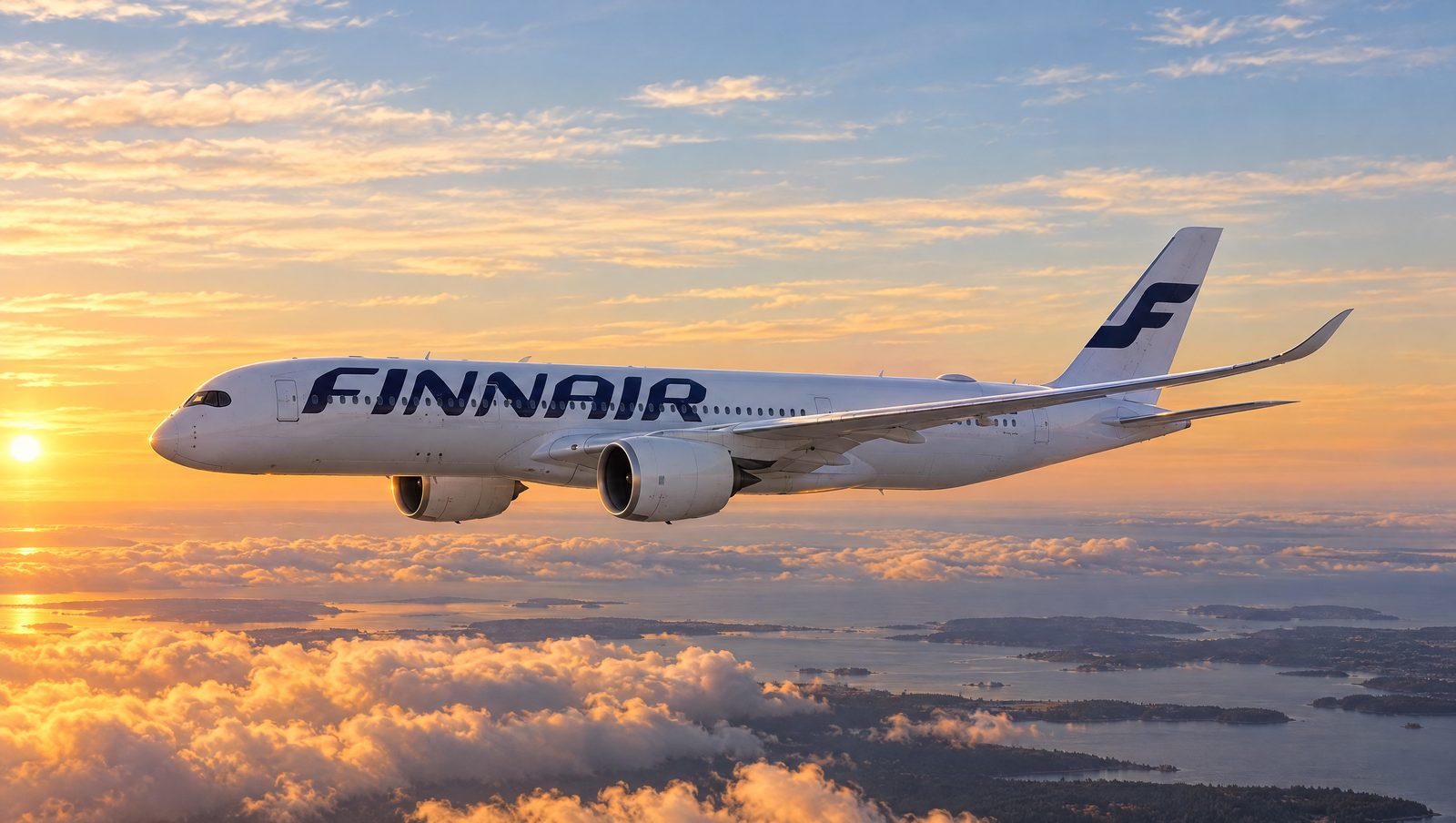
Finnair carried 1,112,200 passengers in September 2026, 9.6% more than in September 2025, as strong growth on its North Atlantic routes and a sharp improvement in unit revenue offset the continued suspension of its Middle East flights. The Helsinki-based airline published the figures in its monthly traffic report on 7 October.
North Atlantic leads the growth
The standout segment was the North Atlantic. Finnair carried 43,900 passengers across the Atlantic in September, up 66.5% year on year, on capacity that rose 59.9%. Traffic on those routes, measured in revenue passenger kilometres (RPK), increased 63.3%, and the North Atlantic load factor reached 76.7%, up 1.6 percentage points.
That is a sharp turnaround from August, when Finnair reported that capacity had fallen to all of its North Atlantic destinations, with only the new Toronto route partly offsetting the decline.
Europe remained by far the largest market. The airline carried 802,000 passengers on European routes in September, up 11.6%, with capacity up 3.5% and the European load factor rising 4.5 points to 79.0%. In Asia, Finnair flew 140,000 passengers, 7.5% more than a year earlier, with an 83.3% load factor.
Domestic traffic was the only segment where passenger numbers fell, slipping 1.0% to 126,300. Finnair said domestic capacity stayed level because a higher share of flights were so-called tag flights, frequencies to Northern Norway routed via Lapland. The domestic load factor was the only one to decline.
Middle East still suspended
Finnair's Middle East flights remain suspended, as they have been since 28 February because of the heightened security situation in the region. The segment carried no passengers in September, compared with 58,400 in the year to date, almost all of them before the suspension.
Capacity, load factor and unit revenue
Overall capacity, measured in available seat kilometres (ASK), rose 6.8% to 3,444.3 million. Including aircraft that Finnair leases out to other airlines with its own crews, known as wet lease outs, capacity increased only 0.4%. RPK rose 10.3% to 2,753 million.
The passenger load factor was 79.9%, up 2.6 percentage points. Revenue per available seat kilometre (RASK), a key measure of how much money an airline earns from each seat it flies, increased 15.8% to 9.4 euro cents, which Finnair said was supported by the higher load factor and a better yield.
The September growth follows a more muted August. In that month, Finnair carried 1,126,000 passengers, up 2.3%, while capacity fell 4.8% and RASK rose 12.3%, according to its August report.
Cargo and punctuality
Cargo also grew. Total cargo tonnes increased 4.5% in September, with all traffic areas growing and the North Atlantic standing out. Revenue cargo tonne kilometres rose 5.4%.
Punctuality improved slightly, with 83.6% of all Finnair flights arriving on schedule compared with 83.1% a year earlier.
Year to date
Over the first nine months of 2026, Finnair has carried 9,682,400 passengers, up 7.3% on the same period last year. Year-to-date capacity is up 2.3%, RPK up 6.6% and the load factor stands at 80.0%, 3.2 points higher. Year-to-date RASK is up 11.7% at 8.7 euro cents.
Finnair noted that its distance-based figures are calculated on great-circle distances in line with industry practice, and do not reflect the longer routings some flights must take because of airspace closures.
The airline will publish its October traffic statistics on Friday 6 November 2026.









Comments
Loading comments…