


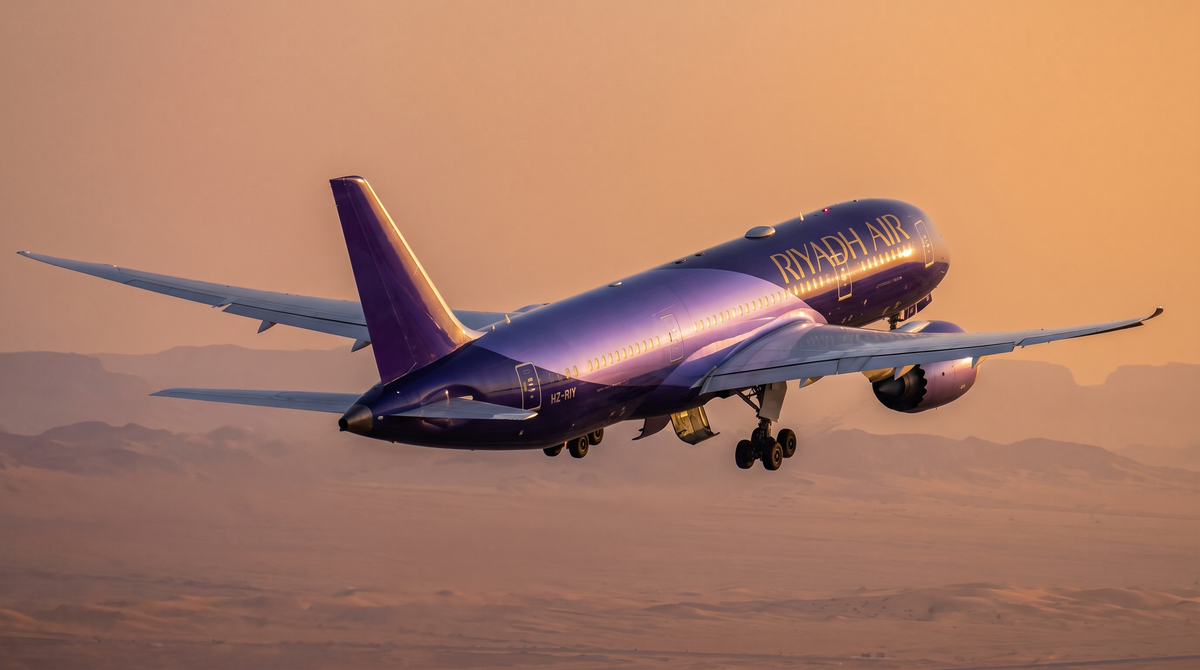
Riyadh Air has announced the addition of three new destinations to its growing network, with flights to Kuala Lumpur, Malaga, and Madrid set to launch as the Saudi startup carrier continues building out its international route map ahead of full-scale operations. The airline, which is positioning itself as a premium long-haul carrier based at King Khalid International Airport, will operate the routes using its fleet of Boeing 787-9 Dreamliners, reinforcing its strategy of connecting Saudi Arabia to key leisure and business markets across Asia and Europe.
The Kuala Lumpur route opens a direct link between Riyadh and one of Southeast Asia's most important aviation hubs. Malaysia's capital is a major connecting point for travel across the ASEAN region, and the route taps into a substantial flow of traffic between the Middle East and Southeast Asia — a corridor that has seen consistent growth in recent years as both regions expand tourism and trade ties. For Riyadh Air, the addition signals an intent to compete on long-haul Eastern routes where carriers like Emirates, Qatar Airways, and Singapore Airlines have traditionally dominated.
On the European side, Malaga and Madrid give Riyadh Air a dual-point presence in Spain, one of the continent's top tourism markets. Madrid, as Spain's capital and largest hub, offers strong year-round demand from both business and leisure travelers. Malaga, situated on the Costa del Sol, is one of Europe's fastest-growing sun destinations and has become an increasingly popular airport for Gulf carriers seeking to capture seasonal leisure traffic. The pairing of a capital city with a resort destination is a strategy commonly employed by network carriers to balance load factors across seasons, ensuring that summer-heavy leisure demand from Malaga can be offset by steadier year-round business flows through Madrid.
Riyadh Air's fleet backbone is the Boeing 787-9, a twin-aisle widebody that has become the workhorse of choice for new long-haul carriers. The variant offers a typical range of approximately 7,530 nautical miles, making it well-suited to all three of the newly announced routes without payload restrictions. The 787-9 also brings significant fuel efficiency advantages over older widebody types, with its composite airframe and GEnx or Rolls-Royce Trent 1000 engines delivering roughly 20 percent lower fuel burn per seat compared to the aircraft it was designed to replace. For a startup building its cost base from scratch, those economics are critical to making thinner routes viable alongside high-demand trunk services.
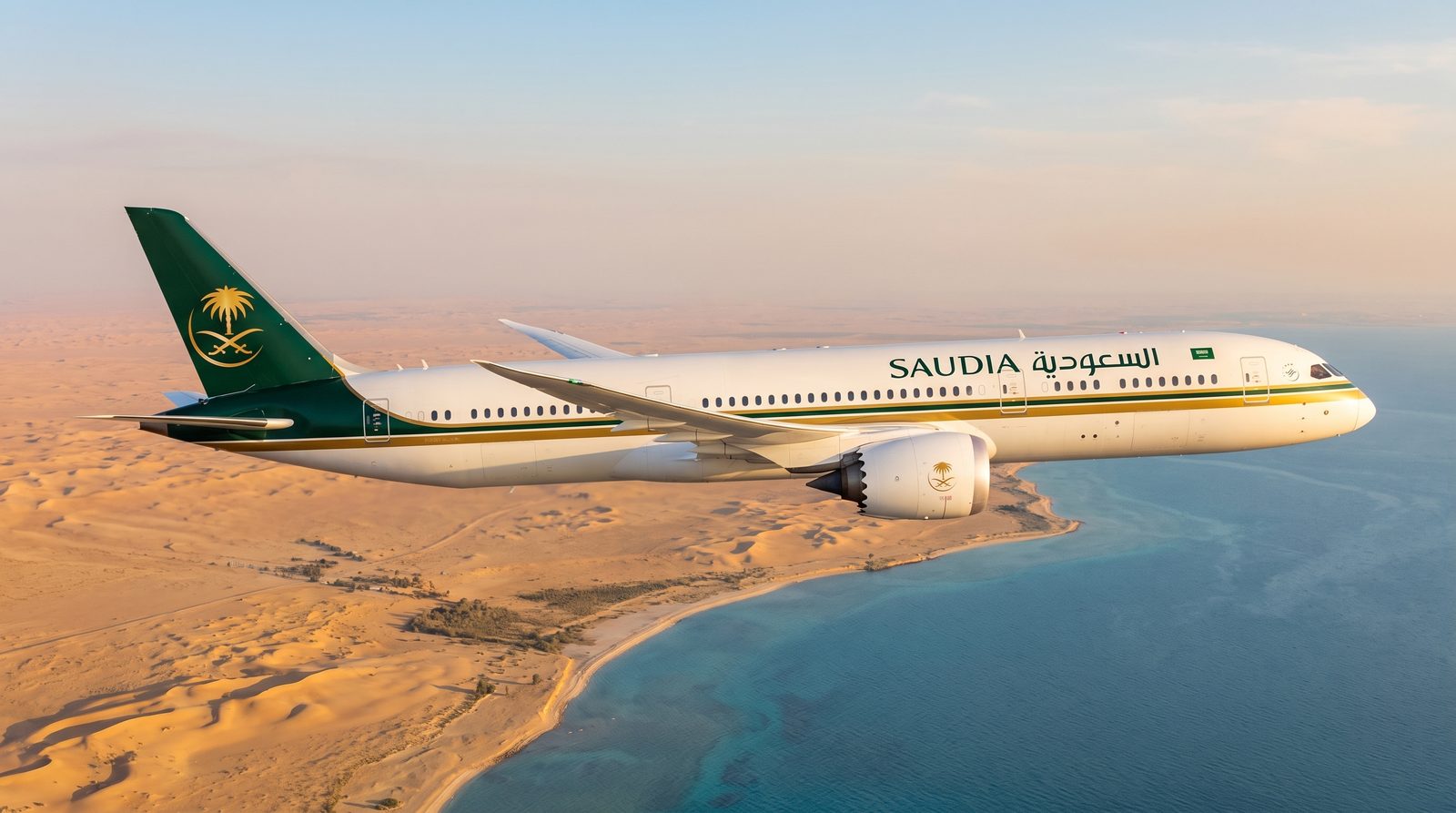
The route announcements fit into a broader national strategy driven by Saudi Arabia's Vision 2030 program, which has earmarked aviation as a central pillar of economic diversification. Riyadh Air was established alongside the expansion of Saudia, the kingdom's flag carrier, with the two airlines intended to serve complementary roles — Saudia focusing on its existing network and religious travel, while Riyadh Air targets a younger, premium-focused demographic and new point-to-point markets. The Saudi government has committed tens of billions of dollars to airport infrastructure, including a massive new terminal at King Khalid International, to support the projected growth in passenger throughput.
Adding Kuala Lumpur, Malaga, and Madrid brings Riyadh Air's publicly announced destination list further toward the scale needed for a credible network launch. The airline has previously revealed plans to serve a range of cities across Europe, Asia, and the broader Middle East, and has secured bilateral traffic rights with multiple countries as part of the Saudi aviation authority's diplomatic push. Each new destination represents not just a route but also the ground handling, crew base planning, and commercial partnerships required to support sustained operations — complexities that have historically challenged startup carriers attempting rapid expansion.
The timing of the announcement also places Riyadh Air in an increasingly competitive environment. Gulf carriers are collectively adding capacity at a pace not seen since the pre-pandemic boom years, and European leisure routes in particular have attracted new entrants and frequency increases from established airlines. Riyadh Air's ability to differentiate will likely depend on its onboard product, which the airline has said will feature a modern cabin with a focus on technology and passenger experience, as well as its pricing strategy against deeply entrenched competitors on these corridors. With the Boeing 787-9 providing the operational flexibility to serve both six-hour European hops and eight-hour flights to Southeast Asia from a single fleet type, the airline has the foundational economics to compete — the challenge now shifts to execution and commercial traction.
Sources: FlightGlobal, Time Out Riyadh. Featured image: AI-generated by AviationShop. By Elena Vargas.


Comments
Loading comments…