


Southwest Airlines has quietly reshaped its third-quarter timetable, and the biggest winner is Nashville International Airport (BNA). Following a round of schedule adjustments, Nashville has become the carrier's leading airport for added departures, with the low-cost giant now scheduling 190 peak-day departures from the Music City hub — the highest figure in the airline's history at the airport.
The numbers behind the shift are substantial. Southwest is operating 17,042 flights at Nashville this quarter, up from 14,792 in the same period a year ago. That is an increase of 2,250 flights, or 15.2%, and works out to roughly 24 additional daily departures compared with last year. For an airline that has spent much of 2026 trimming and reallocating capacity elsewhere in its network, that concentration of growth in a single market is telling.
Nashville's rise inside the Southwest system has not happened overnight. The carrier's scheduled departures from BNA have climbed steadily over the past five years, growing from 38,357 in 2021 to 66,512 in 2026. Along the way the airport has moved firmly into the top tier of Southwest stations, and the airline's investment on the ground has followed the schedule: Concourse D, the pier most closely associated with Southwest's operation, reopened after renovation in July 2025.
The Q3 reshuffle does more than simply add frequency to existing routes. Southwest has used the extra capacity to strengthen service to key markets in its network while also launching a pair of nonstop routes that no other carrier currently flies from Nashville — a familiar Southwest playbook of pairing depth on proven corridors with a handful of unique point-to-point pairings that competitors have overlooked.
Nashville itself has been one of the fastest-growing airports in the United States, and the city's tourism and business travel demand has made it an unusually attractive place for a domestic carrier to plant a flag. Unlike a traditional connecting hub, Southwest's Nashville operation is heavily origin-and-destination focused, which means the added flights are largely aimed at local demand rather than at feeding long-haul connections.
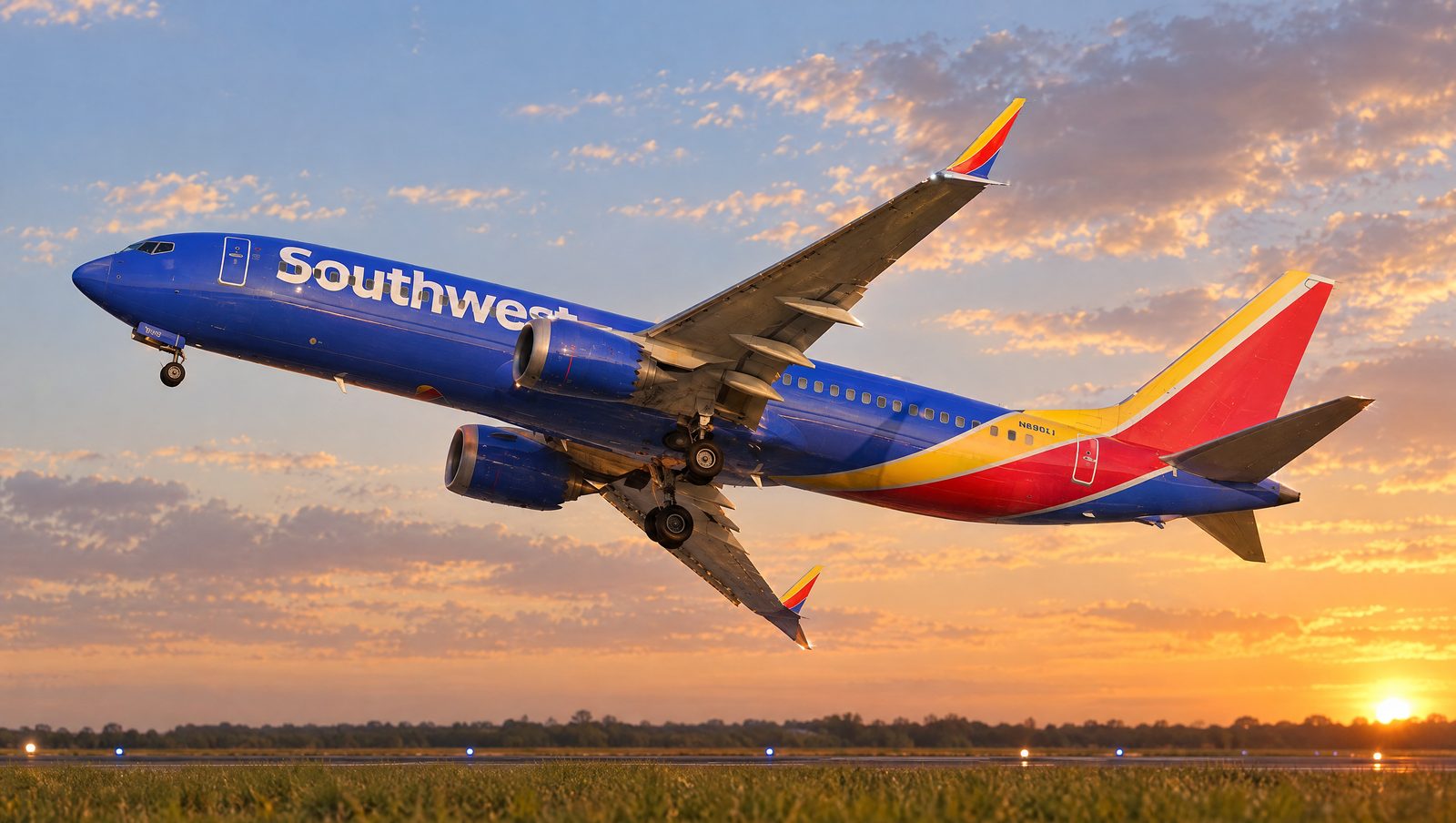
Southwest's fleet remains built around the Boeing 737, and the Nashville expansion is being flown with the same narrowbody family that underpins the entire network. The 737-800 and the 737 MAX 8 provide the seat counts the airline needs on higher-demand trunk routes, while the smaller 737-700 continues to serve thinner markets where frequency matters more than gauge.
For passengers, the practical effect is more choice and more schedule flexibility out of BNA — more morning departures, more evening returns, and two destinations that previously required a connection. For the airport, it is further confirmation that Southwest intends to keep growing in a market it has been building for the better part of a decade.
Sources: Simple Flying, Nashville International Airport. Featured image: AI-generated by AviationShop. By James Holloway.



Comments
Loading comments…