


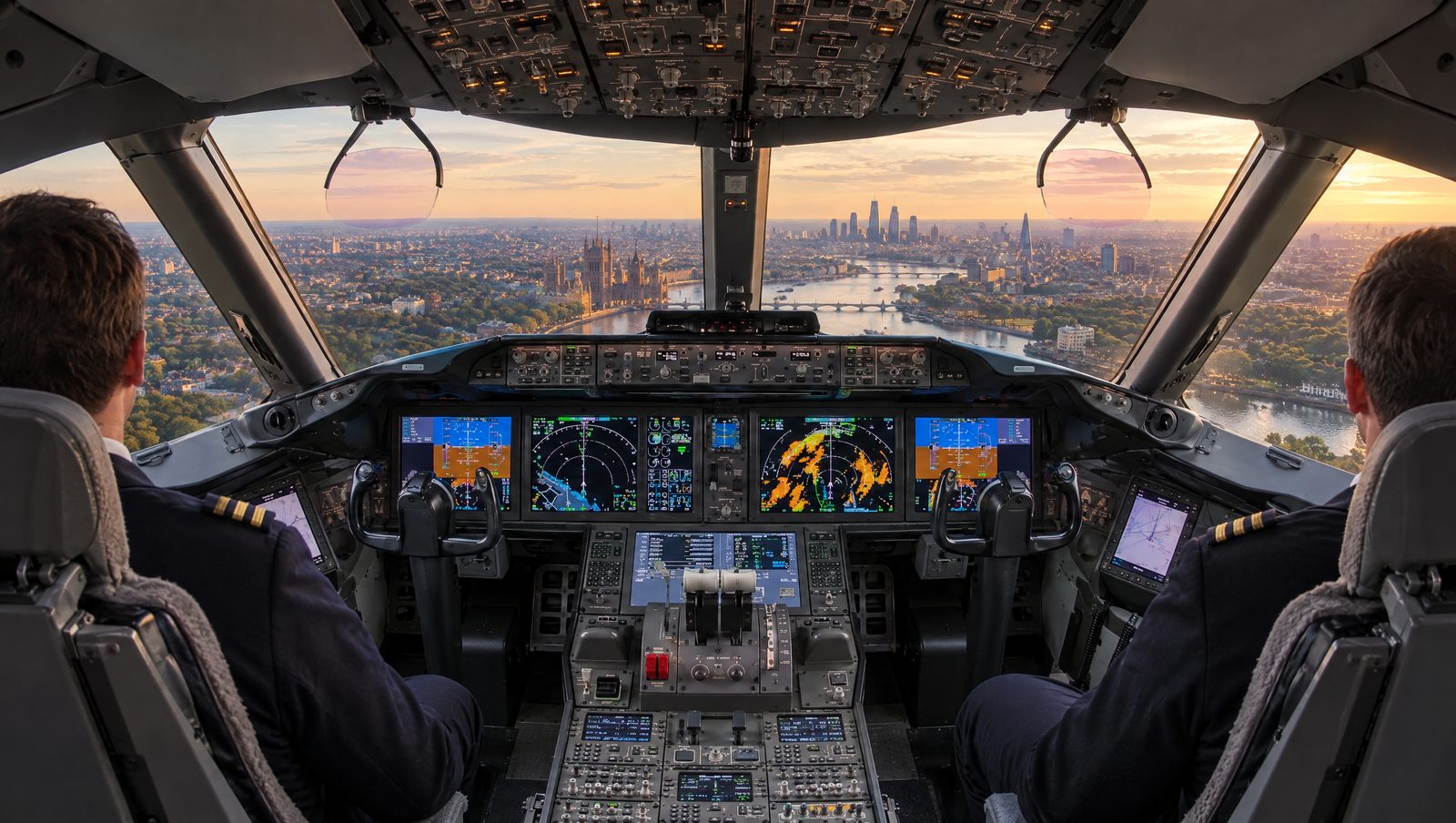
Pilots and flight attendants face the highest risk of dying from radiation-related cancers of any occupation studied in the United States — ahead even of workers who handle radioactive materials directly — according to research published on 17 August 2026 in JAMA Internal Medicine.
What the study looked at
The work was led by Dr Vishal Patel of Harvard Medical School. His team analysed more than 12 million US death certificates recorded between 2020 and 2024 through the National Vital Statistics System, drawing on data covering nearly 13 million decedents across 503 occupations. That population included roughly 14,000 pilots and about 7,000 flight attendants.
Researchers focused on cancers with an established link to radiation exposure: leukaemia, lymphoma, multiple myeloma, and cancers of the skin, breast, thyroid, prostate and central nervous system. Lung cancer was deliberately excluded so that smoking-related risk would not confound the results.
The numbers
Flight attendants had roughly 50% higher odds of dying from a radiation-related cancer than the general working population. For pilots the figure was about 36% higher.
In absolute terms, radiation-related cancers accounted for approximately 6.9% of flight attendant deaths and 6.7% of pilot deaths, compared with 5% among the general working population — roughly one in 14 flight attendant deaths.
Crucially, neither group showed elevated death rates from cancers unrelated to radiation. The researchers say that pattern points toward workplace exposure rather than lifestyle or socioeconomic factors as the more likely explanation.
Why altitude matters
Cosmic radiation increases sharply with altitude, and aircrew spend their working lives in the part of the atmosphere where the shielding effect of the air below them is weakest. According to the Centers for Disease Control and Prevention, aircrew accrue somewhere between three and six millisieverts of cosmic radiation a year depending on their route structure. An average air traveller taking around ten cross-country round trips picks up roughly 0.4 millisieverts — an order of magnitude less.
Exposure is not uniform across the profession either. Polar and high-latitude routes, higher cruising altitudes and long-haul block hours all push the annual dose upward.
A regulatory gap
The Federal Aviation Administration formally recognises pilots and flight attendants as occupationally exposed to ionising radiation. Unlike radiation workers in other US industries — and unlike aircrew in some other countries — US crews are not subject to federal dose limits or mandatory monitoring requirements.
In a commentary published alongside the study, Australian radiation health researchers Catherine Olsen and Ken Karipidis noted that modern crew scheduling has largely eliminated the long, sun-drenched layovers once used to explain elevated skin cancer rates among aircrew. That, they argue, points instead toward cockpit and cabin radiation exposure as the more likely driver.
What happens next
The findings are observational: death-certificate data can establish a strong association but cannot, on its own, prove causation. What it does do is give regulators and unions a large, occupation-wide dataset where previous evidence had come mostly from smaller cohort studies of individual airlines.
The practical questions now are whether US aircrew should be brought under the same dose-monitoring framework applied to other radiation-exposed workers, and whether route and roster planning should factor cumulative exposure alongside fatigue. For crews, the study is a reminder that the flight deck and cabin are a workplace with an occupational-health profile of their own.
Sources: AeroTime. Featured image: AI-generated by AviationShop. By Daniel Okafor.





Comments
Loading comments…