


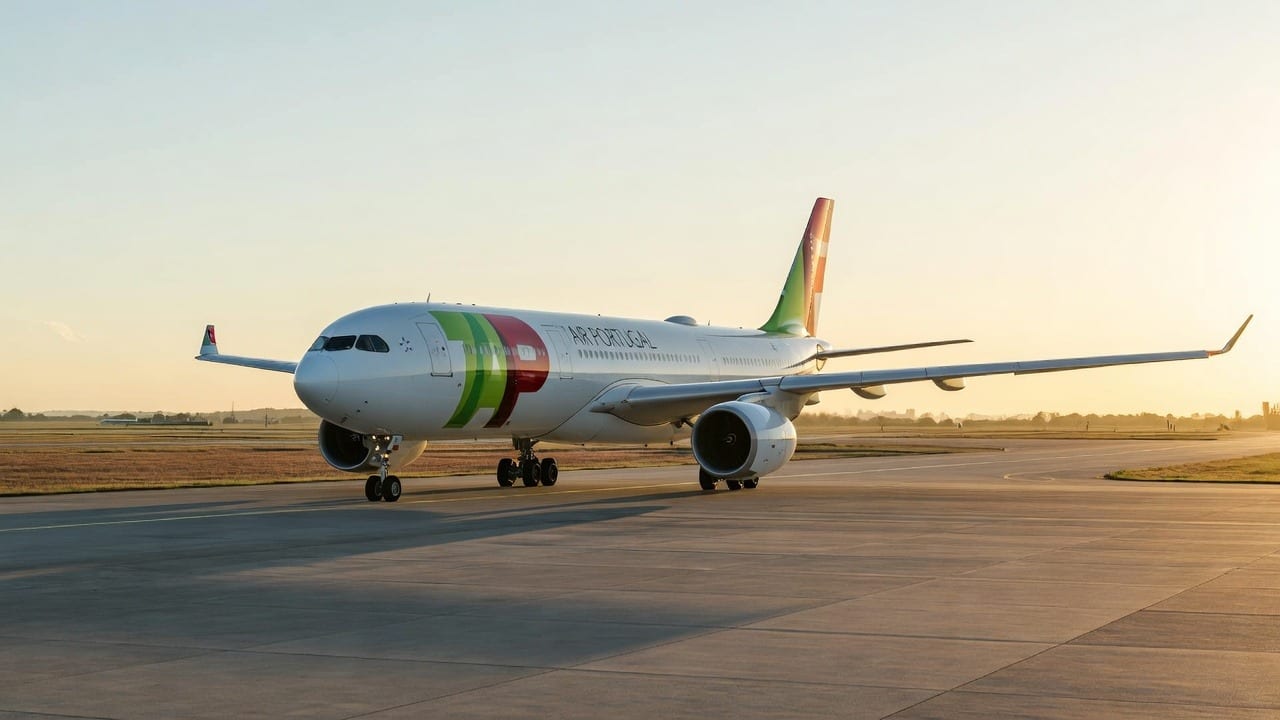
TAP Air Portugal recorded a €99.2 million net loss in the first half of 2026 as jet-fuel costs rose faster than traffic and revenue, Air Data News reported on 31 August 2026 from the airline’s results. The deficit was 40 percent larger than the €70.7 million loss in the first half of 2025. FlightGlobal also listed TAP’s losses expanding ahead of the planned sale in its 31 August airline file as Portugal’s partial privatisation of the carrier moves forward.
Operating revenue increased 4.3 percent to €2.04 billion and passenger revenue rose 4.4 percent to €1.83 billion, according to Air Data News. TAP carried 8.2 million passengers in the six months, up 4.2 percent. Traffic in revenue passenger kilometres rose 5.9 percent, ahead of a 1.7 percent rise in capacity, and load factor increased 3.4 percentage points to 85.4 percent. Demand, those figures show, was not the main problem. Recurring operating costs rose 9.6 percent to €2.12 billion. Fuel spending increased €89.4 million, or 18.7 percent, to €566.4 million. Personnel costs were 7.5 percent higher. Recurring EBITDA fell 29.8 percent to €181.9 million. Recurring EBIT swung from a €17.3 million profit in the first half of 2025 to an €83.7 million loss.
The deterioration was concentrated in the second quarter, when TAP spent €370.2 million on fuel, 52.3 percent more than the €243.1 million spent a year earlier, while operating revenue slipped 0.6 percent to €1.13 billion. Air Data News said TAP’s room to raise fares in the quarter was limited because many tickets had already been sold when fuel prices moved. Second-quarter recurring EBITDA dropped from €256.3 million to €86.4 million. Recurring EBIT swung from a €136.5 million profit to a €47.6 million loss, and the quarter ended with a €59.3 million net loss against a €37.5 million profit a year earlier. North America unit passenger revenue declined 7 percent in the quarter as TAP added capacity; Europe improved 2 percent and Africa 3 percent.
The operational fleet stood at 101 aircraft at the end of June: 22 widebodies, 60 narrowbodies and 19 regional jets. The widebody count was 19 Airbus A330neos and three older A330s. The narrowbody mix was 13 A321LRs, 10 A321neos, 17 A320neos, three A321ceos and 14 A320ceos, plus 19 Embraer E-Jets. An A320neo that was in phase-in at the end of March entered service early in the second quarter, another A320neo was received and placed into operation, and a third had been received by 30 June but was still in phase-in and was not among the 101. Air Data News said 72 percent of TAP’s operational medium- and long-haul fleet was A320neo-family and A330neo aircraft.
TAP held €1.22 billion in cash after issuing €350 million of senior notes in the quarter. Net financial debt was €787.1 million, slightly below €803.7 million at the end of 2025. Portugal plans to sell up to 49.9 percent of TAP, with 44.9 percent aimed at a strategic investor and as much as 5 percent for employees. Air France-KLM and the Lufthansa Group submitted binding offers in July. The European Commission approved €2.55 billion of restructuring aid in December 2021, including conversion of a €1.2 billion emergency loan. Air Data News noted that the restructuring-period fleet cap has ended, which is why TAP is adding A320neo-family jets again.
The half-year loss is now part of the file that bidders and the Portuguese government will read as that sale process continues. TAP has approved a 2026–2035 strategic plan centred on long-haul growth, product investment and new revenue, Air Data News wrote. This article does not rank Air France-KLM against Lufthansa or guess a sale price. A previously published Aviation Shop News item on extra TAP Berlin flights in October 2026 is a different, smaller schedule story and is not this earnings event.
Sources: Air Data News, 31 August 2026; FlightGlobal







Comments
Loading comments…