


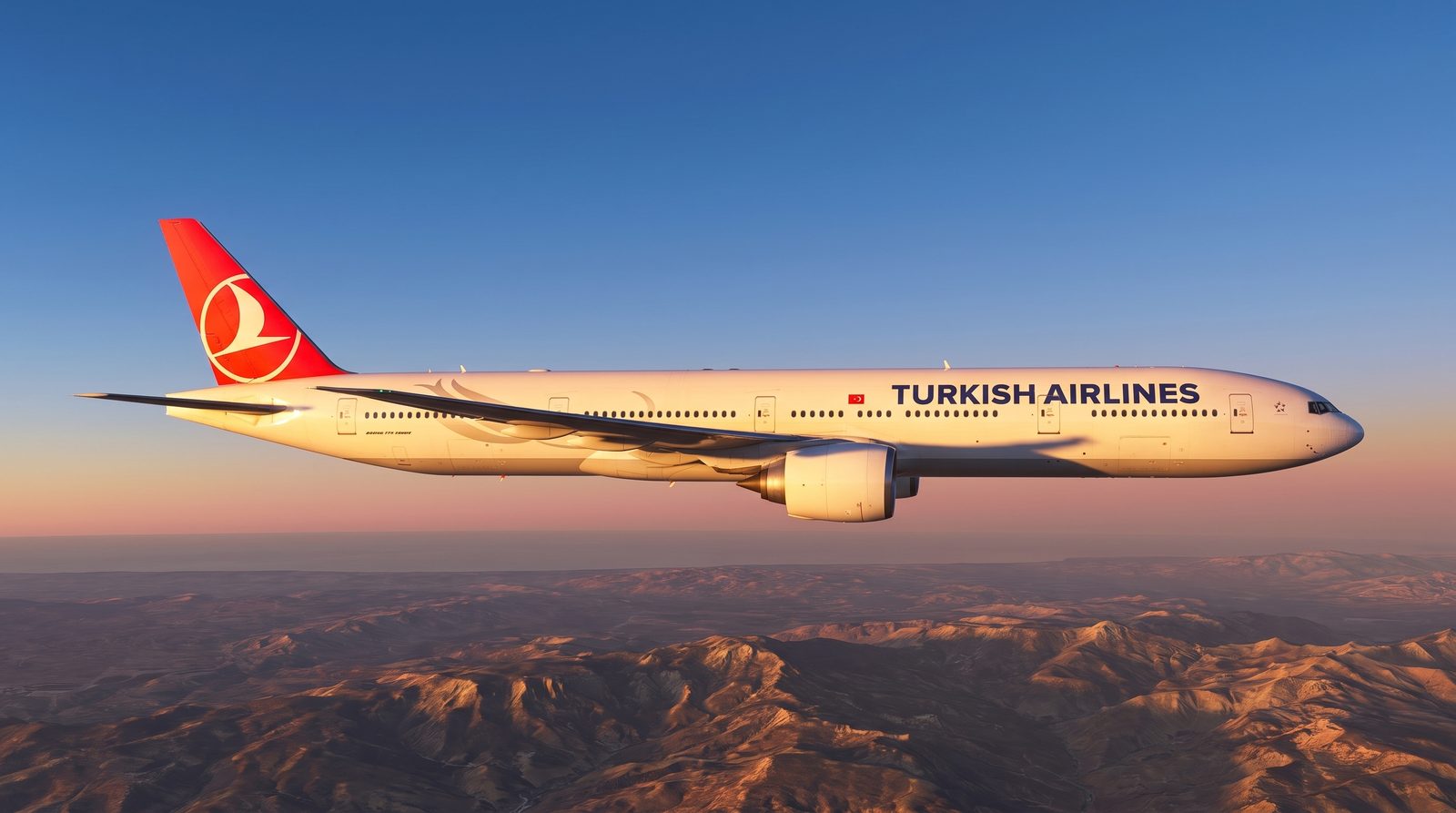
Turkish Airlines has converted a set of earlier 2026 suspensions into permanent network cuts. AeroRoutes reported on September 11 that, as of that day’s schedule read, eleven destinations previously framed as temporary cancellations are now permanently removed from future plans into 2027, while a shorter list slips to a March 28, 2027 earliest restart and several Iranian cities remain only tentatively restored from the same spring week.
The permanent-removal bucket splits by the old cancellation horizon. Cities previously cancelled through October 24, 2026, and now marked permanently gone include Juba, Kinshasa, Libreville, Luanda and Lusaka. Cities previously cancelled through March 27, 2027, and now permanently removed include Billund, Ferghana, Kirkuk, Leipzig/Halle, Najaf and Turkistan. That European pair—Billund and Leipzig/Halle—matters for travelers even though most of the list sits in Africa, Central Asia and Iraq.
Two destinations that had been aimed at a Northern winter 2026/27 return are instead pushed to the week of March 28, 2027, at the earliest: Aqaba and Havana. Separately, Esfahan, Mashhad, Shiraz, Tabriz and Tehran Imam Khomeini are only tentatively scheduled to resume from that same late-March week, reflecting continuing Iran airspace and network caution rather than a firm European leisure restore.
AeroRoutes is explicit that further changes remain highly possible. The September 11 extract is a snapshot of how earlier fuel-and-risk suspensions aged into permanent drops once winter and summer 2027 filings no longer showed returns. It is not a brand-new marketing withdrawal announced with cabin products; it is a schedule-file cleanup with network consequences.
For Europe, losing Billund and Leipzig removes two secondary German and Danish points that Turkish had used for connecting traffic over Istanbul. African capitals such as Luanda, Lusaka, Kinshasa, Libreville and Juba exiting the map shrink the carrier’s west-and-central Africa footprint that had already been under pressure in 2026 suspension waves. Central Asian and Iraqi points (Ferghana, Turkistan, Kirkuk, Najaf) exit the thinner long-thin end of the system.
Aviation Shop will not invent aircraft types for these suspensions. Turkish Airlines operates a mixed widebody and narrowbody long-haul fleet on many of the named cities, but the AeroRoutes note does not assign 777, A330 or A321 metal to each drop. The fact-gate is the destination list, the permanent-versus-slipped status, and the March 28, 2027 earliest language for Aqaba, Havana and the Iranian set.
Travelers holding future tickets to the permanently removed cities should expect re-accommodation or refunds under Turkish’s disruption rules rather than a quiet winter restore. Anyone watching Istanbul–Germany and Istanbul–Denmark secondary markets should treat Billund and Leipzig as gone until a later filing contradicts the September 11 read. Aviation Shop will revisit if AeroRoutes later walks any of the eleven cities back onto the 2027 map.
The broader 2026 context was a large suspension wave tied to fuel cost and regional instability, with earlier reporting describing more than a dozen African, Middle Eastern and European cities paused. What changed on September 11 is classification: several of those pauses are no longer labeled as waiting for October 2026 or March 2027, but as permanent removals.









Comments
Loading comments…