


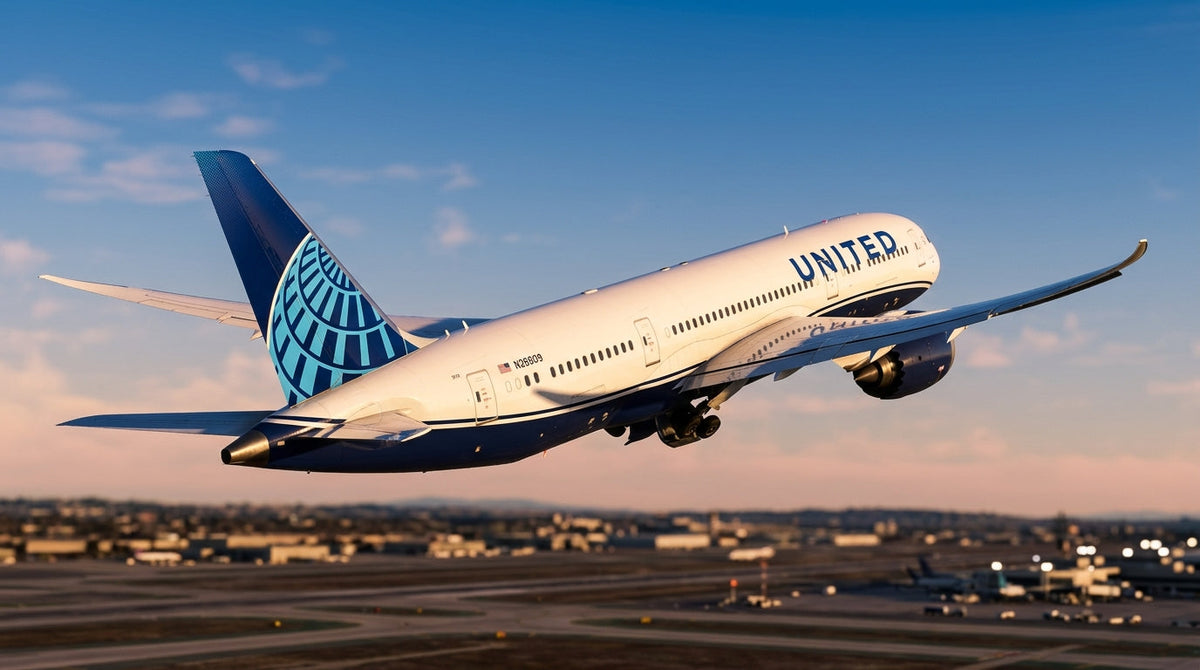
United Airlines has announced a significant expansion of its Japanese network with the launch of a new long-haul route from Chicago O'Hare International Airport to Tokyo Narita International Airport, marking the longest distance ever operated by the carrier's Boeing 787-8 Dreamliner fleet. This strategic addition underscores United's commitment to strengthening its presence in Japan's aviation market while demonstrating the extended-range capabilities of the 787-8 platform on premium transpacific routes.
The Chicago-Tokyo Narita route represents a milestone for United's 787-8 operations, pushing the aircraft type to its outer limits for the carrier's network planning. The 787-8 Dreamliner, which entered service in 2011, is the wide-body, mid-size variant of Boeing's latest-generation widebody family, featuring a two-class cabin configuration and a maximum range of approximately 7,600 nautical miles under ideal conditions. With a typical three-class layout carrying around 242 passengers, the 787-8 balances capacity with efficiency on ultra-long-haul missions, making it ideal for routes where a larger 777 or 787-9 may not align with demand forecasting or operational economics.
This service launch is part of a broader restructuring of United's Japan operations. The carrier is simultaneously introducing service to additional Japanese destinations, including Tokyo Narita and Sapporo, reflecting a deliberate strategy to diversify and deepen market penetration beyond traditional hub concentrations. Japan represents a critical market in United's Pacific network, with Tokyo serving as a gateway to northeastern Asia and beyond. The expansion signals confidence in post-pandemic demand recovery and a willingness to deploy premium, fuel-efficient aircraft to capture both business and leisure traffic on high-value transpacific lanes.
The 787 family has proven instrumental in enabling carriers to launch point-to-point long-haul service on routes that were previously uneconomical or required larger, less flexible aircraft. The Dreamliner's advanced materials, aerodynamic efficiency, and twin-engine reliability allow operators to cruise at high speeds while consuming significantly less fuel per available seat-mile than older widebody platforms. This efficiency translates to lower operating costs, reduced emissions, and the ability to maintain profitability on thinner long-haul routes—precisely the business case for a Chicago-Tokyo pairing that extends beyond United's traditional west-coast gateways.
From an operational standpoint, Chicago O'Hare serves as a major United domestic hub, making it a natural origin point for Asian connectivity. Routing international traffic through Chicago rather than San Francisco or Los Angeles allows United to feed the route with domestic connections and maximize load factors across its Midwest network. The addition of this route also positions United competitively against rivals who have historically dominated Pacific routes from west-coast gateways, offering Chicago-area passengers direct access to Tokyo without a connection.
The expanded Japan footprint also reflects competitive dynamics in the transpacific market, where carriers like All Nippon Airways, Japan Airlines, and the Japanese subsidiaries of legacy U.S. carriers maintain strong position. By increasing frequency and destination coverage, United can offer more compelling schedule options to corporate accounts and leisure travelers, particularly those with connections throughout the Chicago hub.
United's 787-8 deployment strategy on this flagship route validates the aircraft's design philosophy: enabling efficient, profitable long-haul service with manageable crew economics and simplified maintenance. As transpacific demand continues normalizing, expect to see the 787 family play an increasingly central role in shaping route networks for carriers seeking to maximize flexibility and operational efficiency on Asia-Pacific lanes.
Sources: AeroTime, Simple Flying. Featured image: AI-generated by AviationShop. By James Holloway.


Comments
Loading comments…