


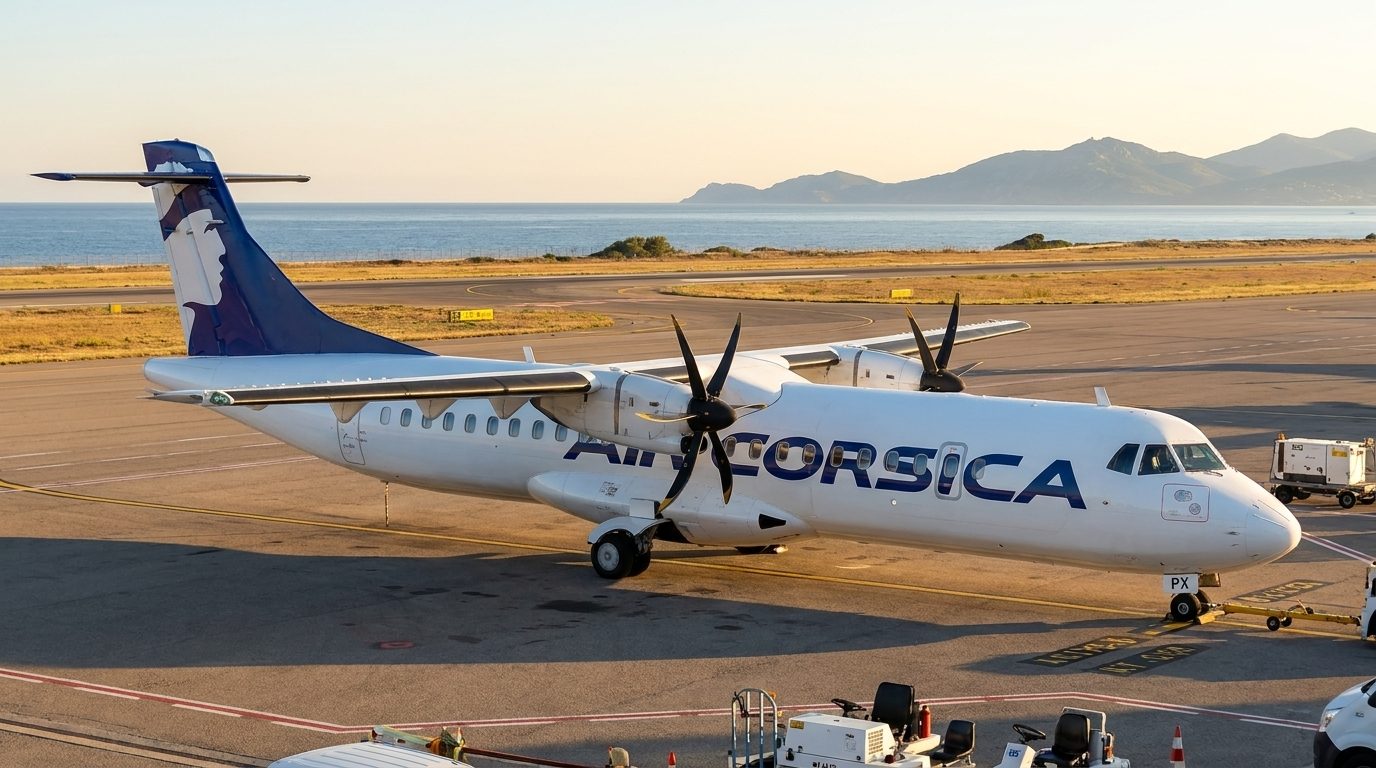
Air Corsica has grounded five of its seven ATR 72-600 turboprops after crews reported unusual odours, mainly in the cockpit, aero.de reported on September 24, 2026. Only two ATR 72-600s remain available for regular flying while ATR conducts a multi-week technical review of the affected aircraft.
The French regional carrier said the precautionary grounding followed repeated detections of unusual smells. With five aircraft offline, Air Corsica faces a sharp cut in turboprop capacity on Corsican routes that rely on the ATR fleet for domestic French and short-haul Mediterranean links. The airline told aero.de that affected customers would be advised by SMS and email about schedule changes or cancellations as the inspection wave continues.
Air Corsica’s ATR fleet is relatively young — aero.de notes an average age under four years — which makes a widespread odour issue more conspicuous than a geriatric fleet defect. The carrier is not describing the event as a single-aircraft anomaly; five frames are in checks at once, pointing to a fleet-wide inspection programme rather than an isolated cabin report on one registration.
ATR’s technical examination is expected to take several weeks. Until those aircraft return, Air Corsica must protect connectivity with the two remaining ATR 72-600s plus whatever jet or wet-lease cover it can arrange on short notice. Peak weekend Corsica flows are the obvious pressure point if the grounding stretches deep into the autumn shoulder season.
Unusual odour events on turboprops often trigger conservative groundings even when root causes later prove non-critical, because cockpit smell reports sit at the intersection of air quality and crew fitness for duty. Air Corsica’s public posture — ground first, inspect with the manufacturer, message passengers directly — matches that industry playbook and prioritises safety messaging over schedule continuity in the first response.
For travellers, the practical effect is immediate: higher cancellation risk and tighter seat inventories on ATR-operated Corsican sectors until the inspection wave clears. Island routes with limited alternate metal are especially exposed, because a turboprop grounding cannot always be patched with a quick jet swap on short runways or thin midweek demand banks.
For Air Corsica, five grounded ATR 72-600s out of seven is a major operational hit on a fleet that underpins the airline’s island network identity. The two remaining turboprops become critical-path assets until ATR signs off the inspections and returns airframes to the flying schedule without recurring odour reports.
Aero.de’s September 24 report remains the clearest public account of the scale — five of seven ATR 72-600s offline, ATR-led checks lasting several weeks, and proactive passenger notifications already promised. No return-to-service date for the full turboprop fleet has been published yet, so schedule reliability will stay under pressure while the manufacturer’s review continues and the carrier works the remaining two ATRs harder.
Until ATR completes the checks, Air Corsica’s published timetable should be treated as provisional on ATR-operated sectors, with passengers advised to watch SMS and email updates before travelling to the airport.
Sources: aero.de (September 24, 2026).

Comments
Loading comments…