


Airbus has asked Air India for details of hydraulic system maintenance carried out on one of its Airbus A320neo jets, after indications that a hydraulic problem preceded an in-flight upset involving the aircraft earlier this month.
The twinjet was operating from Phuket to Delhi when it experienced what the Indian civil aviation ministry described as a “sudden altitude variation” of 300ft in cruise. The event was initially suspected to be turbulence-related, a routine enough explanation for a brief altitude excursion at cruise level. Inquiries have since moved in a very different direction.
According to Airbus documentation authenticated by FlightGlobal, investigators are now focused on a temporary loss of all three of the aircraft’s hydraulic circuits. The green system went first, followed immediately by the blue and yellow circuits. For a period of about four seconds, the aileron and elevator surfaces were lost.
How the failure cascaded
The A320 family uses three independent hydraulic systems – green, blue and yellow – precisely so that no single failure can strip the crew of pitch and roll control. Each circuit powers a different, overlapping set of flight-control surfaces, and the aircraft is designed to remain controllable on any one of them.
Loss of the green circuit initially affected the ailerons on both wings and the left-hand elevator, as well as two of the spoilers on each wing. Pitch and roll control were then handled by the blue circuit, working through the elevator and aileron computer. The blue circuit is linked to the left and right ailerons and elevators, while the right-hand elevator is also connected to the yellow circuit.
But immediately after the green circuit was interrupted, the blue and yellow circuits were lost as well. That left the aircraft with a complete loss of the ailerons, the elevators and all five spoilers on each side. The control surfaces reverted to damping mode, a smoothing function, and the ailerons deflected upward.
Four seconds is a very short time in absolute terms. It is a long time to be without roll and pitch authority in cruise, and it is enough to explain a 300ft altitude excursion without any turbulence being involved at all.
Why the maintenance question matters
A simultaneous interruption of three nominally independent systems is not the sort of thing that happens by coincidence. It points either to a common-mode failure – something shared by all three circuits, such as electrical supply to the pumps or a computer that commands them – or to a condition introduced during maintenance.
That is why Airbus has gone back to the operator for the maintenance history. Establishing what work had recently been carried out on the hydraulic system, and how it was carried out, is the fastest route to understanding whether this was a one-off on a single airframe or a scenario that could repeat across a fleet of several thousand A320-family aircraft worldwide.
For now, no wider action has been announced. The investigation remains at the stage of gathering technical data, and the manufacturer’s request for maintenance records is a normal part of that process rather than a finding in itself.
A320neo in the Air India fleet
The A320neo is the backbone of Air India’s short and medium-haul network, working alongside the A321neo on domestic trunk routes and regional international services such as the Phuket–Delhi sector involved here. The type is fitted with new-generation engines and sharklets but retains the same three-circuit hydraulic architecture as earlier A320-family jets.
Occupants were not reported injured and the flight continued to its destination. What makes the event significant is not its outcome but its mechanism: a brief, total loss of hydraulically powered flight controls on a modern narrowbody is rare enough that the industry will want a full explanation.
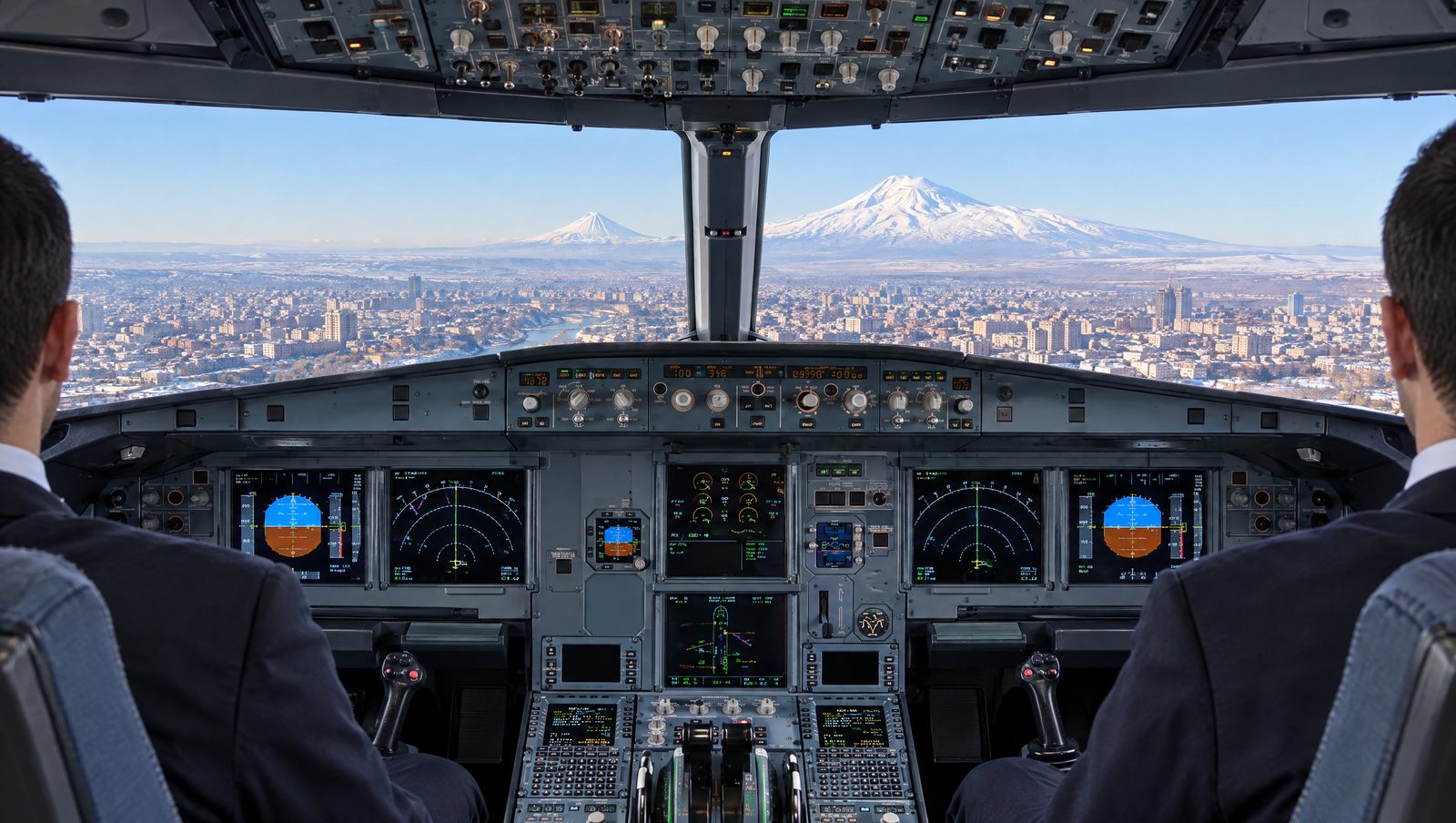
Sources: FlightGlobal. Featured image: AI-generated by AviationShop. By James Holloway.










Comments
Loading comments…