


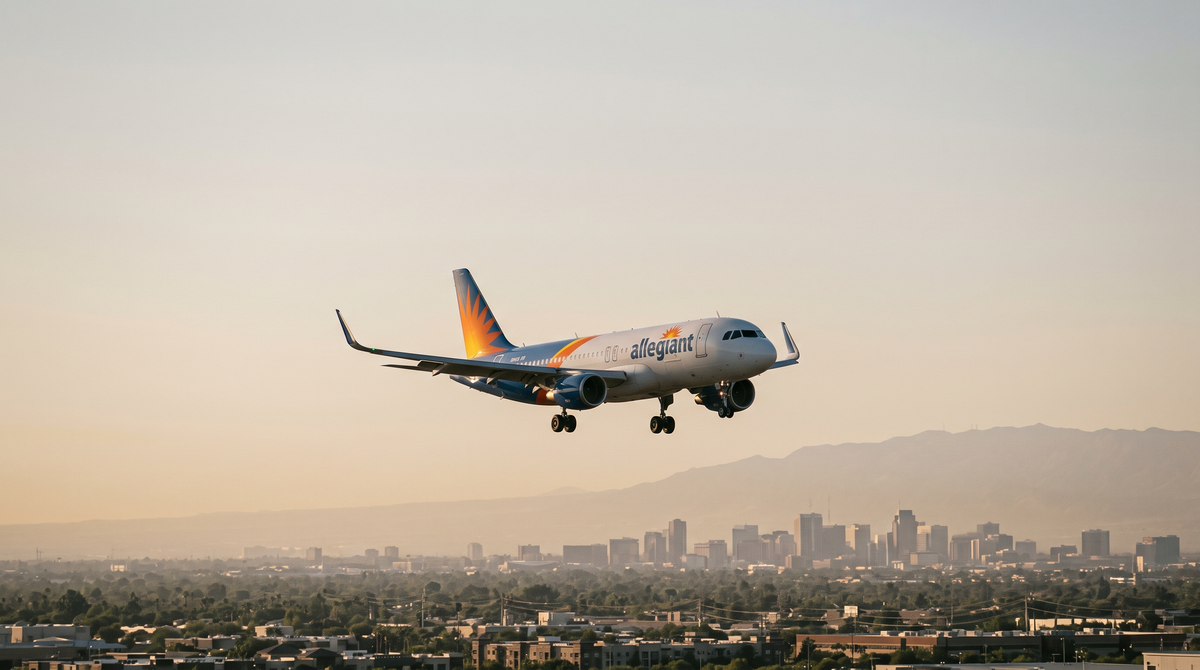
The Sun Country name is going away. An Allegiant executive has confirmed that the Minnesota carrier's brand will be phased out completely once the merged airline receives a single operating certificate from the FAA, with everything eventually flying under the Allegiant name.
Allegiant closed its $1.5 billion acquisition of Sun Country Airlines on 13 May 2026, making Sun Country a subsidiary of the Las Vegas-based ultra-low-cost carrier. What was left open at closing was the question every employee and frequent flyer wanted answered: does Sun Country survive as a brand? The answer is now no.
Years, not weeks
The phase-out will not happen overnight. The two airlines continue to operate separately while they work through integration, and both brands — along with their respective loyalty programmes, Allegiant Allways Rewards and Sun Country Rewards — will keep running in parallel until they are combined under the Allegiant name. Current guidance points to that consolidation taking roughly 18 to 24 months.
The gating item is the single operating certificate. Until the FAA signs off on merging two air carrier certificates into one, the airlines are legally distinct operators with their own manuals, procedures, training programmes and crews. Only after that milestone can the combined carrier repaint, re-code and re-brand as one airline in any meaningful sense. It is the least glamorous part of any airline merger and reliably the longest.
What the combined airline looks like
The merged carrier is a leisure-focused heavyweight: roughly 195 aircraft, close to 175 cities, more than 650 routes and about 22 million passengers a year. Allegiant's model — low-frequency point-to-point flying from small and mid-size cities into leisure destinations, with a large ancillary revenue component — is the template the combined business is being built on.
Sun Country brings a genuinely different mix: scheduled leisure flying, charter work and a cargo operation flying Boeing 737 freighters. Those businesses do not disappear when the paint does; retiring a brand is not the same as retiring a business line. What goes is the name on the tail.
Why brands get retired
Running two consumer brands means running two of everything: two websites, two loyalty programmes, two call centres, two sets of collateral, two marketing budgets. In an ultra-low-cost business where unit cost is the entire competitive position, that duplication is expensive and hard to justify. Consolidating on a single brand is the standard endgame of a US airline merger, and history is unkind to the smaller name — as passengers who once flew AirTran, Virgin America or Alaska's acquisition targets can attest.
Minnesota flyers, in particular, will have views about this. Sun Country has been a Twin Cities institution for decades, and the loss of the name will land differently in Minneapolis than it does in Las Vegas.
What passengers should watch
Nothing changes immediately. Bookings, loyalty accounts and schedules continue to operate as they do today. The signals to watch are the single operating certificate, the announcement of how the two loyalty programmes will merge — the mechanics of point conversion are where mergers most often bruise their frequent flyers — and the first Sun Country airframe to emerge from the paint shop in Allegiant colours.
That first repainted aircraft, whenever it appears, will be the real end of the Sun Country brand. Everything until then is paperwork.
Sources: Simple Flying, AirlineGeeks. Featured image: AI-generated by AviationShop. By James Holloway.








Comments
Loading comments…