


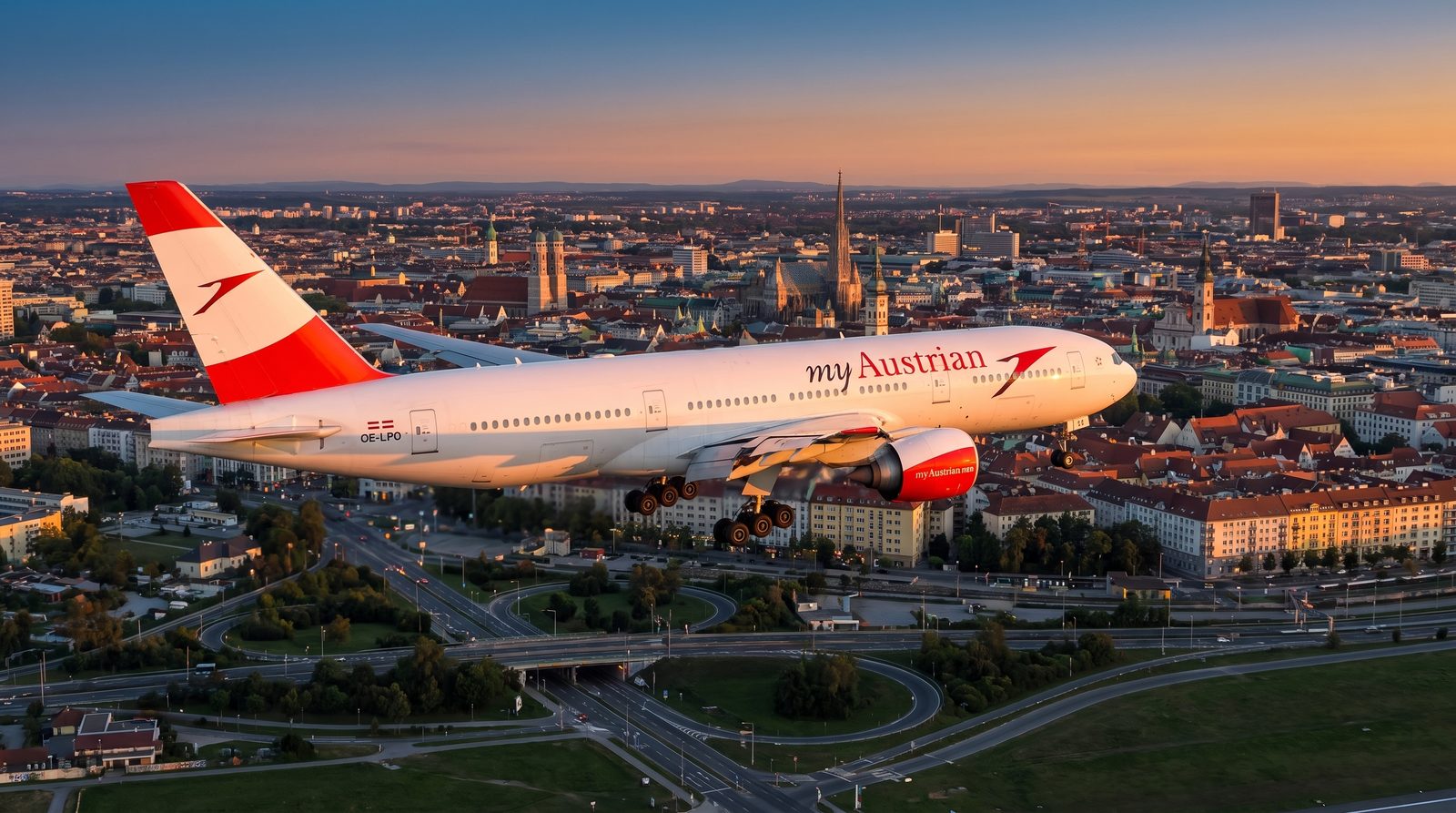
Austrian Airlines plans to put widebody metal on the short Vienna–Berlin hop through Northern winter 2026/27, according to schedule filings reported by AeroRoutes on September 30, 2026. Boeing 777-200ER and 787-9 aircraft appear on several OS flight numbers across the season, turning a routine intra-European link into a rotating widebody playground for spotters and curious passengers alike.
AeroRoutes lists 777-200ER operations on OS227/228 on November 18, 2026, and on OS235/236 on October 25, 2026. The same type also appears on OS231/232 across late October, November and December blocks, plus selected January and February 2027 dates. Boeing 787-9 metal is filed on OS225/226 from January 14 to February 18, 2027 (with the February 11 service moving to February 10), on OS229/230 on February 25, 2027, and on other January–February rotations including OS231/232 and OS235/236 windows.
Vienna–Berlin is roughly a one-hour block time in each direction. Parking a 777 or 787 on that sector is almost certainly about aircraft positioning, maintenance ferry logic or seasonal schedule packing rather than a permanent product upgrade for every Berlin passenger. AeroRoutes notes that planned widebody operation remains subject to change, the standard caveat as airlines reshuffle winter capacity week to week.
Austrian has already experimented with short-haul widebody flying. Earlier AeroRoutes notes showed October 2026 Wednesday 787-9 turns on OS227/228 between Vienna and Berlin, and spring 2026 777 flying to Berlin and Frankfurt. The winter 2026/27 package extends that pattern across more flight numbers and both the 777-200ER and 787-9 types in the same season.
For spotters and premium-curious travelers, the filing is an invitation to watch specific dates rather than assume every Berlin flight will be a Dreamliner. Economy cabins on a repositioning widebody can still mean a different seat and a quieter ride than an A320, but soft product and catering usually follow the short-haul template. Business-class lie-flat is not guaranteed simply because the type is long-haul capable on paper.
Lufthansa Group’s Austrian unit continues to take 787-9s for intercontinental flying while the older 777-200ERs work through their remaining years. Using those jets on Berlin turns can keep utilization high between long-haul banks out of Vienna. It also gives the Austrian capital a rare chance to see widebody departures to a German city that is otherwise a dense narrowbody market for Austrian, easyJet, Ryanair and others.
Traffic on Vienna–Berlin is built for frequency, not for widebody gauge, which is why these filings stand out. A single 777 bank can carry far more seats than an A320 turn, so even occasional substitutions change the day’s capacity profile on the corridor. That can matter for same-day connections into Austrian’s long-haul bank at Vienna Schwechat when a widebody is already on the ground between overseas flights.
Anyone booking OS225 through OS236 this winter should check the equipment field close to departure. If the 777 or 787 holds, it is a short, unusual widebody ride across Central Europe. If the filing reverts to an A320-family jet, that is equally normal for this city pair—and exactly why AeroRoutes flags the plan as changeable. Either outcome leaves Vienna–Berlin as one of Austrian’s most watched short-haul equipment stories of the winter season.
Sources: AeroRoutes
Comments
Loading comments…