


To a passenger glancing out the window, a Boeing 737 MAX and a 737 Next Generation (NG) look like near-identical twins. To a pilot strapping into the flight deck, the family resemblance is just as strong — the two share a common type rating, so a 737NG pilot only needs differences training rather than a whole new course to fly the MAX. But beneath that shared DNA sits a genuinely re-engineered aeroplane: new engines, new aerodynamics, a modernised flight deck, and a handful of system quirks that crews brief carefully on every sector. Here is what actually changed when Boeing turned the NG into the MAX.
The engines: from CFM56 to LEAP-1B
The single biggest difference is the most visible one. The 737NG is powered by the CFM56-7B; the MAX swaps it for the CFM International LEAP-1B, a new-generation high-bypass turbofan. The LEAP-1B turns a 69.4-inch fan — considerably larger than the CFM56's — and runs a much higher bypass ratio of roughly 9:1 against about 5:1 on the older engine. That, together with composite fan blades and a hotter, more efficient core, is what delivers the MAX's headline number: Boeing quotes around a 14% reduction in fuel burn compared with the 737-800.
The LEAP-1B is also rated slightly higher on thrust — up to about 27,000 lbf versus up to 26,000 lbf on the CFM56-7B. In day-to-day flying that extra margin is usually spent on a deeper thrust derate, which means the same takeoff performance at lower internal temperatures, reducing engine wear and fuel consumption rather than producing dramatically shorter takeoff rolls.
Those bigger engines change how pilots operate the aircraft, too. The LEAP-1B needs a slightly longer start sequence because the engine control system performs additional checks and a procedure known as bowed rotor motoring — spinning the core to even out heat before light-up — so start times have to be built into pre-flight planning. On the ground, the LEAP-1B also produces more idle thrust than the CFM56, so the MAX will often roll up to taxi speed without any added power, which is efficient but demands a gentle touch in congested ramps.
Why the engines led to MCAS
Fitting that larger fan to an airframe whose original 1960s design sits low to the ground forced Boeing to mount the LEAP-1B further forward and higher on the wing, and to fit a longer nose landing gear for ground clearance. That repositioning subtly changed the aircraft's aerodynamics: in a specific corner of the flight envelope — high angle of attack — the MAX had a tendency for the nose to pitch up. To give the MAX handling that matched the NG (a requirement of the common type rating), Boeing added the Maneuvering Characteristics Augmentation System, or MCAS, which automatically trims the nose down in those conditions.
MCAS became infamous after two fatal accidents led to a worldwide grounding of the MAX fleet in March 2019. Following extensive redesign of the system — including cross-checking both angle-of-attack sensors and limiting its authority — regulators cleared the aircraft to return to service from late 2020. Today MCAS is a heavily revised, well-understood part of the flight control logic, and understanding why it exists is really a lesson in how tightly the engine change and the airframe are linked.
Wings, winglets and brakes
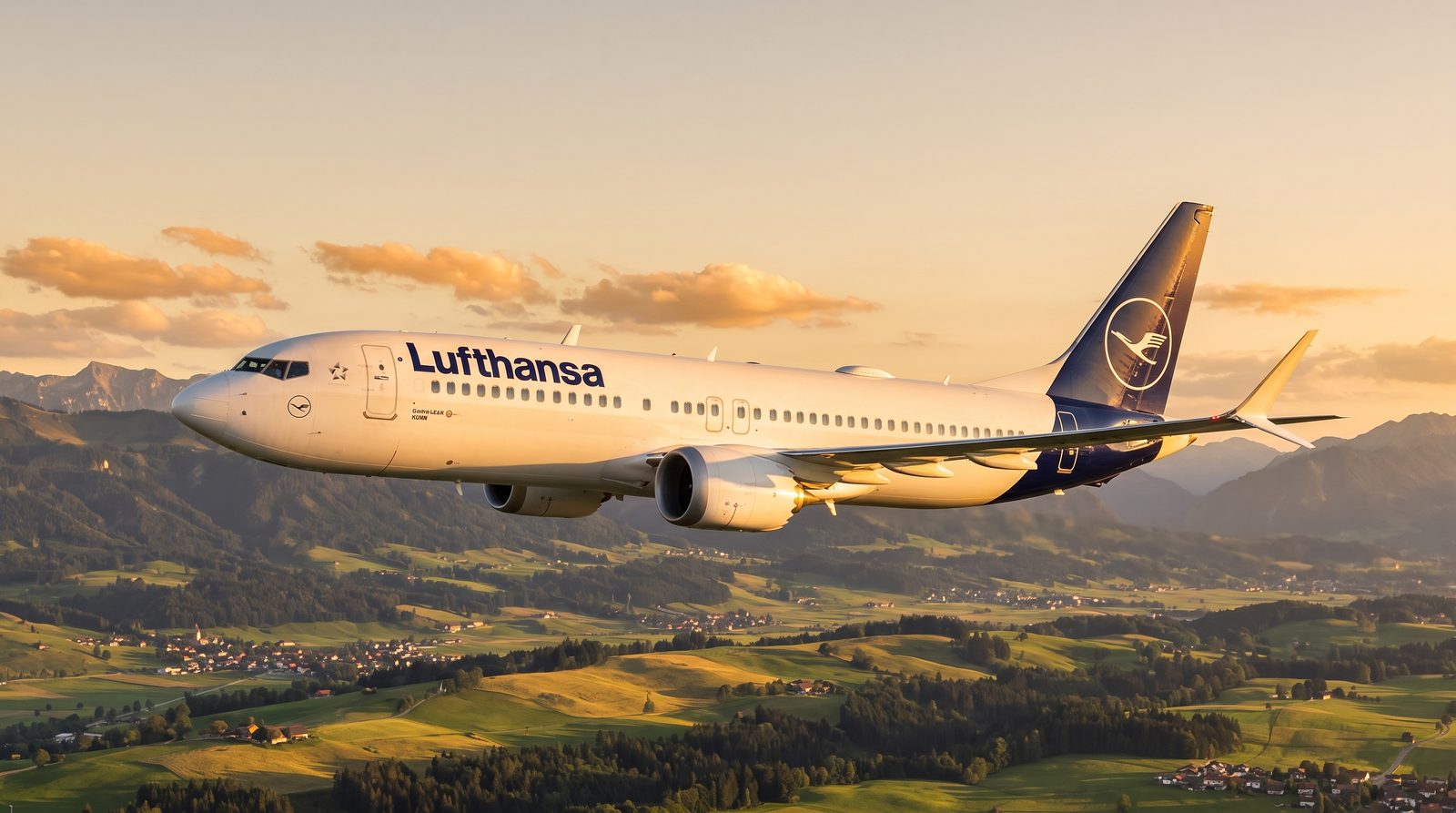
Look at the wingtips and you will spot the second clear visual giveaway. The NG wears blended or, on many aircraft, traditional blended winglets; the MAX introduced the dual-feathered Advanced Technology (AT) split-tip winglet, which extends both up and down for extra aerodynamic efficiency. For crews, the practical note is that those distinctive winglets get a dedicated look during the pre-flight walkaround, since their shape makes them more exposed to ground-handling damage.
The MAX is also fitted with carbon brakes as standard, where the 737-800 typically uses steel brakes (carbon was optional on some NGs). Carbon brakes hold up far better at high temperatures and cool more quickly, which matters enormously for the fast turnarounds that low-cost carriers live by — some target as little as 25 minutes on the ground. The numbers behind that are striking: carbon brakes last on average around 2,200 landings between overhauls, almost double a steel set, while shaving up to roughly 320 kg off the aircraft. The trade-off is technique — manual braking on carbon rewards gentle, on-off application rather than steady pressure. If you enjoy this kind of side-by-side engineering detail, you will find plenty more in our Boeing 737 gifts collection, which is built around the type.
The flight deck: familiar, but modernised
Step into the cockpit and the layout feels immediately familiar to any NG pilot — the same basic architecture, the same control yokes, the same throttle quadrant. The headline upgrade is the displays. The MAX replaces the NG's smaller screens with four large 15.1-inch landscape LCD displays from Collins Aerospace, giving a cleaner, more configurable presentation reminiscent of the wide-screen feel of larger Boeings. It is an evolution, not a revolution, and that is deliberate: keeping the deck recognisable is exactly what preserves the common type rating.
One point that often surprises people: despite all the modernisation, the 737 MAX is not a full fly-by-wire aircraft in the way an Airbus A320 is. The MAX keeps the 737 family's conventional primary flight controls, with pilot inputs still routed through cables and hydraulic actuators (the spoilers are the notable exception, being electronically controlled on the MAX). This is one of the genuine philosophical dividing lines between the 737 and its great rival — and if Airbus is more your camp, our Airbus A320 collection covers the other side of the single-aisle duopoly.
Small switches, big habits
Some of the most important differences for line pilots are tiny physical changes that could trip up muscle memory. The clearest example is the landing gear lever. On the 737-800 the lever has three positions — Down, Up and Off — and crews routinely move it to Off after takeoff to depressurise the gear hydraulics. On the MAX, the lever has only two positions, Down and Up; the hydraulics depressurise automatically about ten seconds after the gear is selected up. A pilot running on NG instincts could reach to move the lever to a third detent that, on the MAX, no longer exists — exactly the sort of trap that gets briefed in advance and managed through structured threat-and-error management.
New indications to watch
The MAX also tweaks some system logic. Its speed brake warning is smarter: in addition to the conditions that trigger the amber "Speed brake extended" caution on the NG, the MAX also watches thrust lever position and will illuminate the light if the thrust levers stay above idle for several seconds with the speed brakes armed. And anti-ice indications flip their colour philosophy — on the 737-800 the cowl anti-ice valve lights glow blue in normal operation, whereas on the MAX those lights instead show amber to flag a fault or a valve that disagrees with its commanded position. That sounds trivial until you are flying in winter weather and have to remember that on the MAX, no light can mean normal, where on the NG you expected to see blue.
What differences training actually covers
Because the two types share a rating, the conversion is measured in days rather than weeks, and most of it is computer-based plus a short simulator session. The syllabus zeroes in precisely on the items above: the engine start logic and idle-thrust behaviour, the two-position gear lever, the revised speed brake and anti-ice indications, the updated display formats, and the function and revised behaviour of MCAS. Crucially, the memory items — the emergency actions pilots must perform from recall — are largely unchanged between the NG and the MAX, which keeps workload low in high-stress moments. Where the aircraft differ, crews lean on structured decision-making frameworks and pre-flight briefings to make sure a habit formed on one type does not bite them on the other. It is a model of how to evolve a long-lived design without forcing operators to start from scratch.
One family, several sizes
Like the NG before it, the MAX is offered in a range of fuselage lengths: the MAX 7, the best-selling MAX 8 (plus the high-density MAX 8-200 favoured by carriers such as Ryanair), the stretched MAX 9, and the largest MAX 10. The workhorse MAX 8 carries the family's typical mission profile, with a range of roughly 3,550 nautical miles — comfortably enough for transcontinental and many transatlantic routes that the original 737 could never have dreamed of. The first MAX 8 entered commercial service in May 2017, and the type now forms the backbone of single-aisle fleets at airlines around the world, sitting right alongside the very NGs it was designed to replace.
So what really separates them?
The honest answer is that the 737 MAX is less a new aeroplane than a thoroughly modernised one. The fuselage, the basic systems and the flying qualities are deliberately close to the NG, because that continuity is worth real money to airlines in training and fleet flexibility. What changed is everything aimed at efficiency and the cockpit experience: dramatically better engines, smarter aerodynamics, lighter and longer-lasting brakes, bigger displays, and a scattering of system refinements that crews absorb through differences training and reinforce every day on the line. For the flying public the upgrades are largely invisible; for pilots and operators they add up to a quieter, cheaper, longer-legged 737 that still feels like home. Pilots who live and breathe this stuff tend to enjoy our airline pilot gifts range, designed by and for people who appreciate exactly these details.


Comments
Loading comments…