


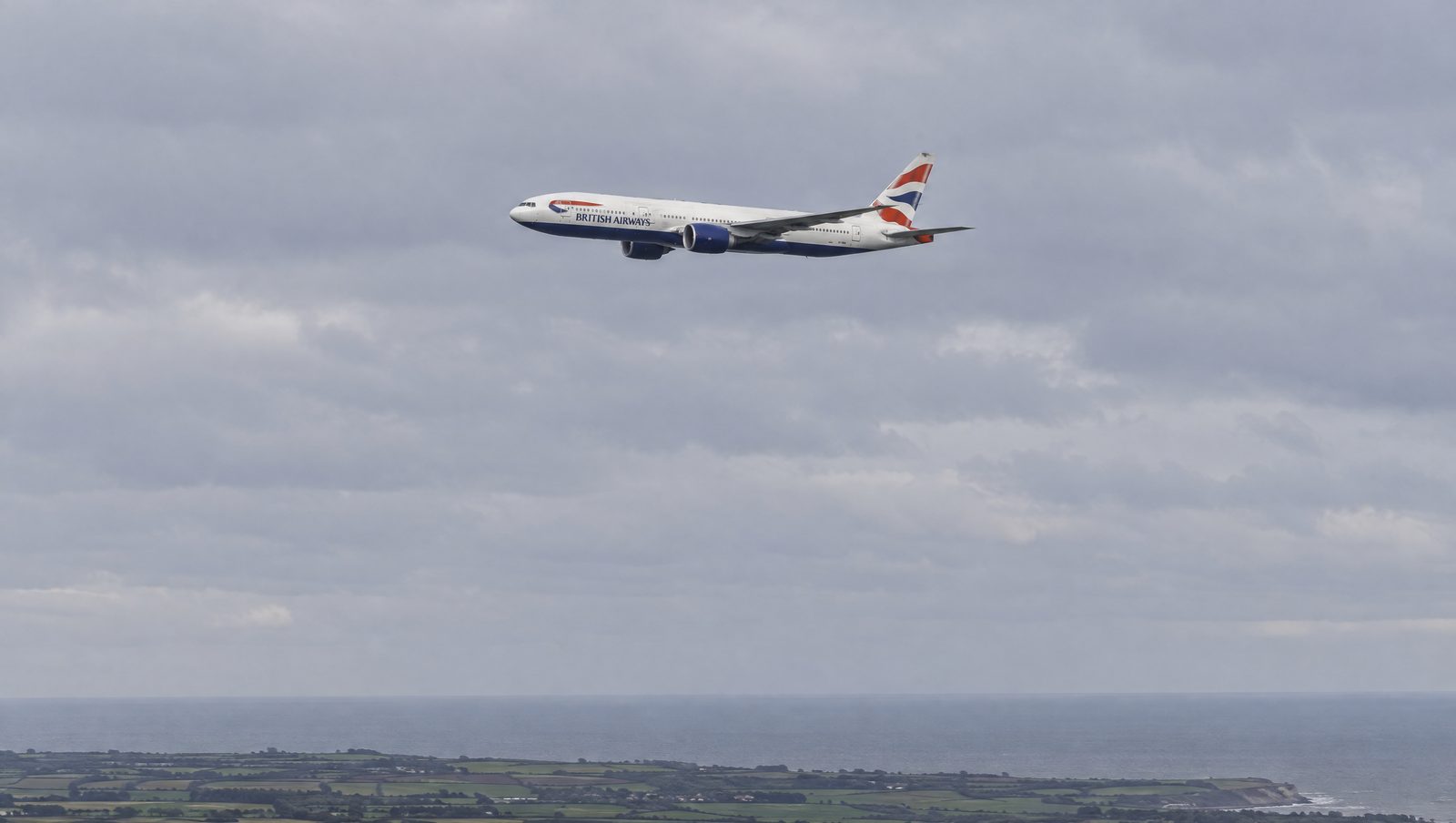
A British Airways Boeing 777-200ER flying from London Heathrow to Chicago O'Hare returned to Heathrow on Monday, 5 October 2026, after a reported loss of cabin pressure forced the crew to make an emergency descent over the Irish Sea. Passenger oxygen masks deployed during the descent, and the aircraft landed safely back in London later that afternoon.
The flight, BA295, was operated by the 777-200ER registered G-VIIA, according to reports by AeroTime and the German aviation site aero.de, both citing an incident report carried by AeroInside.
From 36,000 feet to 9,000 feet
The 777 was cruising at 36,000 feet about 40 nautical miles south of Dublin when the crew began descending. The aircraft levelled off at 9,000 feet roughly seven minutes later. The incident report described a descent of about 27,000 feet in that time, an average of roughly 3,800 feet per minute. Aero.de put the descent at within eight minutes.
Photographs taken inside the cabin showed oxygen masks hanging above passengers' seats. The crew transmitted the emergency transponder code 7700 and turned back toward London. Flight-tracking data showed the aircraft spending an extended period circling near southwestern Britain, and AeroInside reported that the jet dumped fuel before returning to Heathrow, where it landed safely.
What British Airways said
British Airways confirmed that the aircraft returned to Heathrow following a technical issue. "Customers disembarked the aircraft normally and our teams are working to get their travel plans back on track as quickly as possible," an airline spokesperson said.
The incident is now being investigated, aero.de reported, and British Airways has temporarily taken G-VIIA out of its flying programme. The airline has not publicly detailed the cause of the pressure loss.
An emergency descent, not a plunge
Some early reports described the aircraft as "plunging", but the available account shows a controlled emergency descent initiated by the pilots after the pressure loss. It is a standard procedure that crews train for. When a cabin loses pressure at cruising altitude, the priority is to bring the aircraft down quickly to an altitude where passengers and crew can breathe without supplemental oxygen, which is why the drop-down masks deploy automatically. Once the aircraft has descended to around 10,000 feet or below, the immediate risk from thin air is removed.
Fuel dumping before landing is also routine on long-haul widebody flights that turn back early. A 777 departing for Chicago carries a heavy load of fuel for the Atlantic crossing, and jettisoning some of it helps bring the aircraft closer to its permitted landing weight.
Similar cases
Pressurisation problems leading to emergency descents occur from time to time across the industry. In January 2023 a Kenya Airways Boeing 737 deployed its passenger oxygen masks and descended to 10,000 feet before landing safely in Mombasa. In February 2024 an Indonesia AirAsia Airbus A320 suffered pressurisation problems on two consecutive days, prompting emergency descents on both flights.
The 777-200ER at British Airways
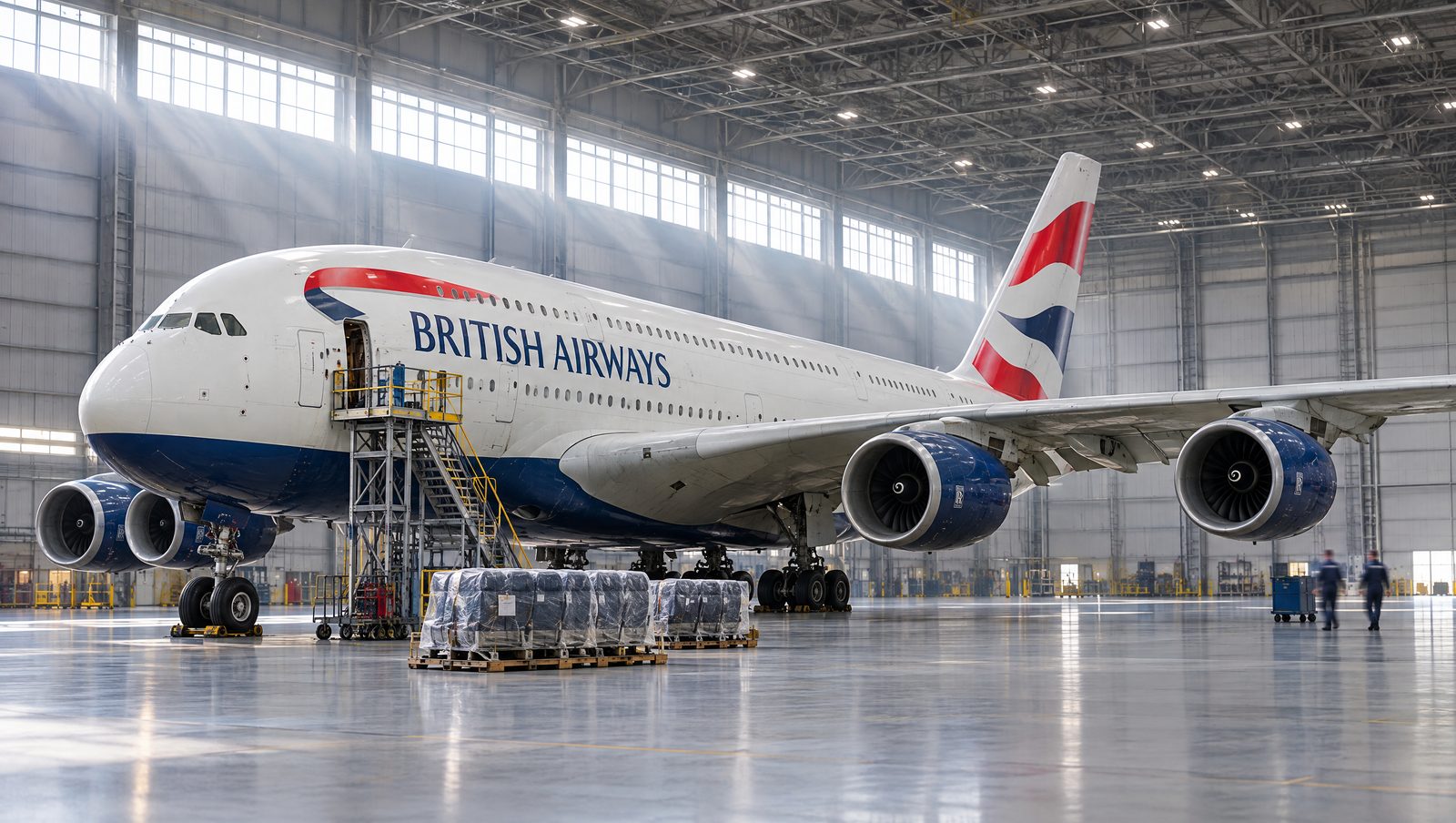
The 777-200ER remains an important part of British Airways' long-haul fleet, flying transatlantic and other long-haul routes alongside the airline's larger 777-300ERs, Boeing 787s, Airbus A350-1000s and A380s.
For passengers on BA295, the airline said its teams were working to get their travel plans back on track after they left the aircraft at Heathrow. Aviation Shop News will update this story if investigators or British Airways release more information about the cause of the pressurisation failure.
Comments
Loading comments…