


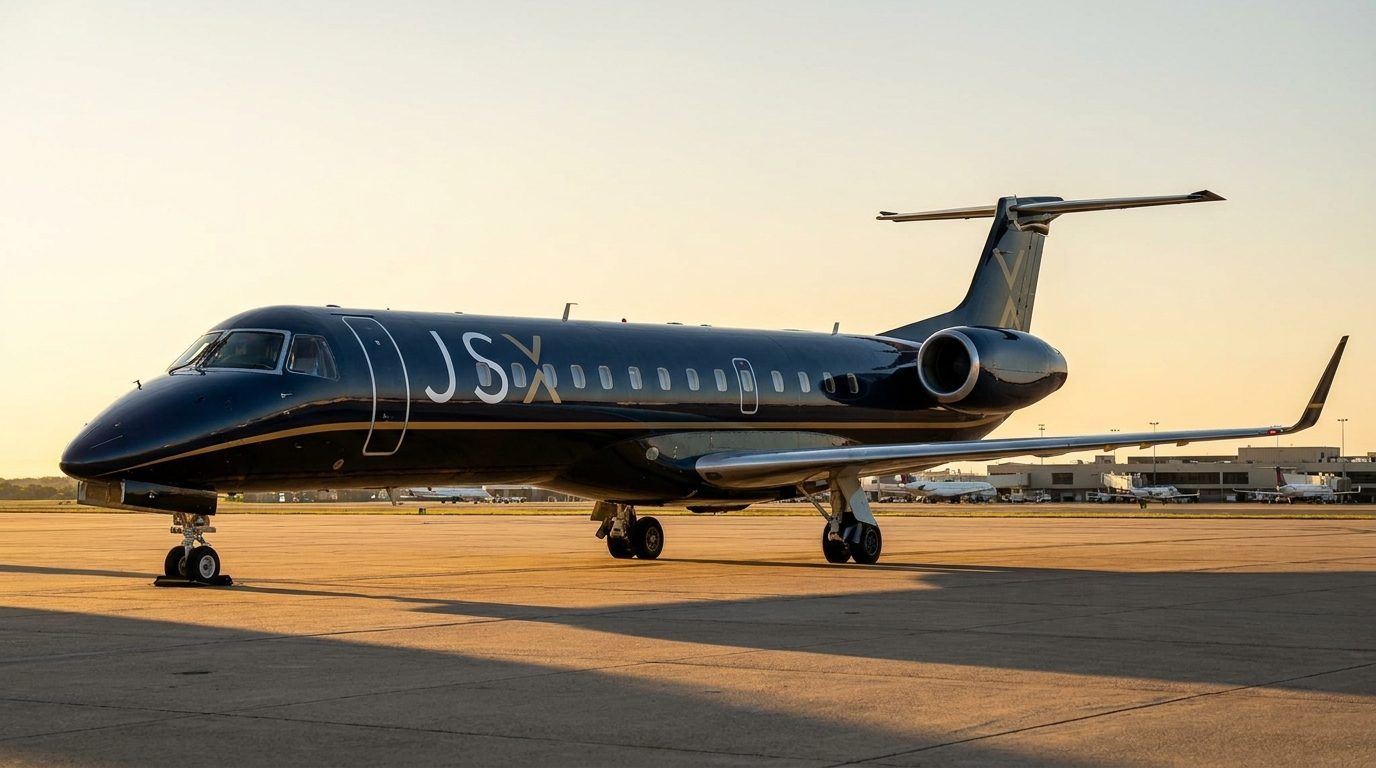
Heart Aerospace unveiled a new hybrid-electric regional design, the ES-36, on September 23, 2026, and said U.S. premium regional carrier JSX has ordered up to 100 of the aircraft. AeroTime’s same-day report describes the ES-36 as an evolution of Heart’s earlier ES-30 concept, with higher passenger and payload capacity but the same maximum takeoff weight and battery capacity targets as the prior baseline.
According to Heart, the ES-36 is sized for up to 36 passengers — the number behind the designation — and adds about 1,415 pounds (641 kilograms) of payload capability versus the ES-30. Propulsion changes are larger still: where the ES-30 was drawn as a four-engine layout, the ES-36 uses two twin hybrid powertrains, each pairing a 1.65-megawatt electric motor with a gas turbine.
Battery-only range is quoted at 125 miles (200 kilometers), while hybrid mode is listed at 745 miles (1,200 kilometers), figures Heart notes do not include reserves. The wing has also been redesigned, with a span of about 95 feet (29 meters), roughly 11 feet wider than the earlier concept, aimed at supporting the higher payload and revised propulsion package.
JSX’s order for up to 100 ES-36s is the commercial headline for U.S. observers. The Dallas-based carrier already flies a premium regional product with Embraer jets under public charter rules, and a future hybrid-electric type would fit its short-haul, high-frequency city pairs if certification and delivery timelines hold. Heart’s September 23 briefing did not publish a firm entry-into-service year for the ES-36 in the AeroTime summary, so the order is best read as a long-lead fleet bet rather than a near-term schedule change.
For Heart, swapping the ES-30 baseline for an ES-36 with more seats and a twin hybrid architecture is a significant product reset. Carrying more passengers without raising MTOW or battery size is the efficiency claim the company is selling to regional operators that need better unit costs than a 30-seat electric design could deliver.
Certification, battery supply, and airport infrastructure remain the usual open risks for any hybrid-electric regional programme. JSX’s interest nonetheless gives Heart a visible U.S. launch customer narrative at a moment when several electric and hybrid projects are still hunting airline logos.
Competing concepts from other startups and established airframers mean Heart still has to prove the ES-36’s economics in airline planning models, not only in brochure range. The JSX memorandum-style volume of up to 100 aircraft is large enough to matter if a meaningful share converts to firm deliveries, and small enough that JSX can still reshape its Embraer-era network if timelines slip.
Passengers should not expect ES-36 metal on JSX schedules in the next few seasons; the September 23 news is an order and a design reveal, not a route announcement. What changed on the day is Heart’s product definition and JSX’s place on the customer list. Source reporting: AeroTime, September 23, 2026; View From The Wing same-day JSX order coverage.
If Heart freezes the ES-36 configuration quickly, the next markers to watch are a formal firm-order split versus options, a target certification basis, and whether JSX commits specific city pairs that fit the 200-kilometer battery and 1,200-kilometer hybrid envelopes. Until those land, the story remains fleet technology rather than tomorrow’s timetable.

Comments
Loading comments…