


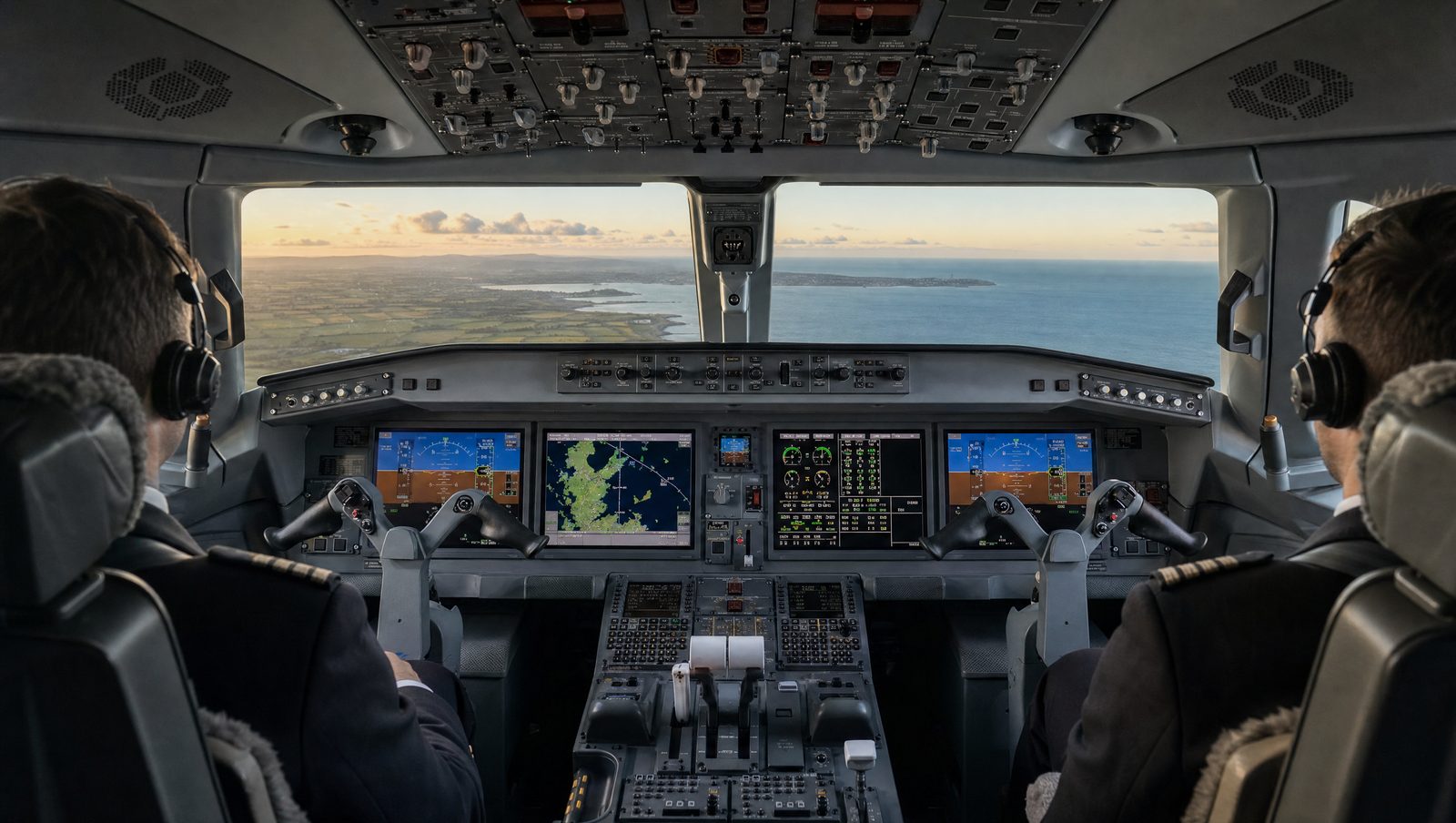
KLM Cityhopper has carried out its first trial of SITA's OptiDescent tool, which is designed to help pilots fly more fuel-efficient descents, and KLM is now weighing whether to use it more widely, FlightGlobal reported on 5 October.
The test took place on 30 September 2026 on a showcase round trip between Amsterdam and Dublin flown with an Embraer E195-E2, one of several flights operated by SkyTeam members under The Aviation Challenge, the alliance's annual programme for testing practical sustainability ideas. KLM Cityhopper operates most KLM services on the Dublin–Amsterdam route with the E195-E2, Travel Extra reported.
Predicting the descent
According to KLM and Travel Extra, OptiDescent was used on both the outbound and the return flight. The tool is designed to improve the prediction of an aircraft's descent profile, with potential savings in fuel and time. FlightGlobal described it as using predictive modelling to suggest flight trajectories that burn less fuel, and said KLM could explore wider implementation after the single-flight trial.
The idea behind descent optimisation is that a jet burns least fuel when it can begin its descent at the right point and glide down at idle thrust, without level-offs or speed brakes. In practice, air traffic control instructions such as shortcuts and speed restrictions often change the profile late. In a webinar recorded on 24 September, SITA described its descent-optimisation module for the OptiFlight suite as using machine-learning models of air traffic control patterns to predict the most likely descent and a digital twin of each aircraft to recalculate the optimal top-of-descent point and speed schedule, with the data sent to the flight deck by ACARS datalink. SITA said a test in South America on Airbus A320neos predicted 70% of ATC instructions correctly and saved about 40 kg of fuel per applied flight.
KLM has not published any fuel figures from its own trial.
More than one test on board
The Dublin rotation was a test bed for several other ideas. KLM said the airline planned to evaluate TaxiBot, which tows an aircraft from the gate to the runway without running its main engines. At Dublin, KLM's ground handler Swissport tested a turnaround using electric belt loaders, passenger steps, baggage tugs and an electric ground power unit, while electric equipment was also used at Amsterdam, Travel Extra reported.
In the cabin, KLM Cityhopper tried a redesigned waste trolley with extra drawers for sorting recyclable materials and a new cup holder that keeps coffee cups and plastic cups apart. KLM already collects and recycles up to 14 types of waste on its European flights. Passengers were also invited to share ideas for the airline's future through a "Message in a Bottle" initiative, as KLM Cityhopper marks its 60th anniversary this year.
Collective Momentum
This is the fifth edition of The Aviation Challenge, and its 2026 theme is "Collective Momentum", highlighting how airlines, passengers, crews, airports and partners can work together. KLM also flew its own showcase flight from Amsterdam to Delhi on 28 September and is using October to raise awareness of sustainable aviation fuel, with an onboard information video and SAF content in its in-flight magazine, Holland Herald.
Unlike new aircraft or fuel, descent optimisation needs no hardware change, which is why airlines are interested in it. If KLM extends OptiDescent beyond a single trial, the E195-E2 fleet that flies short European sectors, with frequent descents into busy airports such as Amsterdam and Dublin, is a natural place to start. Aviation Shop News will report any results KLM or SITA publish from the trial.




Comments
Loading comments…