


Qantas has brought forward the retirement of its ten Airbus A380 superjumbos by four years, with the world's largest passenger aircraft now set to begin leaving the Australian flag carrier's fleet from 2028 rather than 2032.
The airline confirmed the revised timeline on Thursday, pointing to soaring maintenance costs on the double-deck fleet as the trigger for the change. The A380 is the most complex aircraft Qantas operates, and heavy maintenance on an ageing quad-engined widebody consumes both money and hangar slots at a rate that narrows the case for keeping it flying once younger, more efficient replacements are available.
That availability is the other half of the equation. Qantas originally pencilled in 2032 because that was when it realistically expected to have enough new aircraft on property to fill the capacity gap the A380 would leave behind. Aviation supply chains have been under sustained pressure since the pandemic, and delivery delays at both Boeing and Airbus have repeatedly forced airlines to push fleet plans to the right. Qantas says it now has confidence in the delivery timeline for its incoming Airbus A350-1000s and Boeing 787 Dreamliners, which is what allows it to move the A380's exit forward instead of back.
A fleet that outlived its own farewell
The A380 has had an unusually long second act at Qantas. The type was central to the airline's recovery after the pandemic, and more recently it helped Qantas absorb displaced long-haul demand from Middle Eastern carriers affected by the conflict with Iran. A single A380 rotation moves a very large number of passengers on a trunk route, and in a market where seats were suddenly scarce that scale was valuable.
Retiring the fleet will produce a modest reduction in total Qantas capacity. The airline frames that as an advantage rather than a problem: replacing very large, fuel-hungry aircraft with smaller, far more efficient twins is expected to support earnings growth even if the raw seat count falls. Fewer seats chasing the same demand also tends to firm up fares, and Qantas has been explicit that its new aircraft are intended to drive returns rather than volume.
What replaces it
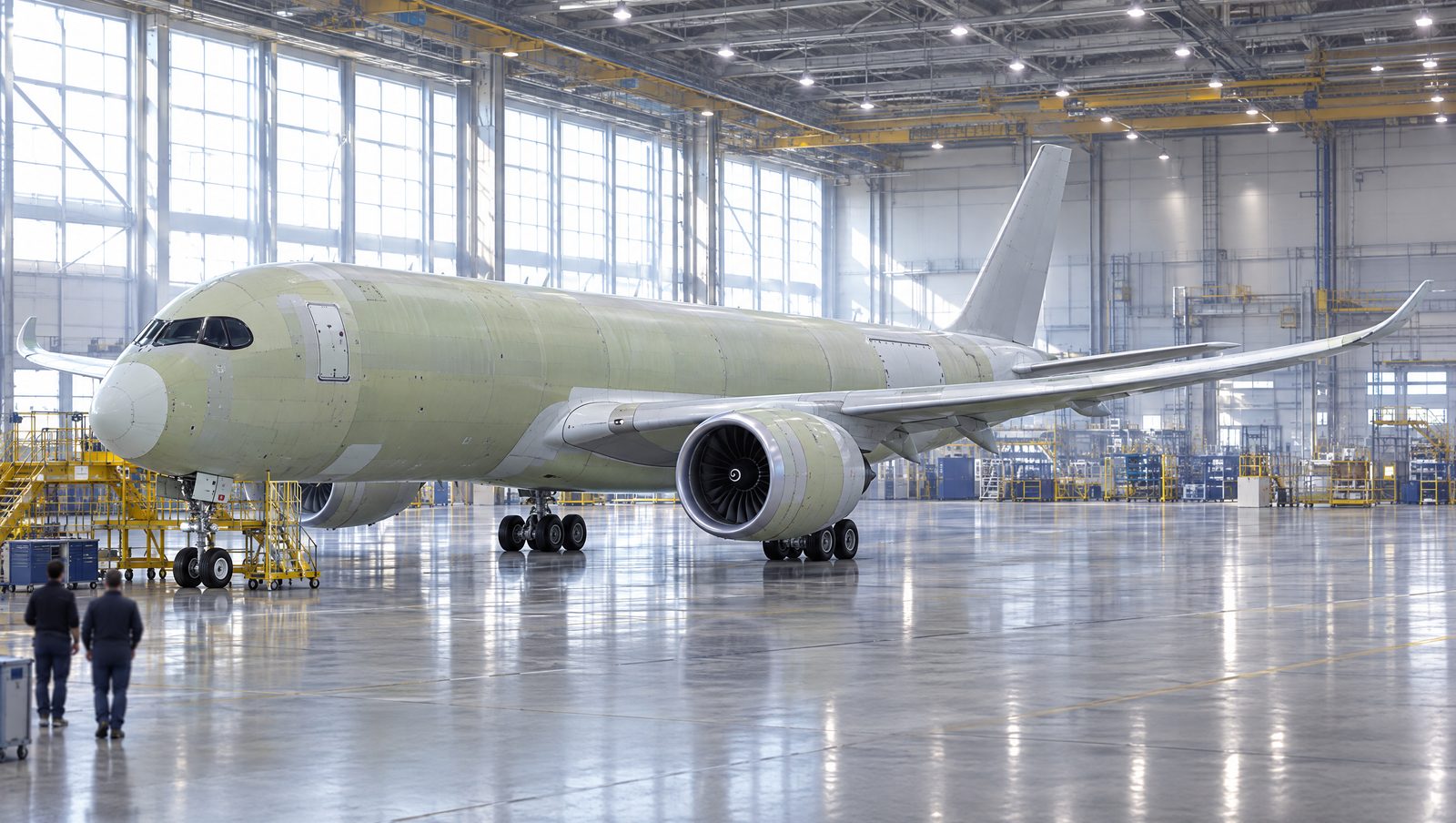
The replacement aircraft are the Airbus A350-1000 and the Boeing 787. Both are twin-engined widebodies with dramatically lower trip and seat costs than the A380, and both are already established parts of the Qantas long-haul plan. The A350-1000 in particular is central to the airline's ultra-long-range ambitions, while the 787 has been the workhorse of its recent international network growth.
For passengers, the practical effect will be gradual. Ten aircraft do not disappear at once, and a retirement that begins in 2028 implies a phase-out running well beyond that first year. Individual routes will lose the A380 as aircraft come off the line rather than in a single announcement, and Qantas has not published a route-by-route schedule for the wind-down.
For the A380 itself, the decision is another data point in a long, slow ending. The type is out of production, its operator base has narrowed to a small group of very large network carriers, and the economics that once justified a 500-seat quad have not returned. Qantas moving its exit four years earlier does not change that trajectory; it simply confirms it.
Sources: Paddle Your Own Kanoo. Featured image: AI-generated by AviationShop. By James Holloway.


Comments
Loading comments…