


Of all the numbers a pilot calculates before takeoff, few matter more than V1. It is the speed that divides the takeoff roll into two worlds: before it, you can still stop on the runway; after it, you are committed to fly. Understanding V1 explains a great deal about how airliners are operated safely.
The takeoff decision speed
V1 is formally the maximum speed at which a pilot can begin to reject a takeoff and still stop the aircraft within the remaining runway. Reach V1 and the rule is simple and absolute: you continue the takeoff, even if an engine fails a moment later. Below V1, if something serious goes wrong — an engine failure, a warning, a tyre burst — the crew can close the thrust levers, deploy the brakes and spoilers, and bring the jet to a halt before the end of the pavement.
Why the line is drawn so firmly
Above V1 the aircraft is moving too fast to stop in the distance that remains. Trying to abort would run the jet off the end of the runway. So engineers and pilots accept a counter-intuitive truth: past V1, the safest option after an engine failure is to keep going, lift off on the remaining engine, climb away and deal with the problem in the air, where there is time and altitude to work the checklists.
V1, VR and V2
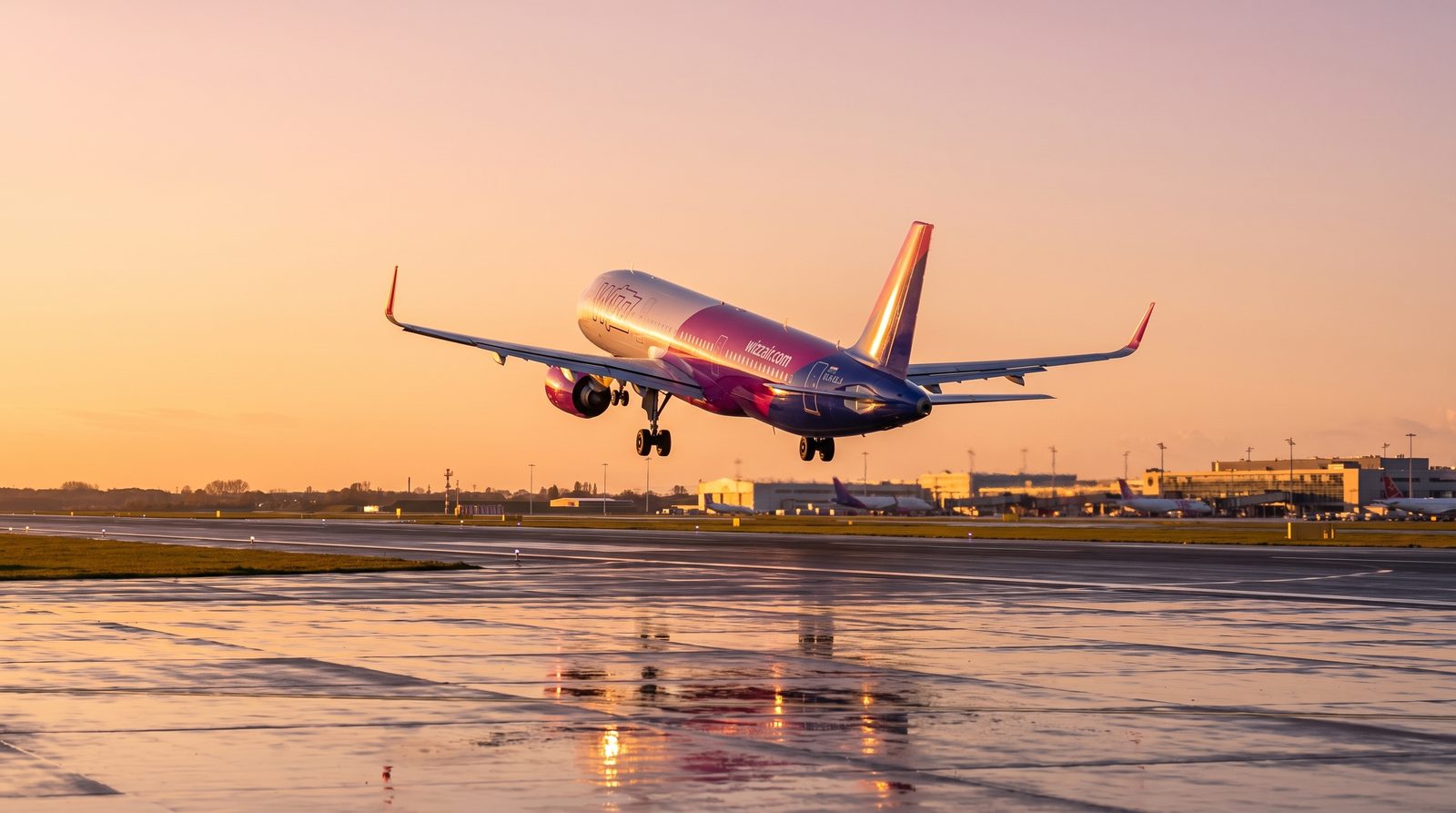
V1 rarely travels alone. It is the first of three takeoff speeds the crew brief before every departure. VR, the rotation speed, is when the pilot pulls back to raise the nose. V2 is the takeoff safety speed — the minimum speed at which the aircraft can safely climb even if one engine has failed. On a twin like the Airbus A320 these speeds are often only a few knots apart, which is why the moments around rotation are so closely choreographed.
How V1 is calculated
V1 is not a fixed number. It changes with every takeoff depending on the aircraft’s weight, the runway length, the slope and surface, the wind, the temperature, the altitude of the airport and the flap setting. A heavy jet on a short, wet, high-altitude runway on a hot day will have a very different V1 from the same aircraft light on a long, dry, sea-level runway. Flight crews compute these figures from performance tables or an onboard performance application before every flight, and the pilot monitoring calls out ‘V1’ aloud so both pilots know the decision point has passed.
Rejecting a takeoff
A high-speed rejected takeoff is one of the most demanding manoeuvres a crew will ever perform. The aircraft may be travelling at well over 150 mph when the pilot decides to stop, and the brakes alone absorb an enormous amount of energy, often heating to the point where they need time to cool before the jet can move again. Because it is so demanding, crews are trained to reject only for the most serious problems once the aircraft is near V1 — a major engine failure, fire, or a clear indication the aircraft cannot fly. Minor issues are taken into the air and sorted out from the safety of a climb.
The human factor
The reason V1 is briefed so carefully is that the decision to reject a takeoff has to be made in a fraction of a second, at high speed, often with alarms sounding. There is no time to debate it. By agreeing in advance exactly what will and will not trigger a rejected takeoff, and exactly when the option disappears, the crew removes hesitation from one of the most time-critical moments in all of flying. That discipline — a number, a callout and an unbreakable rule — is a quiet example of how commercial aviation turns split-second risk into routine safety.
AviationShop Editorial Desk. Featured image: AI-generated by AviationShop. By Elena Vargas.










Comments
Loading comments…