


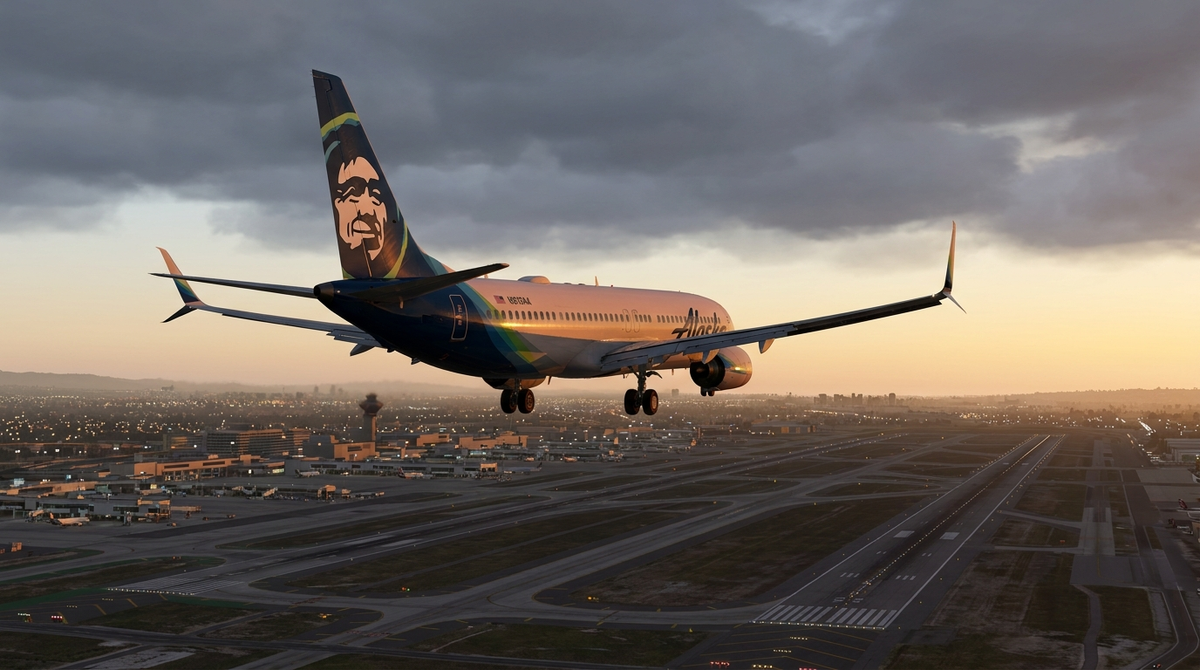
An Alaska Airlines transcontinental flight ended far from its intended destination on May 15, after a Boeing 737 MAX 9 operating Flight ASA34 from Seattle to New York declared an emergency and diverted to Los Angeles International Airport. The aircraft, scheduled to depart Seattle at 9:01 a.m. local time, pushed back at 9:24 a.m. before crews requested priority handling several hours into the cruise and turned south toward LAX, where it touched down safely shortly before 1 p.m. Eastern.
Alaska Airlines confirmed the diversion but did not immediately disclose the cause. According to people familiar with the operation, the flight crew followed standard procedures for an unspecified onboard issue, and no injuries were reported among the passengers and crew. Aviation investigators are reviewing the incident, which industry sources say could be linked to a technical advisory, a pressurization concern, or a medical event on board.
The diversion lands at an awkward moment for the 737 MAX 9 program. Alaska remains one of the largest operators of the type, with its fleet returning to growth after the high-profile mid-cabin door-plug failure on Flight 1282 in January 2024. The airline says all of its MAX 9 aircraft now operate under enhanced inspection regimes mandated by the FAA, and ASA34 has not been publicly linked to any structural concern. Even so, every MAX 9 emergency draws outsized attention from regulators and the traveling public.
Disruption compounded an already turbulent travel day for the carrier. Alaska reported 68 irregular operations across Anchorage and outlying Alaska stations on the same date, tied to weather and crew sequencing problems on its regional network. Passengers from ASA34 were rebooked on later transcontinental services or accommodated by partner airlines from Los Angeles, with the aircraft expected to return to service after a thorough engineering check.
The Federal Aviation Administration is expected to receive a written report from Alaska Airlines within the standard reporting window, with the NTSB monitoring the case but not yet involved. For the airline, the priority is identifying the root cause quickly, protecting the schedule on a heavily booked route, and reassuring nervous flyers that the MAX 9 — now central to its strategic plan — is operating safely.
Compiled from publicly available aviation news sources. Featured image: AI-generated by AviationShop. This article is original editorial content; facts have been verified across multiple public sources.

















Comments
Loading comments…