


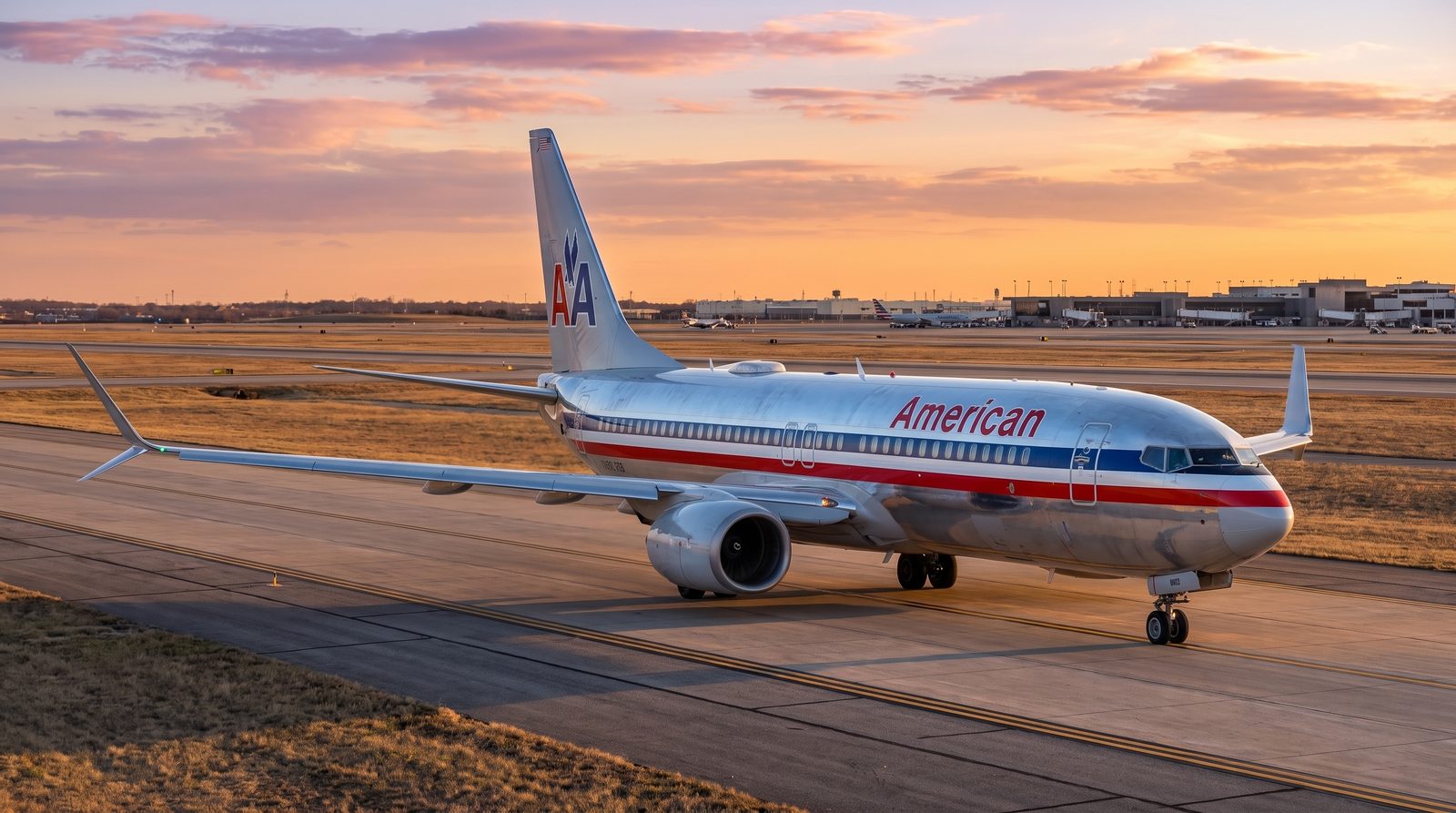
American Airlines announced on Tuesday that it will fit seatback entertainment screens to its domestic fleet, reversing one of the most debated cabin decisions any US carrier has made in the past decade. Every narrowbody Airbus and Boeing jet in the fleet will be retrofitted with 4K displays, the airline says, alongside Bluetooth connectivity and USB-C fast charging ports at every seat.
The scale is substantial. More than 800 mainline narrowbody aircraft are covered by the programme, and the work is planned to be completed by the early 2030s. Passengers will have to be patient: the first American narrowbody aircraft delivered with seatback entertainment as standard will not enter the fleet until 2028, at which point every new Airbus A320-series aircraft and Boeing 737 handed over to the carrier will arrive with screens already installed.
For years American resisted seatback screens, arguing that streaming entertainment over wi-fi to passengers' own phones and tablets saved weight and therefore fuel. That thinking drove the 2017 decision to remove the displays from its narrowbody cabins. With this retrofit, American's single-aisle cabins will largely resemble those of its two main domestic competitors, Delta Air Lines and United Airlines, both of which kept or restored embedded screens. United made the same reversal in 2021 after also betting heavily on bring-your-own-device entertainment.
The upgrade does not sit on its own. It is designed to complement American's rollout of SpaceX's Starlink high-speed wi-fi and a broader wave of investment in premium cabins, onboard dining and airport lounges. Domestic First Class seating is set to grow from roughly a quarter of the narrowbody fleet to 40 percent, a shift that says as much about where the revenue is as the screens do.
Heather Garboden, American's chief customer officer, described the move as one of the most significant investments in the onboard experience in the airline's history, adding that next-generation seatback entertainment at every seat and substantially more premium seating options will give customers more ways to relax, stay connected and enjoy their journey.
No supplier chosen yet
American has not identified which company will build the screens. The airline says it is evaluating several leading technology providers and will select the partner that delivers the best customer experience and value, and that it is looking for a modern, scalable platform that can evolve alongside technology advances rather than a system frozen at the point of installation. That last point matters more than it sounds: the reason airlines abandoned embedded entertainment in the first place was that hardware bolted into a seatback ages far faster than the aircraft around it.
Long-haul flyers already know what the fitted product looks like. More than 140 aircraft in American's widebody fleet carry seatback screens today, and the narrowbody retrofit brings the domestic experience closer to that standard rather than inventing something new.
Why the reversal happened
The bring-your-own-device argument was always a trade between weight and perception. Screens add mass and maintenance cost across hundreds of airframes; they also serve as a highly visible signal of cabin quality on routes where an airline is competing directly against carriers that have them. On transcontinental flights in particular, a passenger comparing a seat with an embedded 4K display against a seat with a phone holder tends not to weigh the fuel burn argument.
The long timeline is the honest part of the announcement. A retrofit of this size touches supplier selection, certification, seat structure and hundreds of individual aircraft rotations through maintenance. Announcing in 2026 and finishing in the early 2030s is not slow by industry standards; it is simply what a fleet-wide cabin change looks like.
Sources: FlightGlobal, PYOK. Featured image: AI-generated by AviationShop. By Elena Vargas.


Comments
Loading comments…