


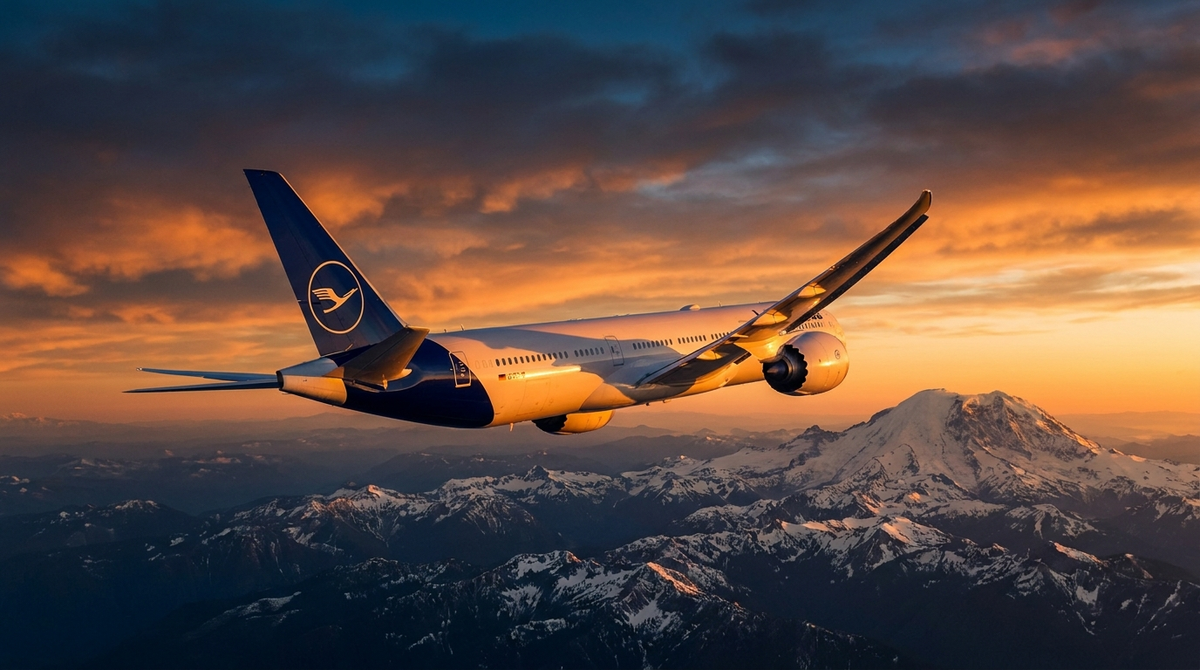
Boeing's 777X program took a major step toward its long-awaited entry into service on Friday, May 8, 2026, as the first production Boeing 777-9 destined for launch customer Lufthansa completed its maiden test flight from Paine Field in Everett, Washington. The flight clears another hurdle ahead of the German flag carrier's first scheduled delivery in 2027 and brings Boeing closer to closing a chapter that has run roughly five years past its original timeline.
A 3-Hour 27-Minute Profile Over The Pacific Northwest
The aircraft, registered N20080 and bearing serial number 1781, was flown by Boeing test pilots Capt. Ted Grady and Capt. Jake Miller. The crew followed a standard new-build profile designed to validate aircraft systems and structures, climbing to a cruising altitude of 39,000 feet and reaching a top speed of 492 knots over Washington and Oregon. The jet returned to Paine Field at 4:52 p.m. local time, completing a 3-hour 27-minute mission in which all primary systems performed as expected.
This is the sixth 777-9 to take to the skies, but the first wearing a customer's livery. Where earlier flight-test airframes carried instrumentation racks and ballast in place of seats, the Lufthansa-bound aircraft is fully outfitted with the airline's revenue cabin, including premium and economy seats and the in-flight entertainment system that paying passengers will eventually see.
The 777X Program And Lufthansa's Order
Lufthansa Group is one of the launch customers for the 777X family and has 20 Boeing 777-9s on order. The aircraft is designed to replace older 747-400s and some 777-300ERs in the carrier's long-haul fleet, offering more range, lower fuel burn per seat and a substantial step up in cabin product. The 777-9's signature features include the largest GE9X engines ever fitted to a commercial aircraft and folding wingtips that allow the jet's record 71.8-meter wingspan to fit existing Code E gates.
What Comes Next
With customer-configured airframes now joining the flight-test fleet, Boeing's focus shifts to closing out type certification with the FAA and EASA. Production aircraft are essential for completing the remaining certification milestones, validating the cabin systems and finalising the airline's training and acceptance procedures. Lufthansa has been preparing its Frankfurt and Munich operations for the type for years, and a successful 2027 entry into service would give the carrier a meaningful capacity boost on key transatlantic and Asian routes just as premium long-haul demand recovers from the recent Iran-related fuel shock.
Compiled from publicly available aviation news sources. Featured image: AI-generated by AviationShop. This article is original editorial content; facts have been verified across multiple public sources.












Comments
Loading comments…