


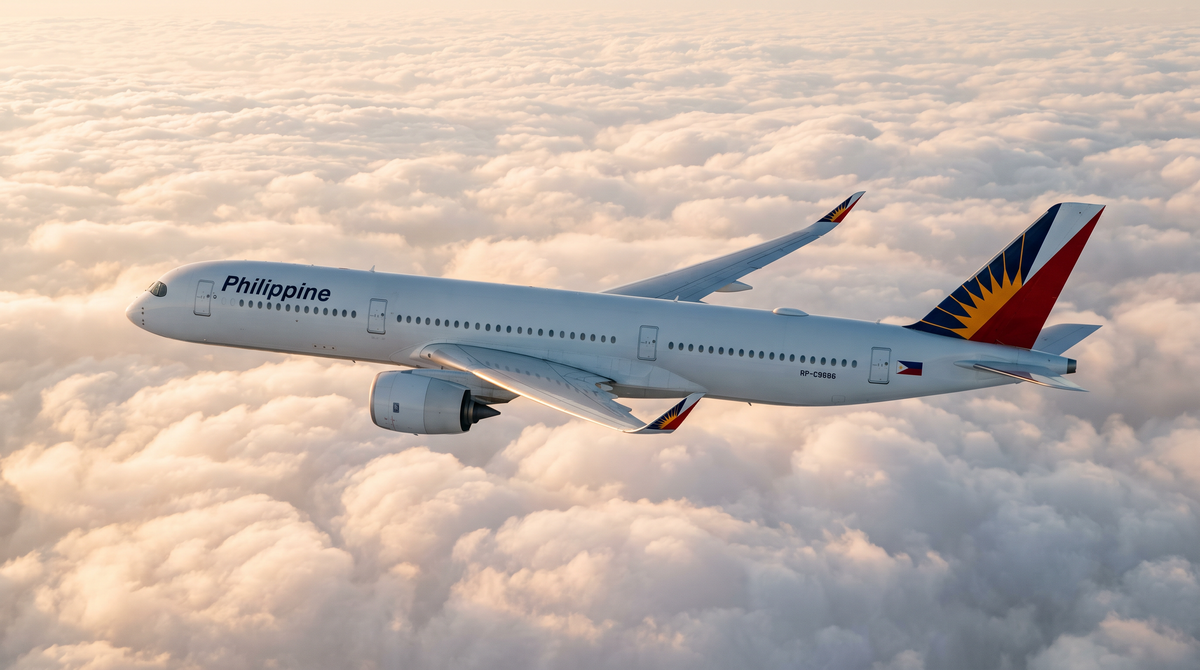
Philippine Airlines (PAL) has posted a net loss of $25.1 million for the first half of 2026, a sharp swing from the $136.7 million profit it recorded over the same period a year earlier, as sharply higher fuel costs tied to conflict in the Middle East outweighed steady revenue growth.
Total revenue rose 5.9% to $1.746 billion, an increase of about $98 million year-on-year, supported by higher passenger yields, stronger cargo performance and continued growth in ancillary revenue. Passenger revenue climbed 4.5% to $1.47 billion, while cargo revenue jumped 30% to $98.2 million on fare and freight-rate adjustments.
That growth, however, was not enough to offset the fuel bill. Fuel expenses climbed 48.2% year-on-year to $674.5 million, a $219.5 million increase that pushed the carrier into the red. Fuel made up 39.2% of PAL's operating costs during the half, up from 30.3% a year earlier, even as non-fuel costs rose just 4.1%. EBITDA fell 28.5% to $271.0 million, with the EBITDA margin narrowing to 15.5% from 23.0%.
The pressure was most acute in the second quarter, when PAL swung to a net loss of $103.6 million from a $60.2 million profit in the same quarter of 2025, as fuel costs surged 88.2% year-on-year. Passenger numbers also softened, with the airline carrying 8.2 million passengers in the first half, down 3.1% from a year earlier, while its load factor eased to 78.9% from 81.6%.
To manage the rising costs, PAL adjusted schedules on selected domestic, Middle East and regional routes while keeping its long-haul international network largely stable. Available seat kilometres held steady at 22.8 billion.
Even amid the financial pressure, the airline continued to invest in its long-term strategy. PAL brought its second Airbus A350-1000 into service in May 2026, deploying the widebody on long-haul routes including New York (JFK), Toronto (YYZ) and San Francisco (SFO). It also expanded its Mabuhay Miles loyalty programme through new partnerships with Qantas Airways and Qatar Airways, and began integration work tied to its planned entry into the oneworld alliance.
The results underline how exposed carriers with significant long-haul exposure remain to fuel-price shocks, even when demand and yields hold up. With revenue still growing and network investment continuing, PAL's challenge for the rest of 2026 will be containing fuel-driven costs while it advances its alliance and fleet plans.
Sources: AeroTime. Featured image: AI-generated by AviationShop. By Marco Bianchi.





Comments
Loading comments…