


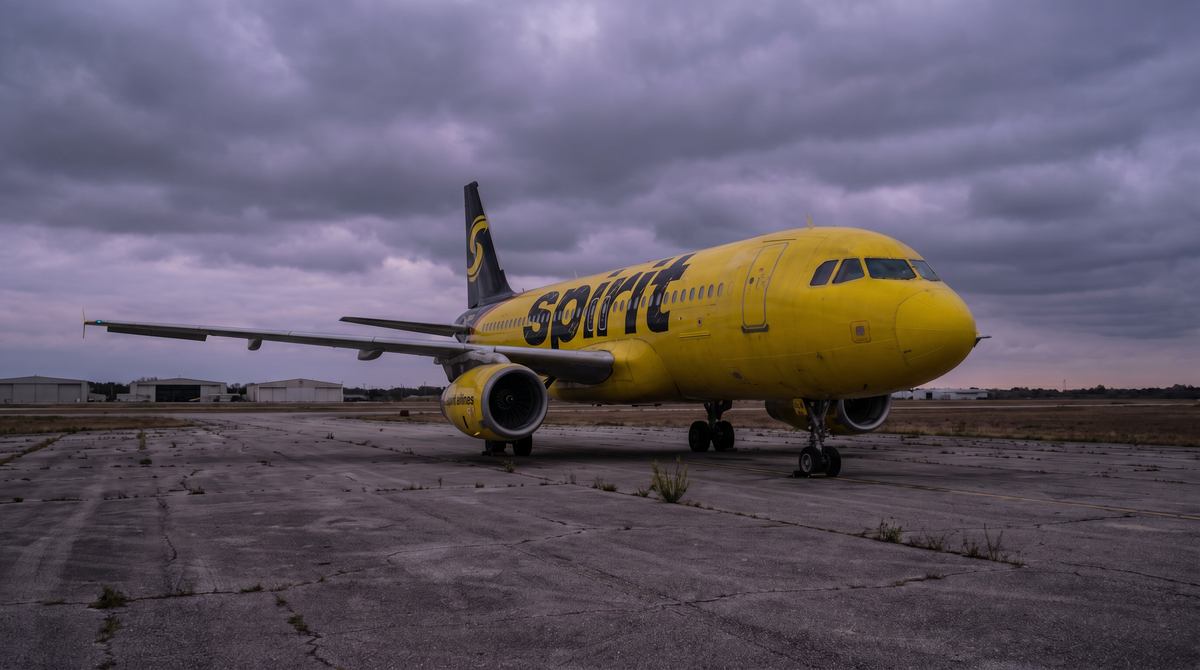
After 33 years of operations, Spirit Airlines has officially ceased flying, marking the end of one of the most disruptive low-cost carriers in modern aviation history. The bankruptcy court approved the airline's liquidation in May 2026, finalising the collapse of a brand once synonymous with ultra-low fares and bright yellow aircraft.
Spirit filed for bankruptcy twice between late 2024 and 2026, after a string of failed merger attempts. The carrier rejected Frontier Airlines' initial offer in 2022 in favour of a richer JetBlue proposal that was ultimately blocked by a federal court in January 2024. Spirit then exited its first bankruptcy in March 2025 with what insiders have since described as an unrealistic standalone plan.
How the Ultra-Low-Cost Pioneer Collapsed
Industry analysts point to Spirit's catastrophic combination of factors: post-pandemic demand for premium products, a brutal Pratt & Whitney GTF engine grounding affecting the A320neo fleet, an inability to expand into more lucrative leisure markets, and the failed merger pathway. By April 2026, Fortune was already describing Spirit's business model as broken beyond repair.
In the final months, Spirit attempted a partial wind-down with a skeletal schedule of around 15 daily departures connecting Las Vegas, Detroit, Orlando and Fort Lauderdale. That, too, proved unsustainable. Frontier Airlines moved quickly to absorb Spirit's Fort Lauderdale traffic with 11 new routes, and Allegiant Travel announced a $1.5 billion merger with Sun Country Airlines that further reshapes the ultra-low-cost landscape.
Aircraft Boneyard and Workforce Impact
Roughly 91 of Spirit's Airbus jets had already been parked at Nomadic Aviation's Arizona boneyard in the months leading up to the final shutdown. More than 17,000 Spirit employees were left without work, with class-action WARN Act lawsuits filed over $10.7 million in disputed retention bonuses.
Spirit's collapse leaves the United States with a more consolidated low-cost market dominated by Frontier, Allegiant, Sun Country and Breeze. The famous yellow paint scheme — once a fixture at every major US hub — now belongs to aviation history.
Compiled from publicly available aviation news sources. Featured image: AI-generated by AviationShop. This article is original editorial content; facts have been verified across multiple public sources.





Comments
Loading comments…