


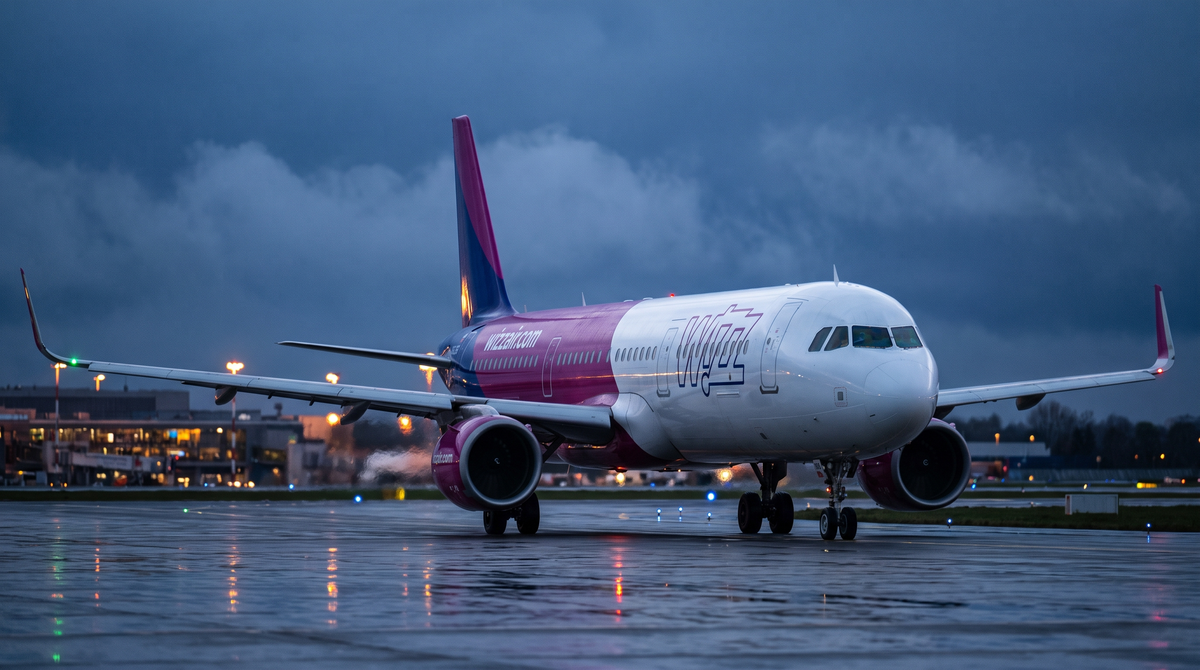
Wizz Air is mounting one of its most aggressive expansions yet, unveiling 15 new routes and adding 19 aircraft as the ultra-low-cost carrier floods capacity into its Budapest stronghold for the 2026 summer season.
The growth is centered on Budapest Ferenc Liszt International Airport, where Wizz Air already holds a commanding position. With the additional jets and routes, the airline is offering close to three million seats across the summer - an increase of roughly 30% compared with the same period last year. The push further cements Wizz Air's dominance at the Hungarian capital, where its market share has now climbed past 40%.
The 19 additional aircraft represent a significant capacity commitment for a carrier that has built its brand on squeezing the most out of every airframe. More jets based at Budapest translate into higher frequencies on established routes as well as entirely new city pairs, giving the airline denser coverage across Central and Eastern Europe and additional reach into Southern European leisure markets.
Alongside the Budapest build-up, Wizz Air is expanding elsewhere in its network, including added flying from Rome aimed at sun-seeking summer travelers. The strategy is classic Wizz Air: concentrate aircraft at fortress bases, drive down unit costs through high utilization, and use low fares to stimulate demand on routes that legacy carriers often overlook.
The timing is notable. European airports are bracing for another congested summer, and ultra-low-cost carriers have leaned on scale and operational discipline to protect their schedules. By basing more aircraft at a single hub, Wizz Air gains flexibility to recover more quickly when weather or air traffic control delays ripple across the continent.
For Budapest, the expansion reinforces the airport's role as one of Central Europe's busiest low-cost gateways. For passengers, it means more destinations and, in many cases, more daily choices at the low fares that define the Wizz Air proposition. It also intensifies competition with rival carriers operating from the region, who now face an even larger Wizz Air presence on overlapping routes.
Wizz Air has long argued that Central and Eastern Europe remains underserved relative to Western Europe, and its latest Budapest investment is a direct bet on that thesis. Whether demand keeps pace with the added seats will become clear as the summer schedule matures, but the airline is clearly wagering that appetite for affordable travel across the region is far from exhausted.
Sources: Simple Flying, Routes. Featured image: AI-generated by AviationShop. By Elena Vargas.











Comments
Loading comments…