


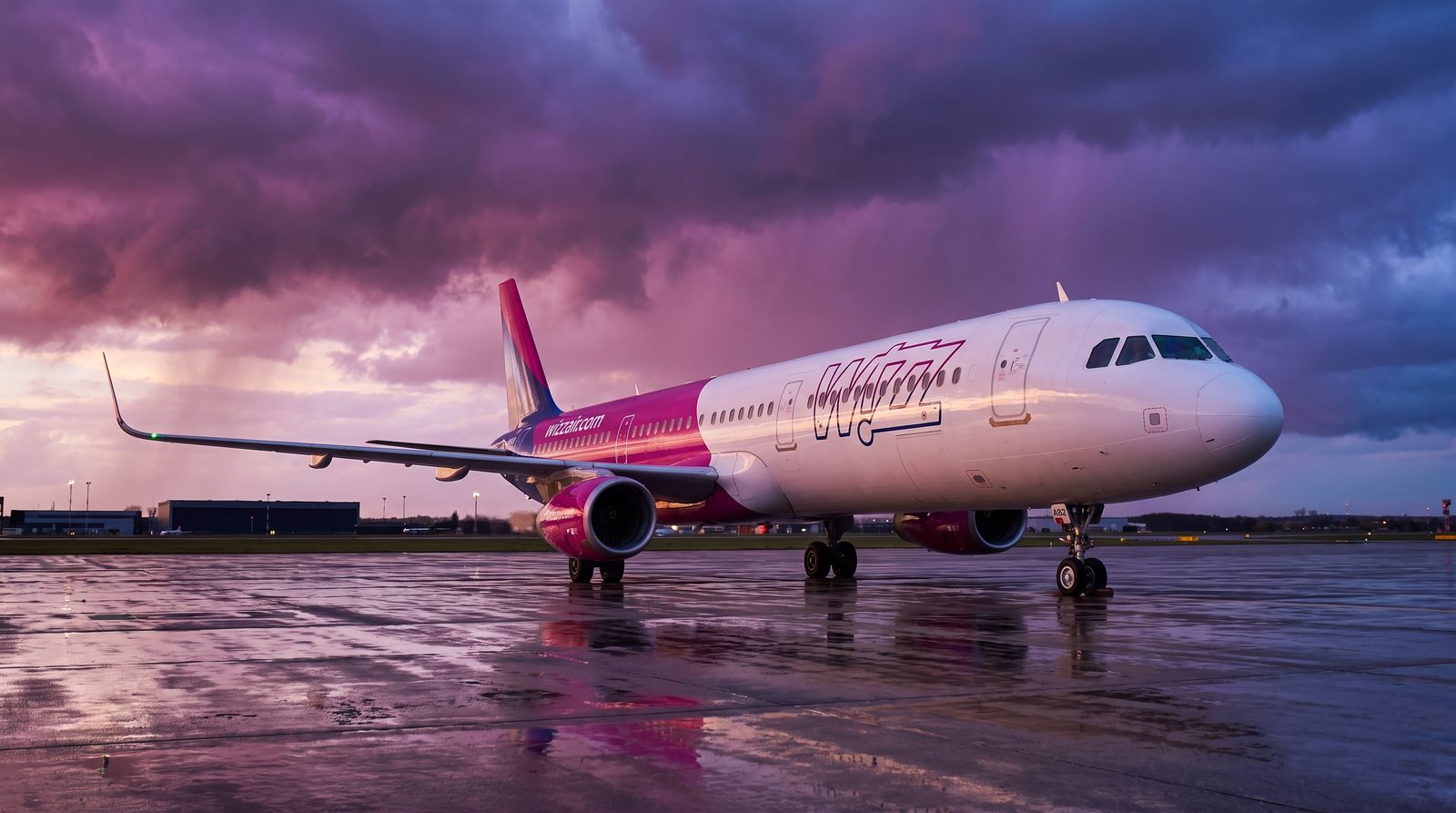
Wizz Air is stripping engines from brand-new Airbus A321XLRs parked in Poland and fitting those Pratt & Whitney PW1100G powerplants onto standard A321neos, according to a September 22 report from Simple Flying. Three XLR airframes are currently on the ground at Bydgoszcz Ignacy Jan Paderewski Airport (BZG), despite being among the newest commercial jets in the airline’s fleet.
The move is a blunt response to the PW1100G durability and shop-visit backlog that has grounded a sizable share of Wizz’s neo fleet. Simple Flying reports the airline operates 208 Airbus A321neos including nine A321XLRs, and has close to two dozen A321neos parked largely because of engine issues — nearly ten percent of the fleet. Pratt & Whitney’s MRO capacity has not kept pace with removals, and new-engine supply has also been tight enough that some aircraft roll out without powerplants.
Because the A321neo and A321XLR share the same PW1100G engine family, an XLR can donate a relatively fresh engine to keep a workhorse neo flying. Wizz’s XLRs are configured with 239 all-economy seats, matching the carrier’s neo cabin product of tight pitch and no seatback screens. On paper the XLR is the longer-range tool; in practice Wizz has been using most of its flying XLRs on European sectors and a handful of Italy–Middle East routes that barely stretch the type’s legs.
That mismatch helps explain the cannibalization. The airline originally held 47 XLR orders but converted 36 of them to standard A321neos. Executives have said the XLR does not fit the business model without a premium cabin and has underperformed on range and payload expectations. On short-to-medium European sectors, the heavier XLR burns more fuel than a standard neo for little commercial gain, so prioritizing neo utilization is rational even when it means parking nearly new long-range frames.
Simple Flying counts five XLRs still flying, with a fourth example parked for maintenance in addition to the three Bydgoszcz jets that have had engines removed. Only two further XLRs are expected to arrive. The fleet snapshot in the report lists 21 A320ceo, six A320neo, 34 A321ceo, 199 A321neo and nine A321XLR airframes in the wider Wizz family picture — numbers that underline how neo-centric the operation has become.
For passengers, the visible symptom is cancelled or constrained neo capacity rather than missing ultra-long thin routes. For Airbus and Pratt & Whitney, the episode is another public case of operators treating scarce GTF engines as the binding constraint, even when airframes themselves are young. For Wizz, it is also an admission that the XLR chapter is being managed for parts value and network pragmatism more than for the long-thin mission the jet was sold to open.
Engine swaps of this kind are temporary by design: once shop visits clear and spare PW1100Gs return, XLRs can be re-engined and returned to the line. Whether Wizz chooses to do that — or keeps the type on a short leash while standard neos do the earning — will show up in future utilization data. For now, three shiny XLRs in Bydgoszcz without engines tell the story more clearly than any route map.
The episode also lands as European leisure demand remains strong but fuel and engine costs bite low-cost carriers harder than advertised. Keeping the denser neo fleet airborne protects Wizz’s core short-haul cash engine. Sacrificing XLR availability is the price of that insurance while the GTF support chain catches up.



Comments
Loading comments…