


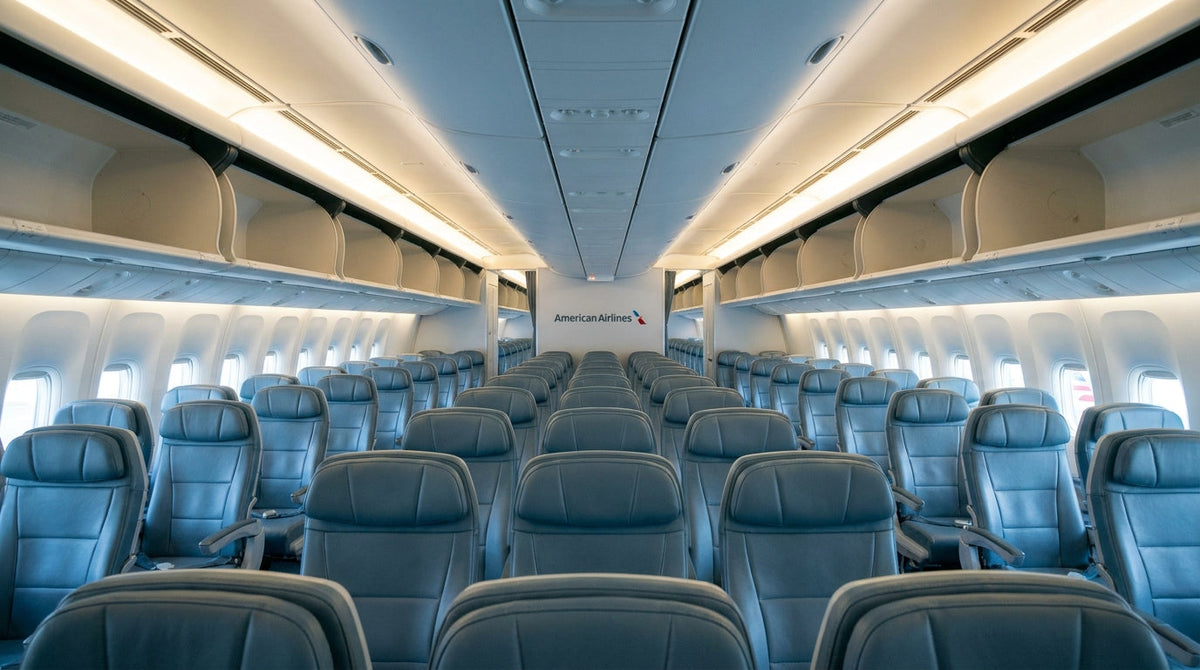
American Airlines has changed the way it compensates passengers who are involuntarily downgraded, after a complaint filed with the US Department of Transportation challenged the flat 40% refund rule the carrier had quietly written into its fare tariff and conditions of carriage earlier this year.
Under that rule, a passenger who booked a premium cabin but was moved to coach at the gate was entitled to a refund of 40% of the original ticket price for the affected segment, rather than the difference between the cabin paid for and the cabin actually flown. The change was not publicised, but it did require an update to American's published tariff, and it was noticed.
Benjamin Edelman and Mike Borsetti, who have tracked airline refund practices for years, worked through what the policy meant in practice. On a typical American Airlines flight from New York JFK to London Heathrow booked three days before departure, they found coach tickets selling for $949 while the cheapest business class seat cost $10,644. Applying a 40% refund to an involuntary downgrade on that itinerary would leave the passenger having effectively paid $6,386 for a coach seat, sitting beside travellers who paid $949 for the same product.
To test whether the extreme example was representative, the pair turned to transatlantic fare analysis compiled by Cirium. That data showed an average one-way transatlantic coach fare of $435 in 2023 against an average business class fare of $1,845 — premium seats selling for roughly 4.2 times the economy fare. On that basis, they argue the appropriate downgrade compensation would be around 76%, not a flat 40%. The gap is not limited to long-haul: they calculate that the appropriate refund on transcontinental flights between New York JFK and Los Angeles should be 73%, and 72% between LaGuardia and Dallas-Fort Worth.
Involuntary downgrades happen for several reasons. A broken seat, or a last-minute aircraft swap driven by a maintenance issue, can leave an airline with fewer premium seats than it has sold. Sometimes the cause sits entirely within the carrier's control — most obviously when more tickets have been sold than there are seats in the cabin.
Edelman and Borsetti took their case to the DOT, arguing that the flat-rate policy breaches federal rules. They cited 14 CFR § 260.6, which requires that when a passenger's flight is significantly changed the carrier must provide a prompt refund of the full value of the service paid for but not delivered, and 14 CFR 253.7, which bars airlines from imposing terms that restrict refunds of the ticket price. In their reading, a downgrade is a significant change.
American's response to the regulator defended the policy. The airline said that fares are highly dynamic and that reconstructing a lower-cabin fare after the fact would be impractical. “American accordingly chose to use a standardized proxy for valuing the difference in class of service, rather than reconstructing a lower cabin fare for the downgraded consumer,” the carrier wrote, adding that “a refund of 40% for the affected segment returns a substantial portion of the consumer's paid fare while recognizing that the consumer still received the principal air transportation service on the consumer's selected flight.”
At the same time, American conceded that the phrase “appropriate refund” may accommodate more than one calculation methodology — and it has now implemented new rules. Downgraded passengers will instead be refunded the difference between the fare they paid and the average ticket price paid by passengers in the cabin they were moved into.
In their latest submission, Edelman and Borsetti argue that American “would not overhaul a methodology it believes is lawful and proper,” and that the right outcome is “not dismissal but an order to help passengers who were under-refunded, and to ensure that the replacement is adequate, filed, and enforceable.” The DOT has not yet ruled on whether it will take enforcement action.
Sources: Simple Flying, PYOK. Featured image: AI-generated by AviationShop. By Elena Vargas.













Comments
Loading comments…