


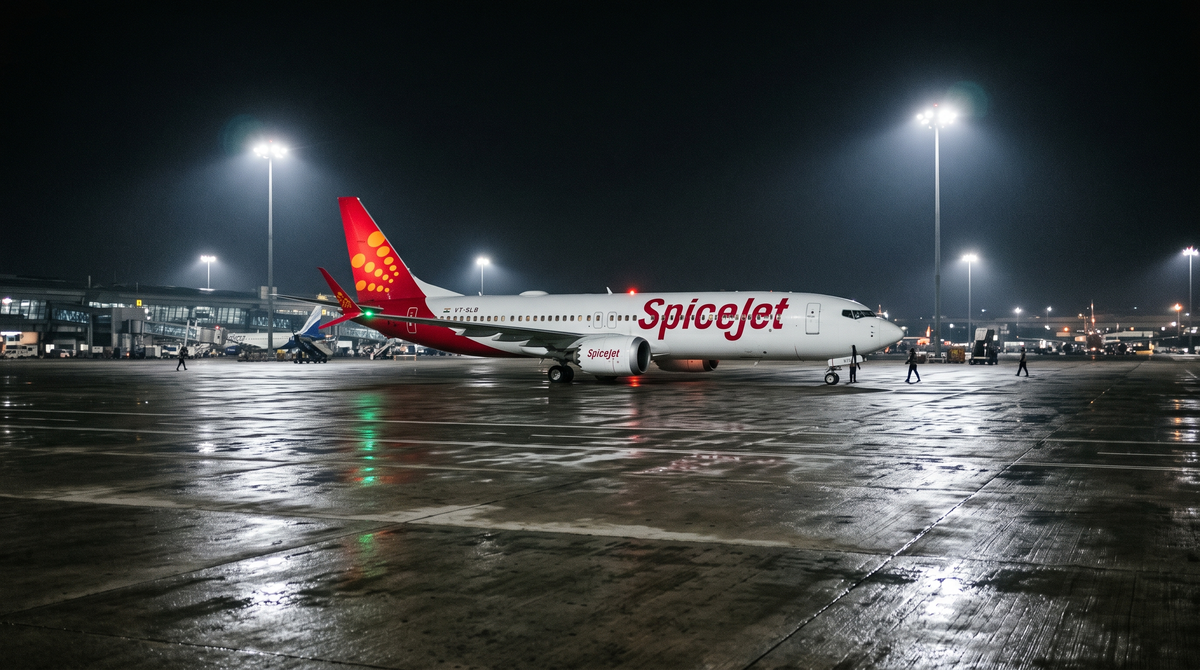
Industrial and Commercial Bank of China (ICBC) has asked India's Directorate General of Civil Aviation (DGCA) to deregister four Boeing 737 MAX 8 jets leased to SpiceJet, opening the legal path for the aircraft to be pulled off the Indian register and flown out of the country.
The four deregistration requests were filed under the IDERA framework - Irrevocable De-Registration and Export Request Authorization - and are dated 9 July 2026. They were submitted by SKY HIGH LXXVIII and SKY HIGH LXXX, two lessors owned by ICBC and based in Ireland. If the DGCA proceeds, the four 737 MAX 8s will be removed from India's civil aircraft register, after which ICBC would look to take possession of the jets and export them.
IDERA is the mechanism that gives aircraft owners a fast, court-free route to recover their assets when a lessee defaults, and it is a cornerstone of how leasing works in emerging markets. India's willingness to honour IDERA filings promptly has been closely watched by the global leasing community ever since the Go First collapse, when lessors spent months trying to recover aircraft that were slowly deteriorating on the ground.
SpiceJet says the jets were not flying anyway
The airline's response was notably relaxed. SpiceJet said the four aircraft had been on the ground for some time because of high-pressure turbine issues in their engines. According to Planespotters.net, the four jets - registered VT-MXA, VT-MXB, VT-MXC and VT-MAX - were all placed in storage in either 2024 or 2025, and are just under eight years old.
"The deregistration of these aircraft will eliminate lease rental costs on assets that have remained non-operational for a prolonged period. There is no impact on the airline's operations, as these aircraft have been out of service for a considerable time," a SpiceJet spokesperson said.
There is a hard commercial logic to that position. A grounded aircraft with an unserviceable engine still accrues lease rent, still needs storage and preservation, and still ties up capital that a cash-constrained carrier would rather deploy elsewhere. Handing back four jets that cannot fly is, in narrow financial terms, a cost saving rather than a capacity loss.
A carrier still repairing its balance sheet
The episode lands while SpiceJet is trying to convince the market that the worst is behind it. In February 2026, chairman and managing director Ajay Singh said that "while legacy costs and external factors continue to weigh on expenses, the core business is clearly strengthening".
"This quarter reflects the progress we have been working steadily towards. Higher revenues, improving yields and a sharp reduction in losses demonstrate that our operational strategy is delivering results," Singh said, adding: "With more aircraft in service, a sharper network focus and continued balance sheet repair, we are building a more resilient airline, step by step."
Executives have mandated a calibrated ramp-up of the fleet to 55-60 aircraft effective in the winter schedule, achieved through a mix of wet and damp leases plus the return to service of grounded aircraft already on the books. That target is the number to watch. The four 737 MAX 8s ICBC wants back were never going to contribute to it - they need engines SpiceJet has not been able to fund. But the loss of four airframes from the register narrows the pool of jets SpiceJet could theoretically reactivate, and it means the winter ramp-up leans that much harder on leased-in capacity, which is more expensive per seat than flying aircraft the airline already controls.
The wider signal is about credibility with lessors. Every high-profile repossession makes the next lease marginally harder and pricier to secure - which is precisely the friction an airline trying to grow its fleet by a third does not need.
Sources: AeroTime, DGCA. Featured image: AI-generated by AviationShop. By Marco Bianchi.


















Comments
Loading comments…