


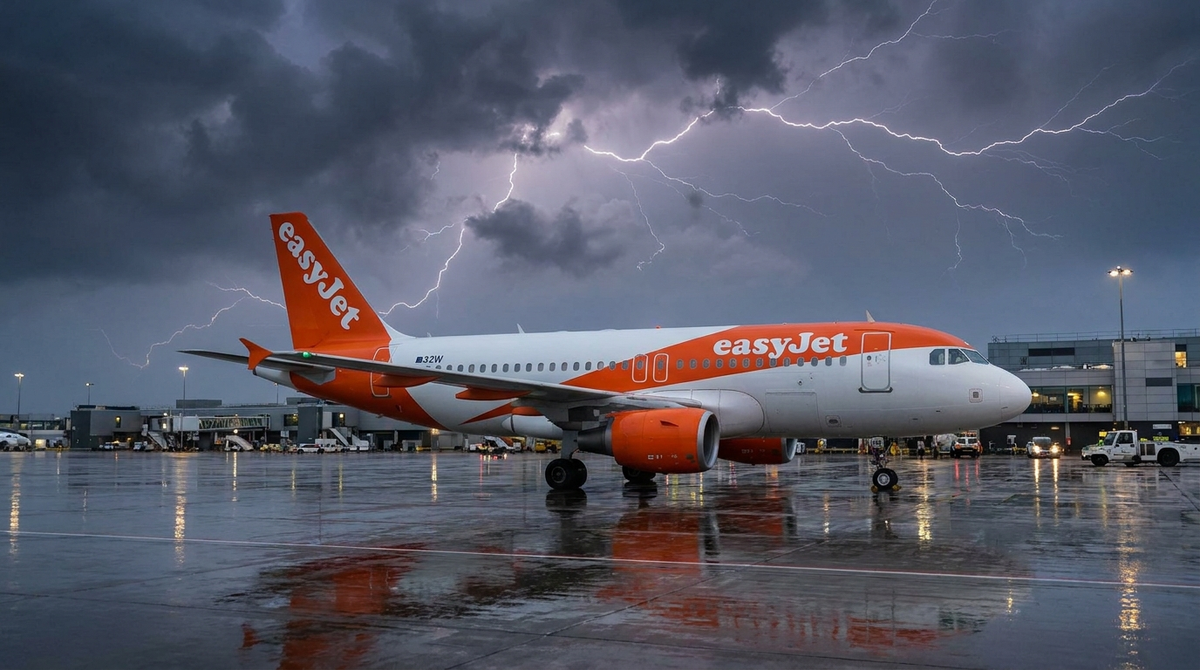
An easyJet Airbus A319 was struck by lightning shortly after takeoff from London Gatwick Airport on Thursday afternoon, forcing the crew to declare a priority and return to the airport just 27 minutes after departure. Flight U28305, bound for Italy, was operated by the A319 registered as G-EZDH and departed Gatwick's runway 08R at 14:22 local time. As the aircraft climbed through dense storm clouds, a lightning bolt struck the airframe at roughly 16,000 feet, prompting the crew to immediately begin assessing aircraft systems.
According to flight tracking data and witness reports from the ground, stormy weather was sitting over the Gatwick area when U28305 lifted off. The crew followed standard post-strike safety protocols, requesting a priority handling code from air traffic control and turning the jet back toward Gatwick. The A319 landed safely on the same runway it had taken off from, ending what had become a tightly managed inflight emergency without injuries among the passengers or crew on board.
Modern commercial aircraft are engineered to act as a Faraday cage during a lightning event, using the metal fuselage to channel electrical current safely around the cabin and back out into the atmosphere. Composite components and probe-style discharge wicks on wingtips and the tail are designed to disperse the charge without damage to avionics or flight controls. Even so, lightning strikes trigger mandatory ground inspections, and the affected aircraft is typically pulled from service for an electrical bonding check and a visual sweep of the fuselage, radome, and tail.
Lightning strikes on commercial jets are estimated to occur roughly once per aircraft per year on average, but the consequences for the schedule can be considerable. easyJet rebooked affected passengers onto later services to their Italian destination and confirmed the aircraft would be withdrawn from operations until engineering teams completed the required inspection. The carrier emphasised that the safe outcome reflected both the robustness of the airframe and the crew's adherence to the airline's standard operating procedures for severe weather encounters.
The episode underscores the operational risk that storm-laden spring weather can pose to short-haul European operations from London Gatwick, where afternoon convective activity has repeatedly disrupted departures this month. With Gatwick handling roughly 900 movements per day during peak season, even a single weather-driven return can ripple through afternoon and evening rotations across the easyJet network.
Compiled from publicly available aviation news sources. Featured image: AI-generated by AviationShop. This article is original editorial content; facts have been verified across multiple public sources.

















Comments
Loading comments…