


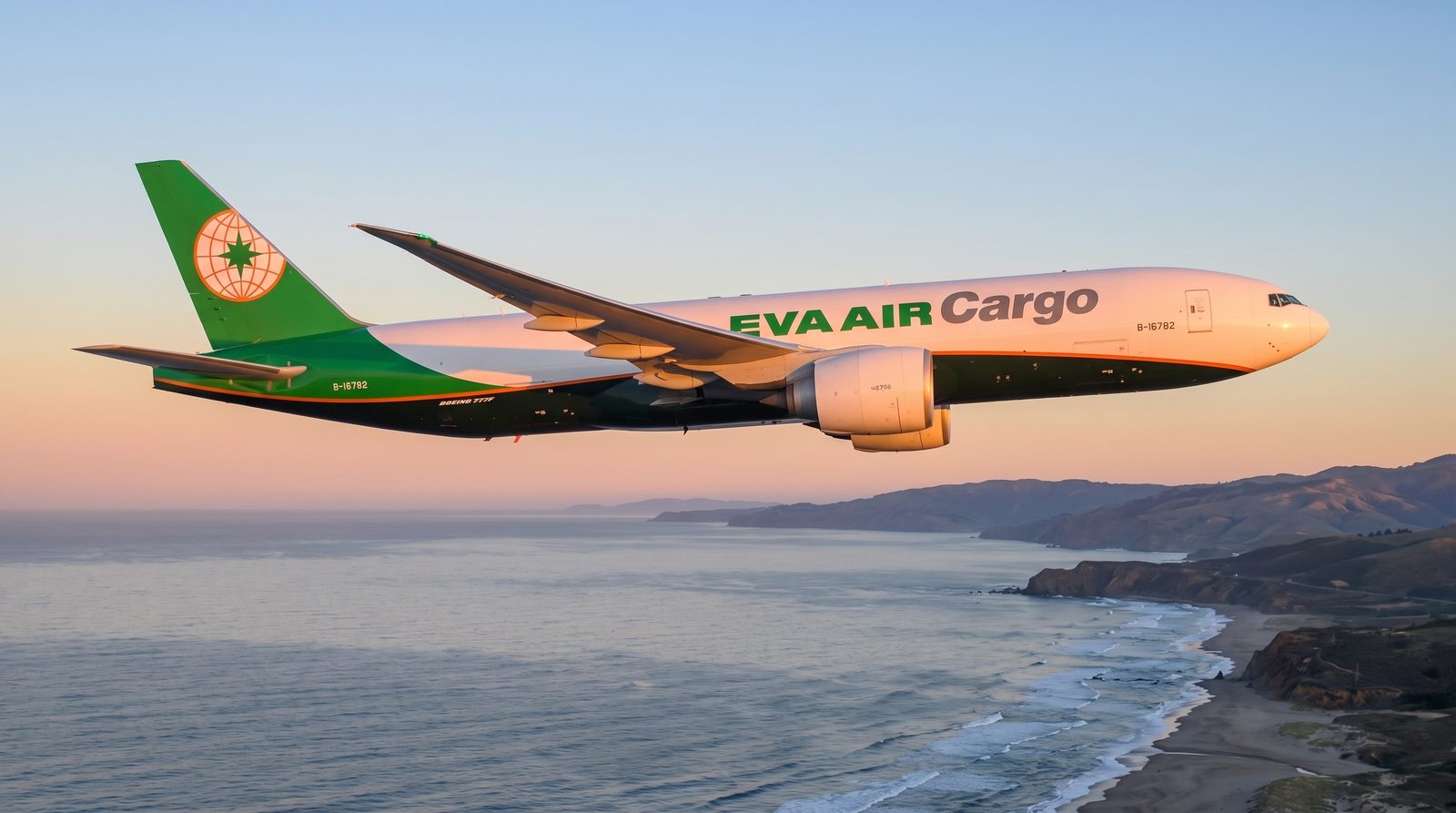
The Federal Aviation Administration has granted Boeing an exemption from post-2027 fuel-efficiency limits so the company can certify and sell up to 35 additional Boeing 777F freighters, AeroTime and Leeham News reported after the mid-September decision that also drew Reuters coverage of the emissions-rule waiver.
Under rules finalized in February 2024, most large aircraft manufactured after 1 January 2028 must meet tighter carbon and fuel-burn standards. The 777F, a main-deck freighter derived from the 777-200LR family, would otherwise have been ineligible for new certifications after 31 December 2027. Boeing petitioned for relief in December 2025, arguing that customers still need large freighters before the next-generation 777-8F arrives and that an abrupt production stop would leave a cargo-capacity hole.
The waiver lets Boeing produce and sell those 35 frames for deliveries spanning roughly early 2028 through early 2031, bridging the gap until the 777-8F is expected to enter service around 2029. Boeing told regulators that an uninterrupted freighter pipeline serves a substantial public interest in air-cargo capacity; the FAA’s approval accepts that argument while still bounding the carve-out to a fixed quantity rather than an open-ended production run that would hollow out the emissions rule.
Leeham’s analysis notes that the exemption is not a free ride. Boeing must still manage supplier capacity, certification paperwork and customer financing for each additional 777F, and environmental critics will watch cumulative fuel burn closely. The FAA has previously estimated that continuing 777F production could raise relevant freighter fuel use versus a cleaner successor, even as cargo operators argue that no certified alternative matches the type’s payload-range combination today for long thin freighter sectors.
For freighter lessors and integrators, the decision removes a hard stop that would have stranded order books between the last compliant 777F and first 777-8F. Express networks and wet-lease cargo airlines that standardize on the twinjet freighter now have a clearer path to replace aging 747 and MD-11 freighters without waiting for the newer type’s entry-into-service curve to stabilize.
The exemption also highlights how tightly today’s cargo fleet plans are coupled to certification calendars. When a single rule date can cut off a production line, regulators become de facto capacity planners for the freighter market. By choosing a capped waiver, the FAA preserved the long-term emissions goal while acknowledging that freighter customers cannot leap straight from today’s 777F to an unproven successor without a bridge fleet of known performance.
Boeing still has to convert the paper relief into firm orders and deliveries. Customers will weigh list prices, residual values, engine support and 777-8F timing before committing capital. Cargo yields and interest rates will decide how many of the 35 slots fill quickly versus linger as options. But for airlines that need large freighter lift in 2028–2030, the FAA’s 35-jet window is the clearest near-term supply signal the freighter market has received this year—and a reminder that environmental rules and industrial capacity now collide on the same calendar.
Industry reaction will split along familiar lines: freighter operators welcome bridge capacity, while climate advocates argue that every additional 777F delays the shift to cleaner long-haul cargo designs. The FAA’s fixed 35-jet ceiling is designed to keep that debate finite rather than perpetual.
Sources: AeroTime, Leeham News, Reuters coverage of the FAA waiver.









Comments
Loading comments…