


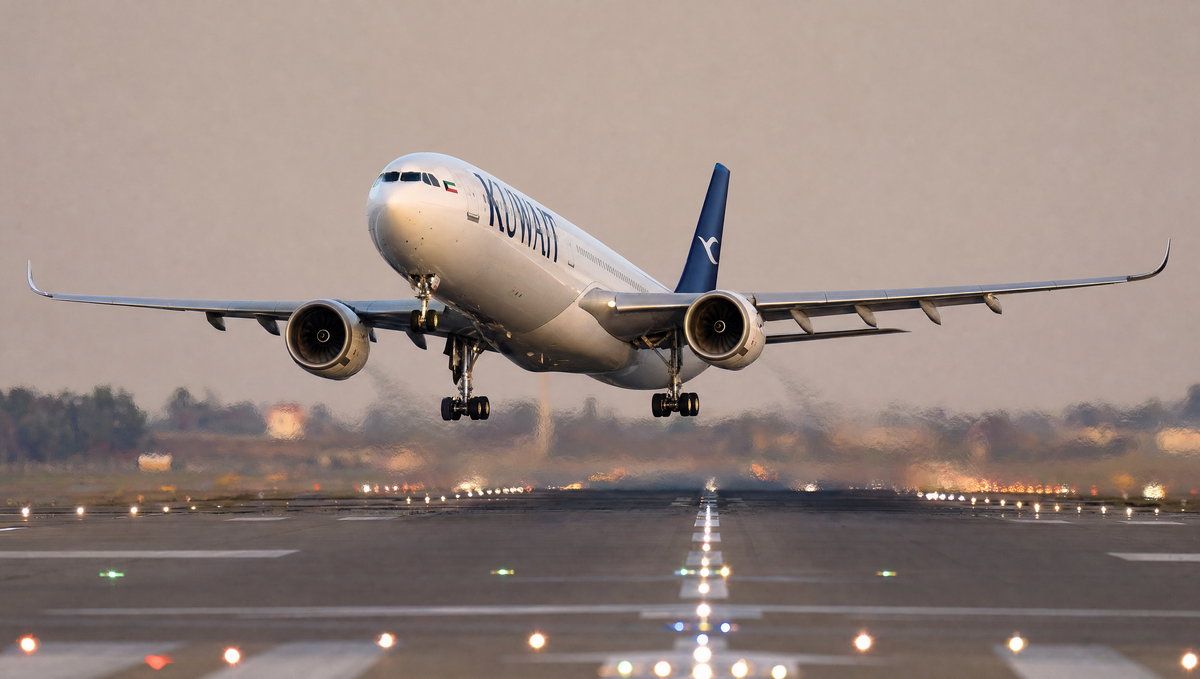
Kuwait Airways is adding Phuket to its network for the 2026/27 northern winter season. The Kuwaiti flag carrier has filed a Kuwait City – Phuket route operated by the Airbus A330-900neo, currently listing two weekly flights from 27 October 2026.
According to the filed schedule, KU407 departs Kuwait City at 03:30 and arrives in Phuket at 14:55 on day 2 of the week, with the day 6 rotation leaving marginally earlier at 03:25 for a 14:50 arrival. The return, KU408, leaves Phuket at 16:15 and lands back in Kuwait City at 20:35, operating on days 2 and 6. The Airbus A330-900neo is listed on all rotations.
A leisure play for the winter season
Phuket is one of the clearest examples of a pure winter leisure market in long-haul network planning. Thailand's Andaman coast enters its dry season around November and runs through to April, exactly when demand from Europe and the Gulf peaks and the northern winter schedule takes effect. Carriers across the Middle East have built seasonal Phuket operations around that pattern, and a start date of 27 October — the beginning of the northern winter season — places Kuwait Airways squarely within it.
The twice-weekly frequency is a deliberate, low-risk way to open a market of this kind. Two rotations per week generate enough inventory for tour operators and leisure bookings without committing a widebody to a daily pattern, and it leaves room to add frequency later if loads justify it. The timings support that reading: an overnight departure from Kuwait arriving in the early afternoon, and an evening departure from Phuket, are the kind of banks that suit holiday traffic rather than time-sensitive business travel.
Why the A330neo fits
The Airbus A330-900neo is the aircraft the route is filed with, and it is a sensible match for the mission. The type is a twin-aisle, twin-engine widebody powered by Rolls-Royce Trent 7000 engines, with the aerodynamic refinements and curved sharklets that distinguish the neo generation from the earlier A330ceo family. Compared with the larger widebodies in a typical Gulf fleet, it offers a cabin sized for a market that is seasonal and leisure-led, while retaining the range for a sector of this length.
That combination — widebody comfort with a seat count that can be filled twice a week — is precisely why the A330neo has become a common choice for medium-density long-haul flying. On a route where demand is concentrated into a handful of months, the risk is not running out of seats but flying too many of them.
Connecting Kuwait to Southeast Asia
Kuwait City sits in a useful position for traffic heading east, and Southeast Asian leisure destinations have become a growth area for Gulf carriers looking beyond the traditional Indian subcontinent and Levant markets. A Phuket service also serves outbound Kuwaiti holiday demand directly, without requiring a connection through a larger regional hub — a meaningful convenience on a sector where the alternative is a one-stop itinerary.
As with all filed schedules, the operation remains subject to change before the season begins; airlines routinely adjust timings, equipment and frequencies as the winter season approaches and bookings firm up. For now, the listing places Phuket on the Kuwait Airways map from late October, with the A330-900neo working the pair of weekly rotations through the northern winter.
Sources: AeroRoutes. Featured image: AI-generated by AviationShop. By Daniel Okafor.



















Comments
Loading comments…