


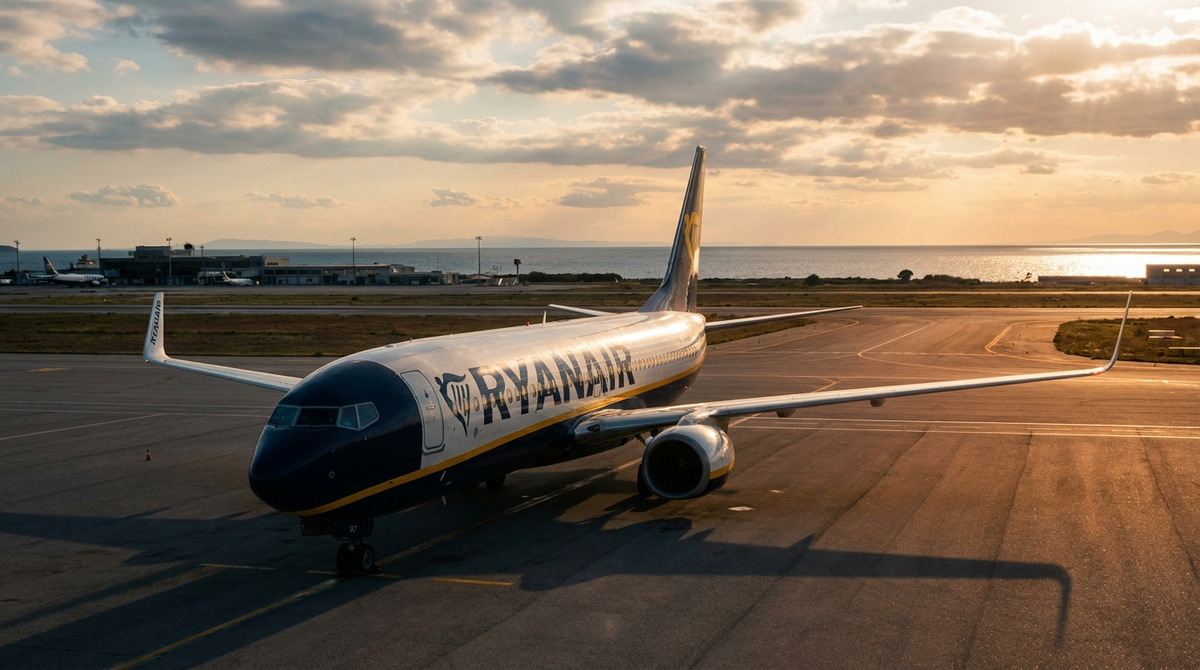
Ryanair has notified staff that it will shut its operational base at Thessaloniki International Airport at the end of October, marking the latest escalation in the carrier's fight with European airport operators over rising charges. The closure was first reported by Greek media on May 6 and confirmed in subsequent industry reporting.
The Irish low-cost giant has framed the move as a direct response to a recent increase in airport fees at Thessaloniki, which serves as the gateway for northern Greece and a key summer leisure market. Ryanair currently bases two Boeing 737-800 aircraft at the airport and operates routes from Thessaloniki to destinations including Brussels Charleroi, London Stansted, Paris Beauvais and Milan Bergamo.
Part of a wider European retreat
Thessaloniki is not the first base Ryanair has trimmed in 2026. The airline has already scaled back capacity in Spain over a 6.62 percent rise in Aena's airport charges, cut around 20 routes from Brussels and Charleroi for the coming winter, and pulled service from a string of secondary airports across France, Portugal and Germany. Combined, the cuts are expected to remove close to three million seats from Ryanair's European network.
Fuel crisis hits the timetable
The base closure announcement comes as Ryanair faces a separate operational crisis. CEO Michael O'Leary has warned that 5 to 10 percent of the airline's flights in May, June and July could be cancelled if the Strait of Hormuz remains closed and jet fuel prices stay near current war-driven highs. Hundreds of Ryanair flights were already pulled from the May schedule for that reason.
What it means for travellers
For passengers booked into Thessaloniki for summer 2026, flights remain on sale through the end of the season. From November onwards, however, capacity from Ryanair will be sharply reduced, opening room for Aegean Airlines, Wizz Air and other competitors to take Ryanair's place in northern Greece. Ryanair has signalled it is open to reversing the decision if Thessaloniki Airport agrees to roll back the new charges.
Compiled from publicly available aviation news sources. Featured image: AI-generated by AviationShop. This article is original editorial content; facts have been verified across multiple public sources.


















Comments
Loading comments…