


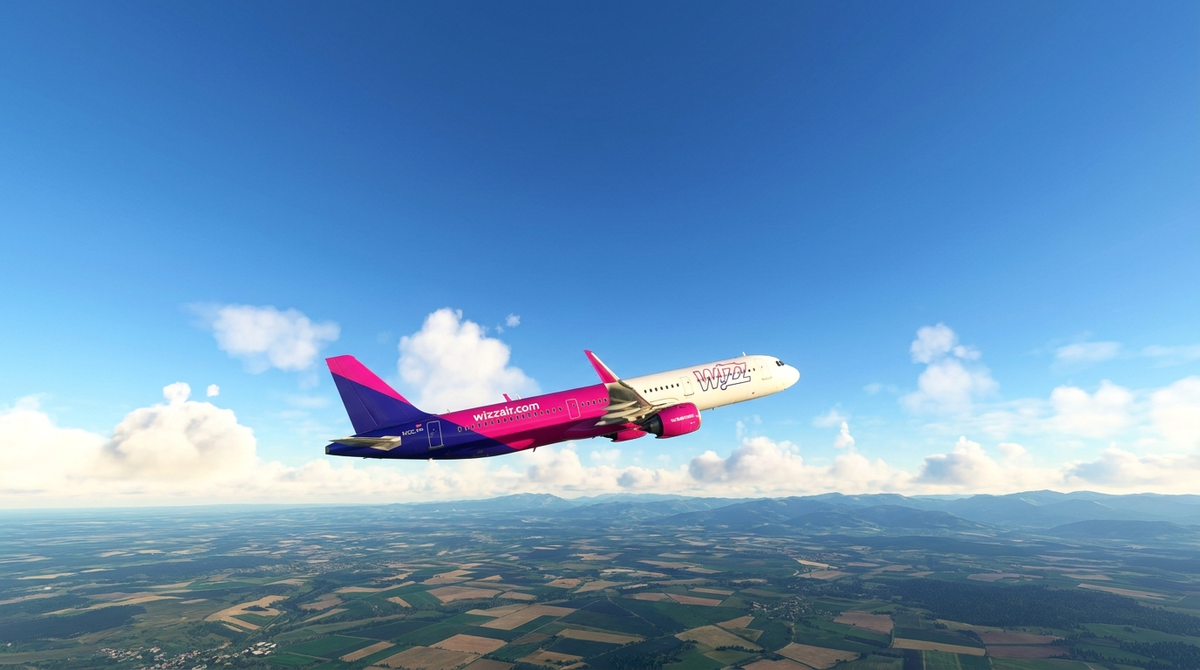
Hungarian ultra-low-cost carrier Wizz Air has tossed out the loss warning it issued at the start of the U.S.–Israeli war on Iran, telling investors on 12 May that it now expects to break even or land slightly above zero in its 2026 financial year. The reversal comes barely 10 weeks after the airline guided the market to a €50 million net loss, citing fuel spikes and forced cancellations across its Middle East-heavy network.
The new guidance leans on four moving parts. Fuel hedges now cover 70% of summer requirements at $720 per tonne, well below current spot levels. Forward bookings — particularly leisure traffic on Central European, UK and Italian routes — have rebounded faster than management modelled in March. The carrier has shifted Wizz Air Abu Dhabi capacity into core European markets, replacing lost Middle East flying with higher-yield short-haul. And promotional fares have been deployed surgically rather than across the full network, protecting yield in must-fly corridors while flooding cheap seats into recovery routes.
Crucially, the airline says it ended the prior fiscal year on 31 March with €2.1 billion in total cash, equivalent to roughly $2.5 billion. That liquidity position is the strongest in Wizz Air's history and gives chief executive József Váradi room to absorb further geopolitical shocks without diluting shareholders or returning to the bond market in an unfriendly rate environment. Wizz has also held back from cutting its standing A321neo and A321XLR order book, betting that lower unit costs from the next-generation Airbus narrowbody will be the structural lever that finally beats Ryanair's cost-per-seat advantage.
Markets reacted accordingly. Wizz Air shares jumped on the London Stock Exchange after the trading update was released ahead of its full-year results, with analysts flagging the speed of the recovery as a positive read-across for the wider European short-haul sector. The company has now joined a small group of carriers — alongside IAG and Air France-KLM — that have publicly walked back Iran-war profit warnings issued during March and April.
The story is not yet finished. Wizz still warns that a renewed escalation in the Persian Gulf, a re-spike in Brent crude above $110, or sustained airspace closures over Iraq and Iran could push the airline back into the red. For now, however, the message is that one of Europe's most exposed budget carriers has stabilised, refinanced its operating plan, and turned the page on what could easily have been a balance-sheet event.
Compiled from publicly available aviation news sources. Featured image: AI-generated by AviationShop. This article is original editorial content; facts have been verified across multiple public sources.
















Comments
Loading comments…