


Most passengers have never heard of it, but the Boeing E-7 Wedgetail may be the most argued-over aeroplane in the Western world right now. It is a 737 you could almost mistake for a short-haul airliner — until you notice the flat slab of radar bolted to its spine. Underneath that unglamorous shape sits the machine that is supposed to replace the E-3 Sentry AWACS, and a procurement story that has swung from cancellation to revival in barely twelve months.
Here is what the E-7 actually is, what the MESA radar does that a spinning dome cannot, and where the programme stands in August 2026.
A 737 with a radar on its back
The Wedgetail is built on the Boeing 737-700 airframe — the same next-generation 737 family that P-8 Poseidon crews and airline pilots know well. The Royal Australian Air Force, the launch customer and still the most experienced operator, lists the basics plainly: length 33.6 m, wingspan 34.3 m, height 12.6 m, maximum take-off weight 77,565 kg and maximum landing weight 60,782 kg. Two CFM International CFM56-7 turbofans of 27,300 lb thrust each push it to a maximum 955 km/h, with a cruise of 760 km/h, a ceiling of 41,000 ft and a range of 7,040 km.
Those numbers are deliberately ordinary. That is the point. An airborne early warning and control aircraft spends its life orbiting for hours at a time, and building it on a mass-produced narrowbody means commercial spares, commercial engines and a maintenance world that already exists. The RAF's decision to base its Wedgetails at RAF Lossiemouth alongside its P-8 Poseidon fleet leans on exactly that logic: both types share the 737NG airframe, so the two fleets can share a spares pool.
If you want the pilot's-eye version of the 737 family that underpins all of this, our Boeing 737 collection is where a lot of avgeeks start — the airframe is the same one that flies half the world's short-haul network.
What the crew actually does up there
Australia's E-7As carry a flight crew of pilot and co-pilot plus a mission crew of air battle managers and airborne electronics analysts, working ten mission consoles in the cabin. Those operators are not passengers along for the ride: they are running the air picture, controlling fighters, deconflicting traffic and passing tracks to ships and ground units over HF, VHF, UHF, Link-11, Link-16 and UHF SATCOM. In a single standard mission, the RAAF says one Wedgetail can cover more than four million square kilometres — roughly the size of Western Australia.
MESA: why the dome had to go
The visual signature of the E-7 is the Northrop Grumman Multi-Role Electronically Scanned Array — the "top hat" fin above the rear fuselage. It does not rotate. Nothing on it moves.
That is the whole argument in one sentence. The E-3 Sentry's 30-foot rotodome takes about ten seconds to complete a rotation and fully refresh the picture, according to US Air Force officials; for ten seconds at a time, a given piece of sky is simply not being looked at. The MESA array steers its beams electronically, so it can revisit a track in a fraction of that time, hold its gaze on multiple areas of interest at once, and concentrate energy where it matters to extend detection range and improve track quality.
The RAAF quotes a MESA range in excess of 400 km, working simultaneously in air search, maritime search and fighter-control modes. Because the array is electronically steered rather than mechanically swept, the aircraft can also fly a more useful orbit geometry — and it does the job with a smaller crew than the E-3 requires.
E-7 vs E-3 at a glance
- Airframe: the E-7 uses the in-production Boeing 737-700 (737NG family); the E-3 is built on the long out-of-production Boeing 707.
- Radar: the E-7 has a fixed Northrop Grumman MESA array with electronic beam steering; the E-3 uses a mechanically rotating 30-foot rotodome that needs about ten seconds per full refresh.
- Crew: the E-7 is designed to be operated by a smaller mission crew — ten consoles on the Australian aircraft — where the E-3 needs considerably more people.
- Sustainment: commercial 737NG spares, engines and maintenance infrastructure versus a bespoke 707-based fleet that is increasingly hard to keep airworthy.
None of that makes the E-7 invulnerable, and survivability against long-range air-to-air threats is precisely the objection Pentagon planners raised when they tried to cancel it. But as a replacement for an aeroplane designed in the 1970s, the case is not subtle.
Who flies it
The Wedgetail is not a paper aeroplane. Australia's No. 2 Squadron operates six E-7As from RAAF Base Williamtown near Newcastle, and Australian Wedgetails have deployed operationally well beyond home airspace. South Korea (Peace Eye) and Turkey (Peace Eagle) fly the same basic system under different programme names, giving the type a service record stretching back to the programme's 1990s origins.
The United Kingdom is the newest operator. WT001, the first RAF Wedgetail AEW1, landed at RAF Lossiemouth on 21 May 2026 after conversion work at STS Aviation Services in Birmingham, closing — at least symbolically — a capability gap that opened when the RAF retired its E-3D Sentries in 2021, well ahead of their original 2035 out-of-service date. No. 8 Squadron will operate the aircraft once test and evaluation at MOD Boscombe Down and Lossiemouth is complete.
The UK fleet is small, and that is a deliberate cut rather than the original plan. The 2021 Defence Command Paper reduced the buy from five aircraft to three; because Britain had already committed to five radar sets, two spare arrays came with the deal. Cost at that point was £1.89bn for three aircraft and five radars, down from £2.155bn. The second airframe, WT002 — a converted second-hand 737-700 BBJ — is still being outfitted in Birmingham, and the third, WT003, is a new-build 737 completed back in 2022 and not yet converted.
The cancellation that wasn't
This is where the Wedgetail story gets genuinely strange.
In the Fiscal Year 2026 budget request, Pentagon leadership proposed killing the US Air Force's E-7 outright, arguing that a mix of the Navy's smaller E-2D Hawkeye and space-based targeting sensors would do the job more survivably and more cheaply. That would have ended a planned buy of 26 aircraft.
Congress disagreed, loudly. The FY2026 National Defense Authorization Act and defence appropriations bill forbade the Air Force from cancelling the prototyping effort and injected roughly $1.1 billion into it. In February 2026 the Consolidated Appropriations Act directed the service to continue development and transition into an engineering and manufacturing development phase.
On 12 March 2026 the Air Force duly awarded Boeing contract modifications worth a combined $2.4 billion — a $2.3 billion option exercise for additional developmental aircraft, plus $99 million for continued MESA radar work. Together with the two rapid-prototype aircraft already under a contract definitized at $2.56 billion, that pushes the E-7 contract value past $5 billion, with work running to August 2032 across Seattle, Oklahoma City, Huntsville and Heath, Ohio.
Even so, the long-term shape of the fleet is unsettled. An Air Force solicitation in March 2026 asked vendors to build business cases for a support fleet anywhere between the two prototypes and the full 26 aircraft — a spread wide enough to tell you nobody has decided yet.
NATO walked away
The knock-on effect landed in Europe. NATO had selected the E-7A in November 2023 to replace its E-3A Sentry fleet, but on 13 November 2025 the Netherlands announced that the acquisition was off, citing the disappearance of the strategic and financial basis for the buy after the US withdrawal from its own programme. Reporting since has pointed towards Saab's GlobalEye as the likely direction of travel, with Sweden and France already moving to that platform.
Meanwhile the operational case for airborne radar has not weakened. The 2026 combat loss of an E-3 sharpened attention on how thin — and how old — the West's early-warning fleet has become: NATO's own Sentries date from the early 1980s.
What it means if you fly for a living
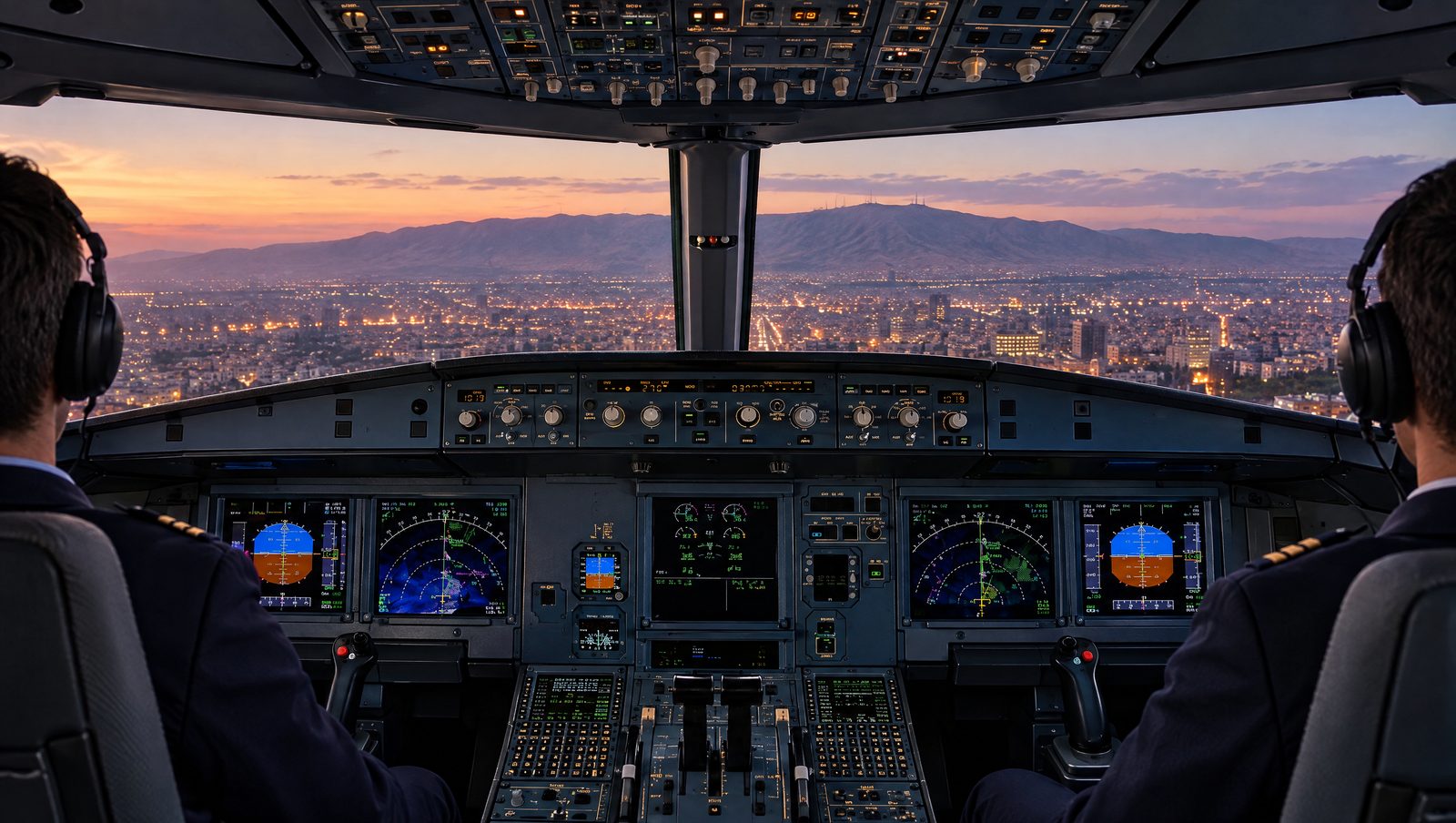
For airline pilots, the Wedgetail is a reminder of how much civil and military aviation now share. The CFM56 line, the 737NG systems architecture and even the spares chain overlap directly with aeroplanes flying revenue sectors every day. Ex-airline engineers and 737-rated pilots are exactly the talent pool these programmes recruit from — and, in reverse, plenty of military AEW&C crews end up in the right seat of an A320 or 737 later on.
If you are on the other side of that path — heading towards an airline flight deck rather than a mission console — the route is more structured than most people assume, and our own guide Becoming an Airline Pilot walks through licensing, training costs and the hiring pipeline step by step.
The bottom line
Technically, the E-7 Wedgetail is settled: a proven 737NG airframe, a fixed electronically scanned radar that outperforms a rotating dome in refresh rate and flexibility, three export operators flying it and the RAF in test. Politically, it remains one of the most contested procurements in the alliance — saved by Congress, dropped by NATO, and still without a firm final fleet size in US service.
What is clear is that the mission itself is not going away. Somebody has to hold the air picture, and until space-based alternatives are more than a slide deck, that job belongs to an airliner with a slab of radar on its back.
For more aircraft deep dives and gear for the people who genuinely enjoy this stuff, browse our aviation enthusiast collection.






Comments
Loading comments…