


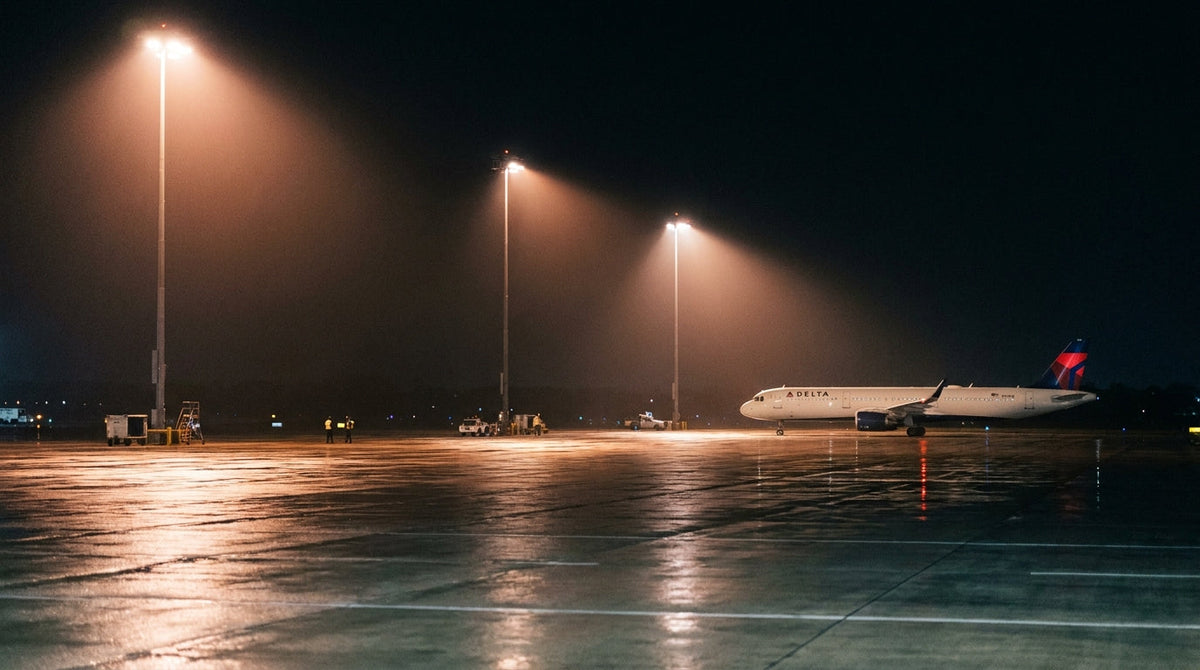
A scheduled Delta Air Lines service from Los Angeles International Airport to Boston Logan International Airport diverted to Detroit Metropolitan Wayne County Airport on Tuesday after a pilot on board suffered a medical emergency in flight. Appendicitis is believed to have been the cause.
The diversion took the aircraft to Delta's Michigan hub so that the captain could seek medical attention. Detroit is one of the airline's largest bases, with its own maintenance presence, crew reserves and direct access to major medical facilities, which makes it a natural choice for a crew emergency on a transcontinental sector that routes across the northern United States.
Pilot incapacitation is a scenario that commercial aviation is specifically built to absorb. Every airliner in scheduled passenger service in the United States operates with a minimum of two qualified pilots on the flight deck, each fully trained and legally able to fly and land the aircraft alone. When one pilot becomes unwell, the remaining pilot takes over as pilot flying, the cabin crew are informed, and the operator's dispatch and medical support teams are brought into the loop to help select a suitable diversion airport.
That decision balances several factors at once. Crews weigh the severity and likely progression of the medical condition, the quality of medical care available on the ground, runway length and weather at the candidate airports, the aircraft's landing weight, and whether the airline has its own engineering and crewing resources in place to look after the aircraft and the passengers once it is down. An airline hub scores well on almost every one of those measures, which is why diversions of this kind so often end at one.
Appendicitis is a useful illustration of why airlines take crew illness seriously rather than pressing on. It typically presents with abdominal pain that intensifies over a period of hours, and it is not a condition that improves on its own at altitude. On a coast-to-coast flight with several hours still to run, continuing to the destination would mean accepting a steadily worsening situation with no way to change the outcome. Diverting early, while the remaining pilot is fresh and the aircraft has plenty of fuel and options, is the conservative choice.
For passengers, a diversion of this type is disruptive rather than dangerous. The aircraft lands normally, and the delay that follows is usually driven by crew logistics on the ground: a replacement pilot has to be found, briefed and legally rostered before the flight can continue to its original destination. At a hub such as Detroit, that process is considerably faster than it would be at an airport where the airline has no local presence.
Medical events involving flight crew remain rare relative to the number of sectors flown each day, but they are not unheard of, and the industry's layered approach to them is deliberate. Multi-crew operation, recurrent training in single-pilot handling, and a route network dense with suitable diversion fields all exist so that a single person falling ill never becomes a safety event.
Sources: Simple Flying. Featured image: AI-generated by AviationShop. By James Holloway.









Comments
Loading comments…