


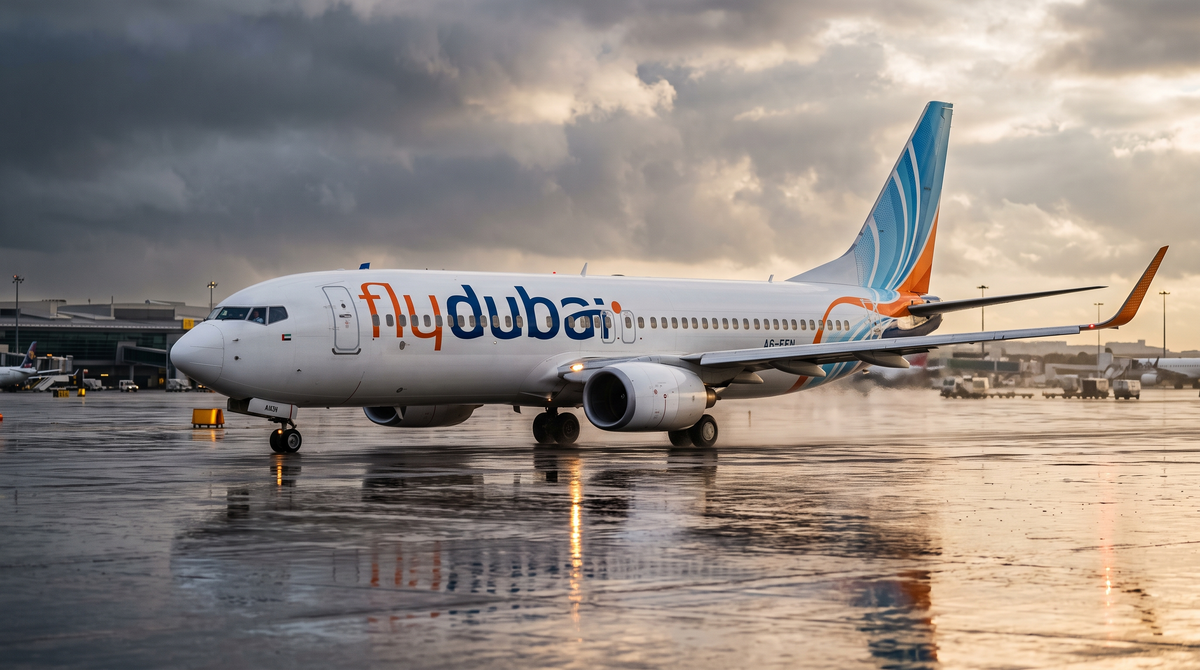
Flydubai will resume daily nonstop flights between Dubai and Aleppo from July 20, restoring a route that has been dormant for nearly 14 years. The Dubai-based low-cost carrier is one of three airlines opening service to Syria's second city in the coming weeks, in what is shaping up to be the clearest sign yet that international air links to the country are recovering.
For flydubai, Aleppo becomes its second destination in Syria. The airline already serves Damascus, a route it relaunched in 2025 and has since built up to three flights per day following a frequency increase. Adding Aleppo on a daily basis is a significant step up from that single-city presence, and it gives the carrier a second point in a market most international airlines abandoned more than a decade ago.
Two More Carriers Follow In August
Saudi Arabian low-cost carrier Flynas will follow on August 1 with two weekly flights between Riyadh and Aleppo. That complements an already substantial Syrian network: Flynas currently operates 24 weekly services to Damascus from Riyadh, Jeddah and Dammam, making it one of the most committed foreign operators in the market.
Turkey's SunExpress is also scheduled to launch on August 1, with a twice-weekly Antalya–Aleppo service operated by Boeing 737-800 aircraft. It will be the only nonstop link between the two cities, and it plugs Aleppo directly into a Turkish leisure and connecting hub rather than a Gulf one.
The three launches are complementary rather than competitive. Flydubai's daily Dubai service offers the widest onward connectivity through one of the world's largest transfer hubs. Flynas connects Aleppo to the Saudi market. SunExpress provides the shortest hop of the three, across the border from Antalya. Between them, they give a city that had no meaningful international service a link to the Gulf, the Kingdom and Turkey within a fortnight.
Why It Matters
Aleppo's return to the international map is a route-development story, but it is also an infrastructure and confidence story. Airlines do not commit daily narrow-body capacity to an airport unless they believe the traffic — diaspora, business, humanitarian and reconstruction-related — will hold up beyond the first few months of novelty demand.
Flydubai's 14-year absence gives a sense of just how long the gap has been. In that time, the airline has grown from a young low-cost start-up into an operator of a large Boeing 737 fleet spanning the Middle East, Africa, Central Asia and Europe, and it has become the Emirates group's primary tool for opening thin or difficult markets. Aleppo fits that brief precisely.
Whether the three routes stick will depend on load factors over the winter, when leisure demand thins and only the structural traffic remains. But for now, an airport that spent well over a decade off most airline maps is about to see daily widebody-hub connectivity return — and two more carriers arrive within two weeks of it.
Sources: Aviation Week. Featured image: AI-generated by AviationShop. By Elena Vargas.



















Comments
Loading comments…