


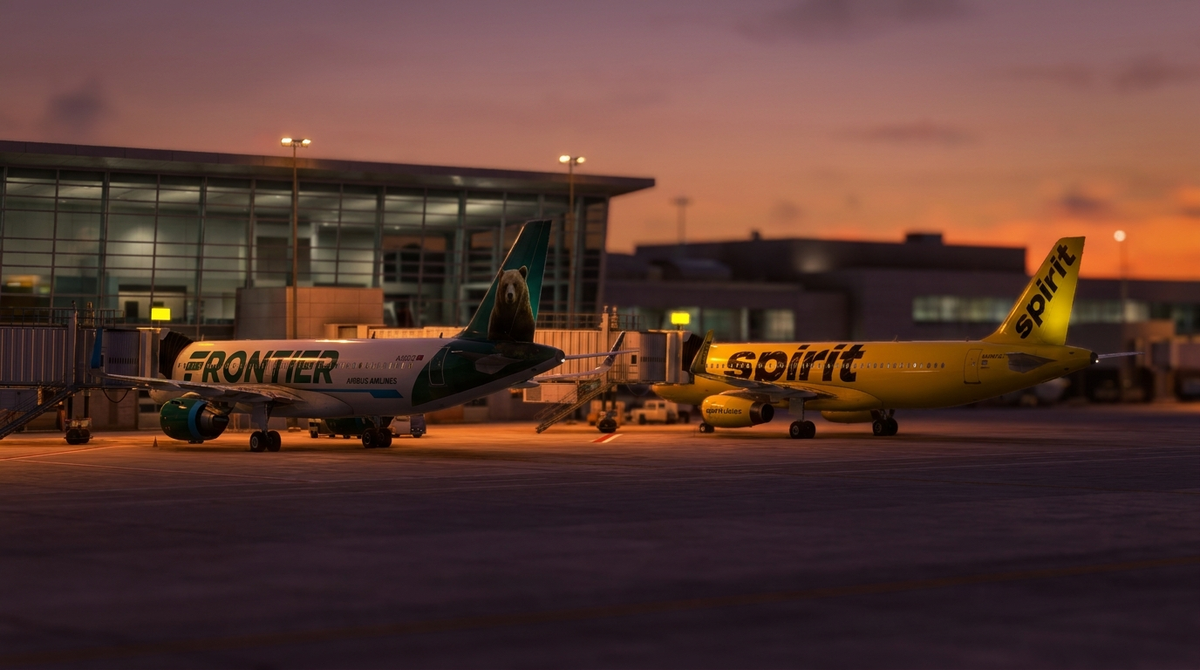
Barry Biffle, the former Frontier Airlines chief executive who pushed for years to combine the two largest US ultralow-cost carriers, says Spirit Airlines would almost certainly still be flying today — and 17,000 layoffs would have been avoided — if his 2022 bid to merge Frontier and Spirit had succeeded instead of being outflanked by JetBlue and ultimately blocked by federal regulators. Biffle made the comments in a recent Forbes interview, his most direct public assessment of the Spirit collapse since he resigned as Frontier CEO in December 2025.
"Everyone knows I wanted to merge with Spirit," Biffle told the publication, adding that he has personally spoken with dozens of laid-off Spirit pilots and flight attendants since the May 2 shutdown. Biffle argued that a combined Frontier-Spirit, operating a single ultralow-cost network and a unified Airbus A320 family fleet of more than 250 jets, would have generated the cost synergies and balance-sheet flexibility needed to survive the post-pandemic fuel price spike that ultimately broke Spirit. Jet fuel prices have climbed roughly 70 percent since the start of the Iran conflict in February.
The history is messy. Frontier first announced a stock-and-cash agreement to acquire Spirit in February 2022, valuing the deal at roughly $6.6 billion. JetBlue then launched a hostile counter-bid at a higher cash valuation, and Spirit's board ultimately broke from Frontier and accepted JetBlue's offer. The Department of Justice sued in 2023 on antitrust grounds, and a federal judge struck down the JetBlue-Spirit deal in January 2024 — sending Spirit into a standalone reorganization that culminated in last week's liquidation. Frontier briefly revisited the merger conversation in late 2025 but the talks never produced a binding term sheet, and Biffle was replaced as Frontier CEO by company president James Dempsey on December 15, 2025.
Biffle's argument has reignited the long-running debate over whether US antitrust enforcement is calibrated correctly for an industry where consolidation has been the historical norm. Supporters of the DOJ's 2024 block argued the JetBlue-Spirit combination would have eliminated the lowest-fare option for millions of price-sensitive travelers. Critics — including Biffle and several aviation industry analysts — counter that blocking the deal left Spirit standalone and undercapitalized in a market it could not survive, and that consumers have now lost the ultralow-cost option entirely rather than seeing it absorbed into a larger network.
Frontier itself has not commented on Biffle's interview, and the carrier is widely reported to be the frontrunner among bidders for Spirit's gates, slots, and unsecured Airbus orderbook in the ongoing liquidation process. Whether Frontier ultimately buys those assets at fire-sale prices — and whether Biffle's "what if" becomes the foundation of a quiet post-mortem merger after all — is a question the bankruptcy court is expected to begin answering in the coming weeks.
Compiled from publicly available aviation news sources. Featured image: AI-generated by AviationShop. This article is original editorial content; facts have been verified across multiple public sources.















Comments
Loading comments…